

A practical guide to balancing academics, athletics, and social life at Georgia Tech.
By Sarthak Das and Michelle Rhee
Jump to: Schedule | Sleep and stress | Social life | Weekly review | Campus resources
Why sleep, stress, and your schedule matter
When considering a school like Georgia Tech, the transition from high school to college can be pretty difficult. Between challenging classes, extracurriculars, and trying to have a social life, a lot of first-year students realize that their old time management habits just aren’t enough anymore. It can be easy to spend the whole day going from class to class, then stay up late finishing homework, and repeat the same thing the next morning. Eventually, sleep and personal time are usually the first things to get sacrificed.
During our original interview with JJ, a first-year Georgia Tech football player, we learned how challenging this transition can be for student athletes in particular. He explained that morning practices, afternoon classes, and homework at night leave him with little time to relax or meet people outside of football. While not everyone has athletic practices to manage, plenty of first-year students deal with similar problems when it comes to balancing school, friendships, and their own well-being.
The goal of this guide is to help you build a routine that actually works for you. You don’t need a perfect schedule or to spend every free minute studying. Instead, we’ll go through nine practical steps you can use to organize your week, get better sleep, manage stress, and still make time for the things you enjoy. Even making a few small changes can make your first semester feel a lot more manageable.
Part 1: Take control of your schedule
Step 1: Put all your commitments in one calendar
Start by adding your classes, labs, practices, work shifts, club meetings, and assignment deadlines to one calendar. Check Canvas and your syllabi when you’re doing this so nothing important gets missed. I would recommend using something like Google Calendar since you can pull it up on your phone whenever you need to. The main point is to see what your week actually looks like before you start making plans.
Step 2: Plan your week before it starts
Take 10 to 15 minutes on Sunday to look at upcoming exams, assignments, and events. Figure out which days are going to be the busiest and move smaller tasks to the days when you have more time. If you have an exam on Friday, for example, don’t wait until Thursday night to start reviewing. A little planning makes it a lot easier to avoid last-minute stress.
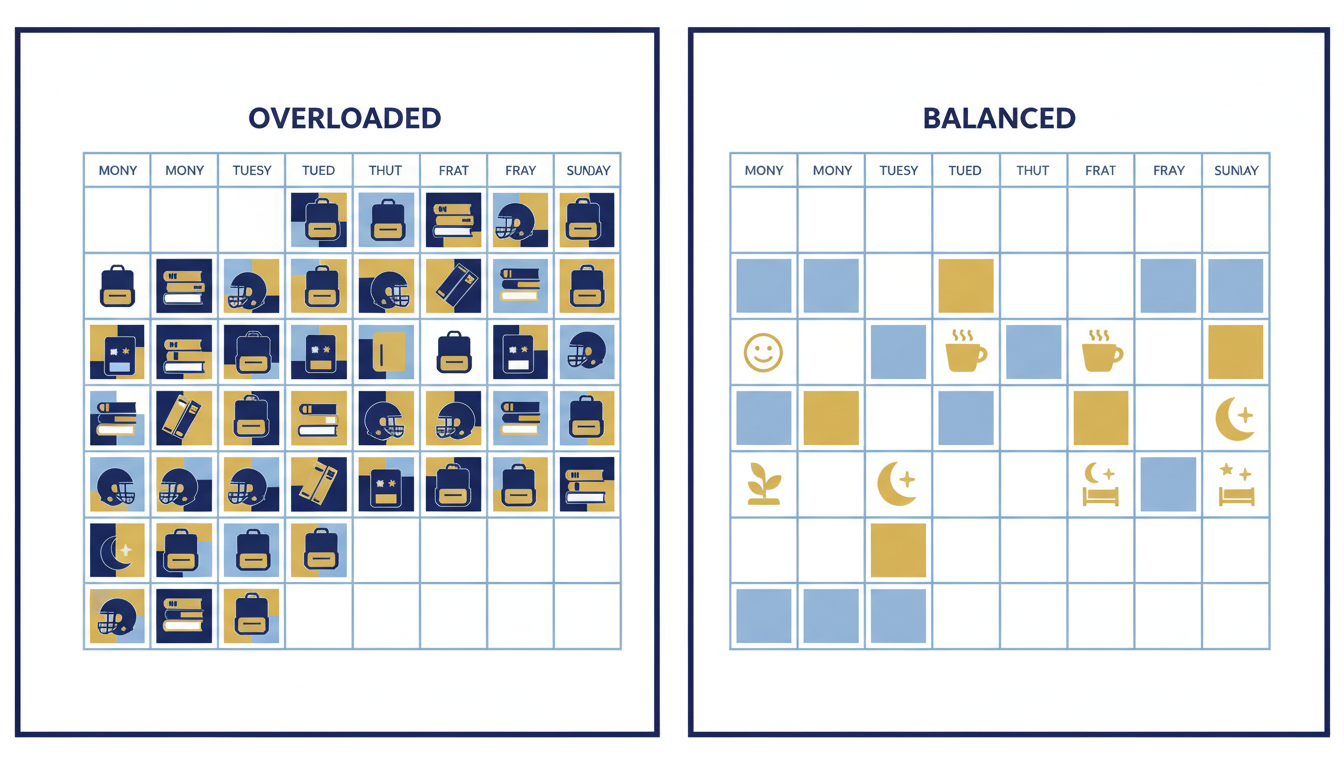
Step 3: Break big assignments into smaller tasks
An assignment that says ‘finish project’ can feel overwhelming, especially when you have multiple classes to keep up with. Instead, split it into things like reading the instructions, setting up your files, completing a first draft, and checking your work. Try working in focused blocks of 25 to 50 minutes and taking a short break between them. It is usually easier to get started when you know exactly what you need to do.
Part 2: Improve your sleep and manage stress
Step 4: Set a realistic sleep schedule
Try to go to bed and wake up at roughly the same time, including on weekends when possible. The CDC recommends at least seven hours of sleep per night for adults ages 18 to 60. Rather than pulling an all-nighter every time something is due, work backward from your morning class to figure out when you need to wind down. Your schedule should include sleep, not just whatever time happens to be left over.
Step 5: Create a wind-down routine
Give yourself a little time before bed when you’re not doing homework or checking deadlines. You can put your phone down, dim the lights, shower, or read something unrelated to class. The CDC also recommends avoiding caffeine in the afternoon or evening, so try not to rely on late-night caffeine to push through assignments. Getting into a repeatable routine can make it easier to fall asleep when you actually need to.
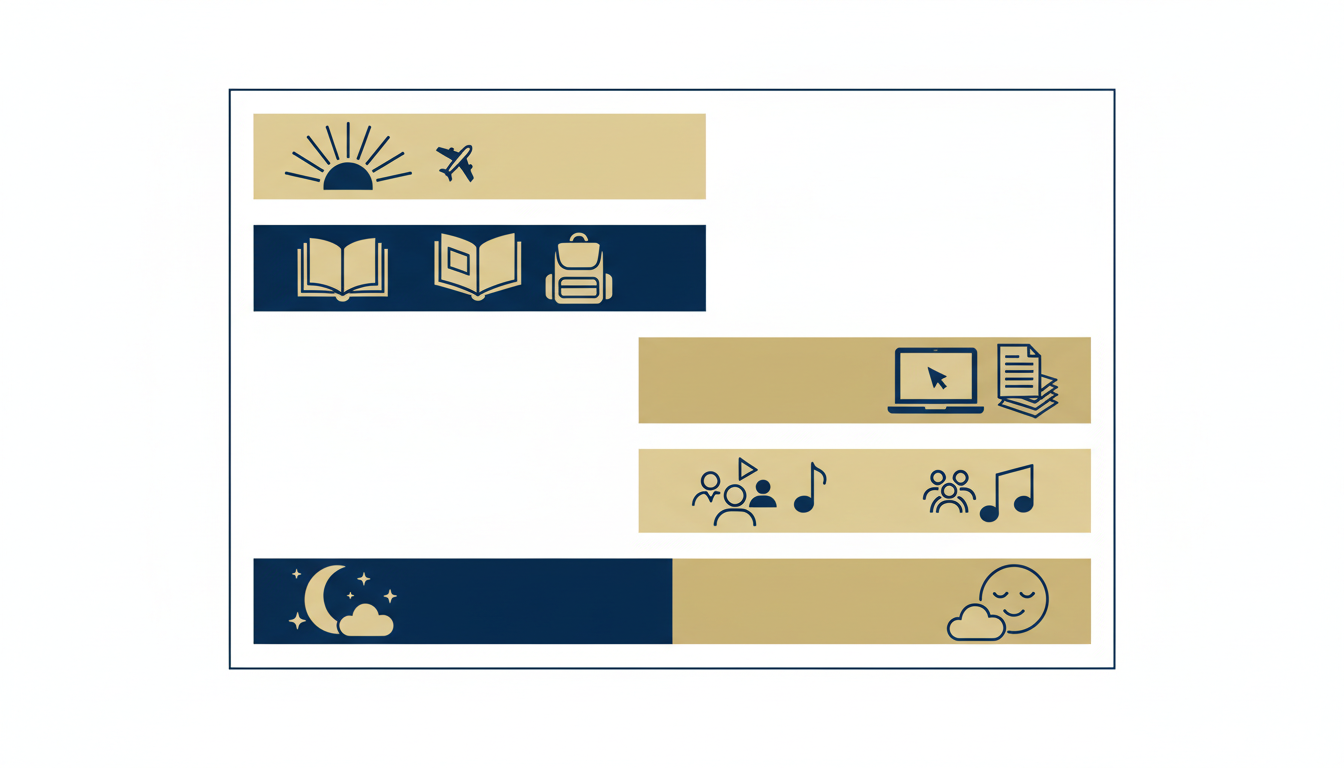
Step 6: Make time for meals, movement, and breaks
It is really easy to skip meals or stay at your desk for hours when you’re busy. Put meal breaks into your schedule and try to get outside or move around during the day. Even a short walk around campus or a quick break between study sessions can help you feel less stuck. The NIH’s emotional wellness guidance recommends physical activity and regular relaxation to help with stress. Don’t think of taking breaks as wasting time. They’re part of making your routine sustainable.
Part 3: Make time for your social life
Step 7: Leave room for friends and activities
College shouldn’t just be class and homework. Plan time to meet friends, go to a club event, or just hang out without feeling like you need to be productive. You also don’t need to join every organization during your first semester. Pick a couple of things you genuinely enjoy and see how they fit into your week. Having people to talk to can make the adjustment to Tech a lot easier. The NIH also recommends building a social support network when managing stress.

Step 8: Recognize when stress is building up
Pay attention when you’re constantly exhausted, having trouble focusing, or feeling overwhelmed by assignments. If that happens, check whether your schedule is too packed and which commitments you can change. Talk with a friend, resident assistant, academic advisor, or campus support professional if you need help. Georgia Tech’s Center for Mental Health Care & Resources offers counseling for students facing stress and other challenges. Asking for support early is much better than waiting until everything piles up.
Part 4: Maintain your routine throughout the semester
Step 9: Review what worked and make changes
At the end of each week, think about what went well and what didn’t. Did you leave enough time for an assignment? Were you staying up too late? Did you actually get time to relax? Use those answers to make one or two changes to the next week’s schedule. Your first semester is going to involve some trial and error, so the goal is to find habits you can stick with rather than making the perfect plan on day one.
Where to find support
If you’re having trouble staying on top of everything, reach out before it becomes unmanageable. Georgia Tech’s health and well-being resources and academic success resources are good places to start. You can also talk to your advisor or someone you trust about adjusting your workload.
Final takeaway
The biggest thing to remember is that figuring out your routine takes time. Your first semester doesn’t have to be perfect, and you shouldn’t have to choose between doing well in class and taking care of yourself. Start with a calendar, protect your sleep, and make small adjustments as you learn what works for you.
Sources and image credits
- Centers for Disease Control and Prevention, About Sleep (2024). Source for recommended sleep duration and consistent sleep habits.
- National Institutes of Health, Emotional Wellness Toolkit. Source for physical activity, social connection, priorities, and stress management.
- Georgia Tech, Center for Mental Health Care & Resources: Counseling. Campus counseling resource.
- Original interview with JJ, first-year Georgia Tech football player, conducted by our project group. Unpublished primary source.
- Visual credits: two schedule infographics and the social-life illustration were generated specifically for this guide. The Georgia Tech library photograph was sourced from the GT How WordPress media library; original photographer attribution is not listed in its media record.


Leave a Reply