
How first-year Georgia Tech athletes can make friends outside their team
Ronit Khanna, Jace Daurie, Riyan Patel
Why This Matters
If you are a first-year athlete at Georgia Tech, most of your day is already planned. Lift starts at 6 AM, practice is late morning, and class, meals, and extra skill work fill most of what is left. Most athletes handle this schedule well. The harder question is where new friends fit in.
We asked a first year basketball player what part of college he was still figuring out. His classes were going fine, and he had built his schedule with his athletics advisor. His answer was about people. Almost all of his social time was with teammates. He wanted to meet students outside the team, but he could not see when.
Teammates are a strong support system. Still, a social life built only around the team can shrink fast after an injury, a transfer, or the end of a season. The NCAA’s GOALS study names time demands as one of the main pressures on college athletes, and it also tracks whether athletes feel like part of their campus community. Feeling connected outside your sport is part of doing well in college.
You do not need a free afternoon to change this. Thirty minutes that repeat every week is enough to start. In this guide, you will map your week to find open time, use classes, meals, and your dorm to meet people, pick one or two clubs that can work around practice, and plan ahead so those friendships last through the season.
How this differs from the existing GTHow post “How to Find Your Place at Georgia Tech” is that this post is written for all first years. Ours is written for students whose schedules are set by coaches and travel, so each step starts from fixed commitments and covers the change between off-season and in-season.
Before You Start
- Your practice and class schedule
- A phone calendar
- Your GT login for GT Engage
- About 30 minutes
Eight Steps to Meeting People Outside Your Team
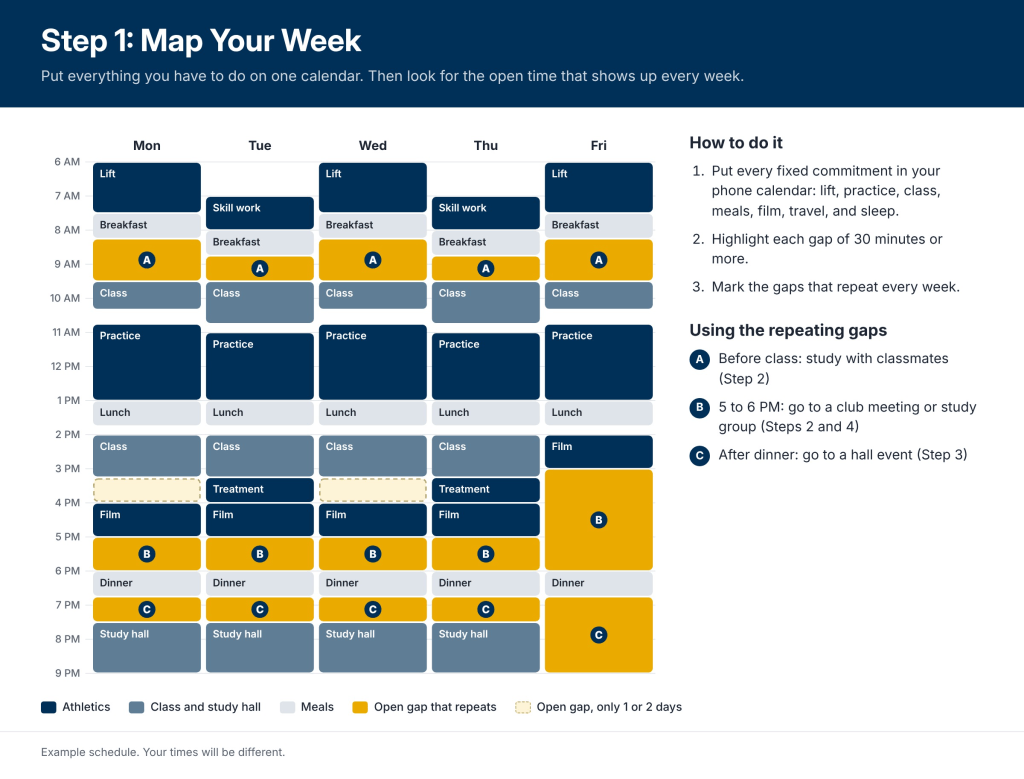
Step 1: Map Your Week
- Put every fixed commitment in your phone calendar: lift, practice, class, meals, film, travel, and sleep.
- Highlight each gap of 30 minutes or more.
- Mark the gaps that repeat every week. You will use these in the next steps.
Step 2: Turn Classes into Study Groups
- Sit near the same two or three classmates in each lecture.
- Suggest studying together before a quiz, during one of your repeating gaps.
- Meet in places you already pass through, like the library or Clough Commons.

Step 3: Get to Know Your Residence Hall
- Introduce yourself to your resident advisor (RA) and ask about floor events.
- Go to one hall event that falls in an open gap, even for 20 minutes.
- Keep your door open during downtime so neighbors can stop by.
Step 4: Join One or Two Flexible Clubs
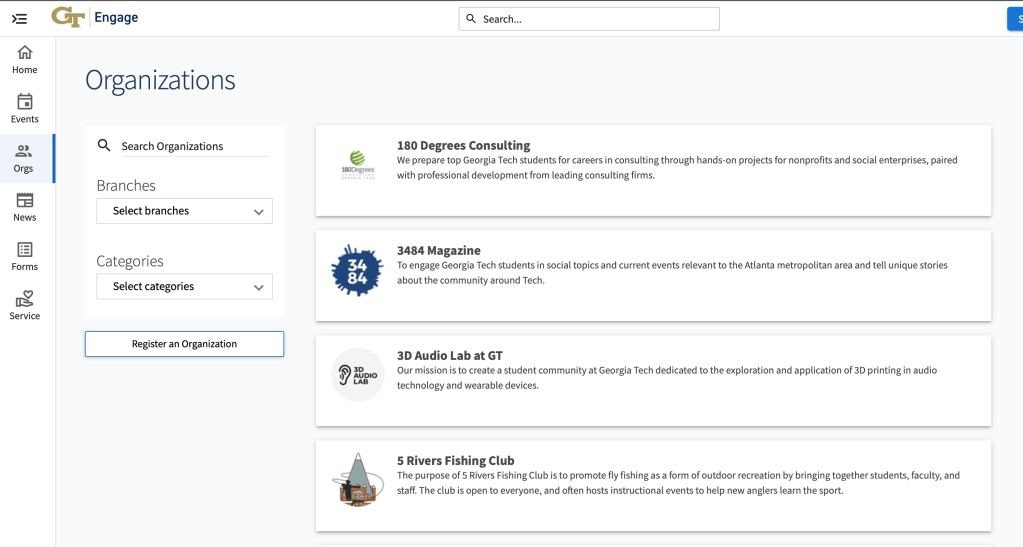
- Log in to GT Engage and search by interest.
- Look for clubs that meet in the evening or on weekends and let members drop in.
- Message a club officer before your first meeting and tell them about your practice schedule.
Step 5: Use Meals to Meet People
- Invite a classmate or hall neighbor to a meal you were going to eat anyway.
- Pick a regular time and place so people know where to find you.
- Spend time at the Student Center between commitments instead of going straight back to your room.
Step 6: Meet Athletes from Other Teams
- Go to Total Person Program workshops and events, which include athletes from many sports.
- Ask your team’s Student-Athlete Advisory Board (SAAB) representative about community service days.
- Watch another team’s home game with a friend from class.
Step 7: Go to One-Time Campus Events
- Check GT Engage each week for events like trivia nights, cultural festivals, or club fairs.
- Pick events that do not require signing up, so a schedule change costs you nothing.
- Bring someone you already know.
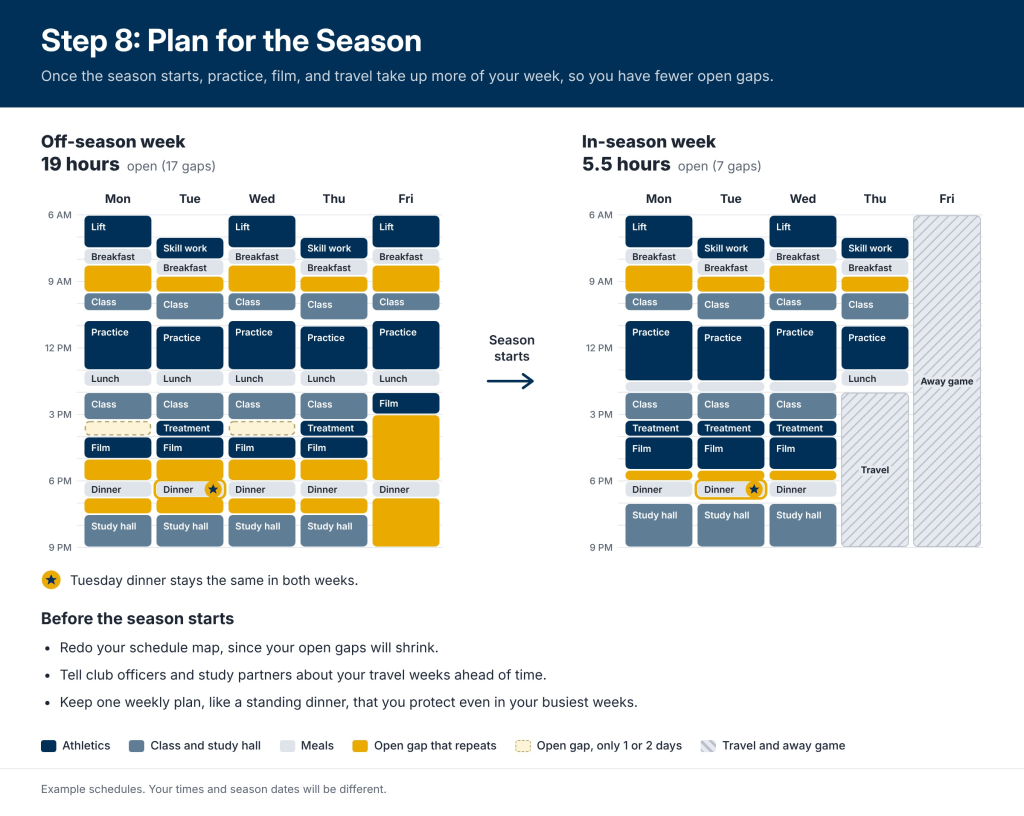
Step 8: Plan for the Season
- Redo your schedule map before the season starts, since your open gaps will shrink.
- Tell club officers and study partners about your travel weeks ahead of time.
- Keep one weekly plan, like a standing dinner, that you protect even in your busiest weeks.
Conclusion
Building friendships outside your team does not require a perfect schedule or hours of free time. It starts with using the gaps you already have and showing up consistently. A study group, a regular dinner, or one flexible club can become a place where people know you beyond your sport. Your schedule will change throughout the year, especially during the season, but small routines can stay. Keep checking your calendar, communicate when travel affects your plans, and protect one connection each week. Over time, those small choices make Georgia Tech feel more like a community where you can truly belong.
More Resources
- Georgia Tech Total Person Program: GT Athletics programs for leadership, wellness, and community outreach
- Center for Student Engagement: student organizations and guides for using GT Engage
- GT Engage: directory of registered student organizations and campus events
- NCAA 2020 GOALS Study Results: national data on athletes’ time demands and sense of belonging
- Santos and Sagas (2023), “Academic Identity, School Belongingness, Athletic Identity, and Athletic Expectations as Predictors of Academic and Athletic Time Use of College Athletes”: peer-reviewed study using NCAA GOALS data


Leave a Reply