
Table of Contents
- Introduction
- Step 1: Identify Your Skills
- Step 2: Start Exploring Career Interests
- Step 3: Build a Resume
- Step 4: Take Career Development Classes
- Step 5: Start Networking
- Step 6: Apply to Jobs
- Step 7: Attend Career Fairs and Events
Introduction
Student athletes at GT often come in with their mind set on one thing: going pro. In reality, less than 2% of NCAA athletes actually reach the big leagues. This leaves student athletes around the country scrambling without a backup plan. The packed schedules of athletes make it harder, since practices, travel, and classes leave little time for career fairs or other events. Most athletes don’t take the very likely scenario of not making it as a pro into consideration, which is where this guide comes in.

In this guide, we provide a step-by-step guide for student athletes to create a plan B for job opportunities after graduation. Our guide is built around an athlete’s schedule and gives practical steps for exploring career paths, finding career advising for athletes, turning sports experience into resume skills, timing applications around the season, and networking with former athletes. The goal is to give student athletes a realistic Plan B without giving up their sport.
Step 1: Identify Your Skills
Athletes have many transferable skills that they often don’t realize. For example, team sports naturally require players to build communication skills. Identifying the skills you have learned from athletics is a great first step to working towards building a career plan.
Using Your Athletic Experiences
Throughout your athletic journey, you’ve had to take steps to reach your goals. Perhaps you started waking up earlier everyday to practice earlier or had to persevere through an injury.
Start by reflecting on your journey so far and identify specific challenges or things you have had to change in your life to reach where you are now. What were the tough moments or things you learned from coaches and teammates?
As you reflect consider:
- Have you made any changes to your schedule since committing to athletics such as waking up earlier?
- What injuries have you faced and how did you deal with them?
- How did you stay motivated when things weren’t going your way?
- How do you communicate with teammates in games?
Thinking About Your Strengths
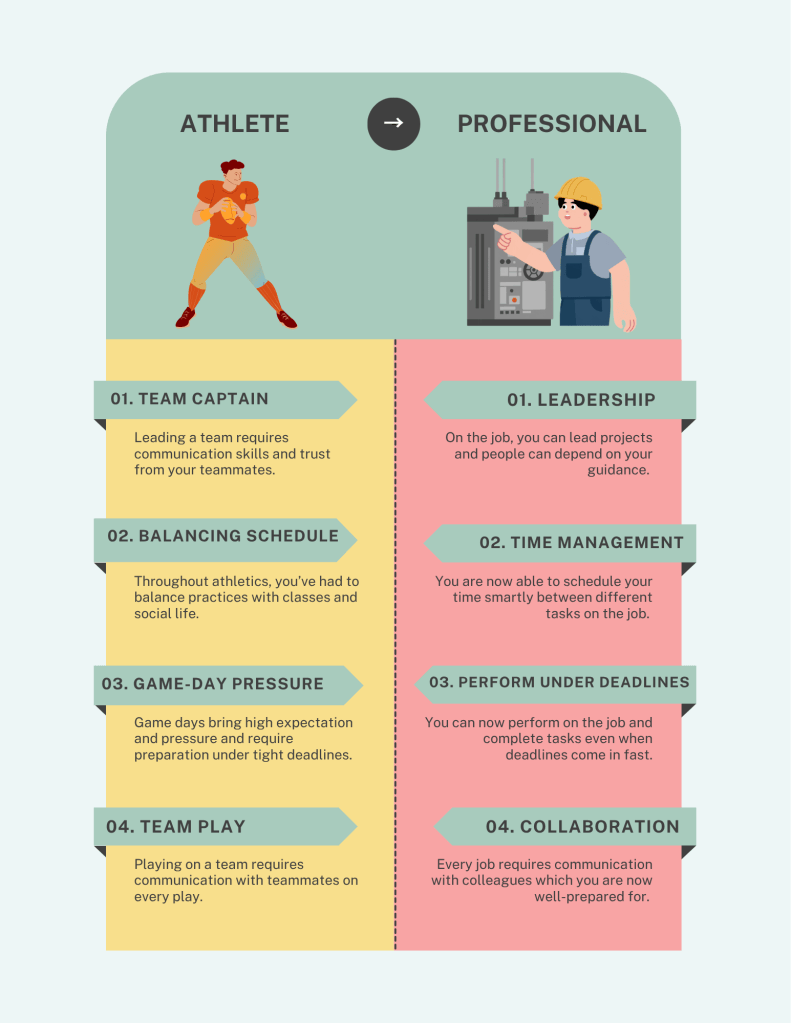
Now that you’ve reflected on your athletic journey, it’s time to identify how those challenges and moments transfer to career-ready skills. The infographic below gives examples of skills you may have picked up from sports. The hope of this infographic is to share what skills can be applied to the professional workplace from playing at university. It can help prepare them for resume planning and interview prep going in both confidence and understanding that they can apply their experience with sports to their career.
Step 2: Start Exploring Career Interests
Goal: Help student athletes discover potential career paths by connecting the goals they’ve developed through sports to different jobs that match their interest.
Transferring Your Strengths to Interests
Now that you have identified your strengths, the next step is to figure out what careers interest you, and can see yourself making a career out of it. Just because you are good at something doesn’t mean you’ll necessarily enjoy doing it everyday. Begin by thinking of your favorite hobbies, classes, and the type of work environment you envision yourself working in. At this point you have a solid idea, and it’s time to research different industries and job descriptions to understand what professionals do in those roles.
Try identifying three careers that interest you and learning what responsibilities to expect, qualifications needed, and opportunities for growth. Doing this will help you narrow down your options before building and tailoring your resume.
Step 3: Build a Resume
Establishing a career in the workplace starts with building a strong resume, and is the beginning of unlocking internships and jobs. Although, as a student athlete you most likely do not have much traditional work experience due to demanding schedules, that doesn’t mean you cannot create a strong and competitive resume.
Resume Components
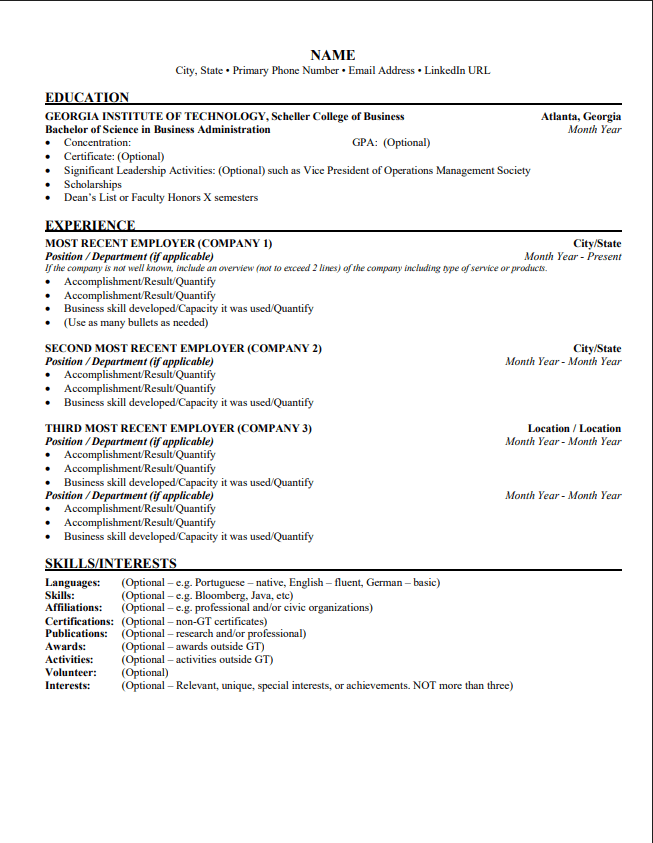
Begin with including contact information, education, work experience, skills, involvement in extracurriculars, and leadership roles. Make sure you highlight your athletic involvement and any accomplishments that will help you stand out as being capable of succeeding in the professional environment. Keep your resume concise, easy to read and the standard for undergraduate students is one page long.
Gatech Templates
If you are unsure where to start, Georgia Tech offers resume templates and career resources that are there for students to help build professional resumes. Using a template can make it easy to organize a collection of everything you want to incorporate ensuring it is up to the industry standard and meets what employers are looking for. Take a look at the attached Georgia Tech resume template and tailor it to you and the job you are applying to.
Step 4: Take Career Development Classes
As a student at GT, you have the opportunity to take classes and attend workshops that will help you in your job search. These opportunities can help you identify career interests, strengthen your profile, and learn how to navigate the job process.
MGT 3599
One course Georgia Tech offers is MGT 3599: Career Development Workshop. This is a one-credit course that teaches skills and strategies for identifying a career path. It also gives practical advice for navigating a job search in the management field.
Speak with your advisor to see how this course can count to your degree and fit into your schedule.
Career Center Workshops
The Georgia Tech Career Center has events year-round to help students develop skills for their job search. For example, these events cover topics such as:
- Resume building
- Job interview prep
- Networking with employers
- Applying to jobs
To find upcoming events, check out the career center calendar.
Step 5: Start Networking
Oftentimes, using the people you know is the easiest way to get a job. The Georgia Tech Scheller College of Business estimates that networking has a 12x higher success rate than distributing resumes. A recruiter reading your resume online doesn’t know what type of person you are in real life, but a coach who you’ve talked to every week for years knows all about your character and work ethic. Getting a recommendation from someone who knows you well can be a great way to fast-track your job search.
Listing Who You Know
The easiest way to start networking is by listing out people you may know. Your first instinct might be to think this only includes your parents or friends, but there are many others who you should include as well.
Consider including:
- Extended family members such as uncles or cousins
- Teammates and former teammates: include anyone you’ve played with, including high school teammates
- Professors: student athletes often have smaller class sizes, so you may have been able to develop a closer relationship with a professor
- Coaches and athletic stuff: anyone who mentored you can likely speak to your work ethic
Reaching Out
To start off, make an account on LinkedIn. You may find that many professors, coaches, and other people you have met in your athletic journey already have a profile that you can connect with. LinkedIn gives you an easy way to connect with these people which can be especially useful if you don’t have their contact information.
Next up, begin reaching out to people in your network and schedule 1-on-1 conversations. During these conversations, consider keeping the following advice in mind:
- Come prepared: keep a list of questions to ask
- Narrow your skills: don’t just ask for any job, narrow down your interests, so the other person can help you effectively
- Learn about their field: even if you’ve never heard of their profession, their work could be a potential career path for you
- Get other connections from them: even if they aren’t able to get you a job, they might know someone who can
Step 6: Apply to Jobs
To land a job, you have to apply. But for many students, this is harder than it sounds. There are numerous websites which can lead a student to getting lost. In this section, we break down the tools to use and how to stand out.
Available Tools
There are many websites that can help students search for jobs. Instead of using all of them, start with 1-2 and go from there.
Consider starting with the following websites:
- CareerBuzz: Georgia Tech’s career search platform, filled with resources and opportunities
- LinkedIn: allows you to search for jobs and connect with people from companies you’re interested in
- Indeed: a large job board with thousands of jobs
How to Stand Out
Finding a job posting and submitting a resume is easy, but actually landing interviews and offers is a tougher process. Employers can receive hundreds of applications, and it can be difficult to narrow down the best candidates. To stand out, follow these tips:
- Focus on job areas that actually match your skills rather than mass-applying to any type of job
- Highlight skills you’ve gained from athletics
- Try to get a job referral if you can from networking to boost your choices
- Tailor your resume: keep multiple versions of your resume at hand that include keywords listed in the specific job description
Remember that job applications are a long process with many qualified candidates. Stay patient in your search and continue to build your resume.
Step 7: Attend Career Fairs and Events
Career fairs are a great opportunity for all students including student athletes, to explore jobs that may interest and network with employers.
Student-Athlete Career Fair
Georgia Tech understands the demanding schedules of everything that comes with being a student athlete. Every year Georgia Tech hosts career events that are exclusive to student athletes, and these events can provide opportunities for students to connect with employers who value the experience of balancing academics and athletics.

Other Career Fairs
In addition to student athlete career events fairs, Georgia Tech offers a variety of career fairs and networking events throughout the year for all students from different majors. These events allow you to explore more opportunities outside of athletics and learn about industries you may not have considered before. Regularly check your Georgia Tech email, Career Buzz, and Georgia Tech’s Career services for upcoming events that fit your schedule.
Note: After attending a career fair make sure to follow up with recruiters through email thanking them for the time and the opportunity to speak with them. This will show expressed interest in future opportunities within the company.


Leave a Reply