

A Guide to Becoming a Yellow Jacket Stress-Free
Written by Sanjita Kondamadugula & Elil Mohankumar
Transferring to Georgia Tech through the conditional transfer pathway is an exciting opportunity, but the process can be confusing to navigate. Unlike traditional transfer or first-year admission, conditional transfer has its own requirements, deadlines, and expectations that students must carefully follow. After admission, students also face important decisions about course registration, transfer credits, and academic planning that can affect their graduation timeline. Without clear guidance, students may overlook application requirements, misunderstand transfer equivalencies, register for the wrong courses, or struggle to find major-specific information spread across multiple university websites. These mistakes can create unnecessary stress and potentially delay admission or graduation.
This guide breaks the conditional transfer journey into clear, manageable steps. Rather than focusing only on the application, it provides resources for every stage of the process, including application checklists, transfer credit planning, course registration, graduation requirements, and major-specific guidance. By bringing everything together in one place, this website helps students make informed decisions and transition to Georgia Tech with confidence.
Here is an overview of the transfer pathway and guidelines for what needs to get done every semester:
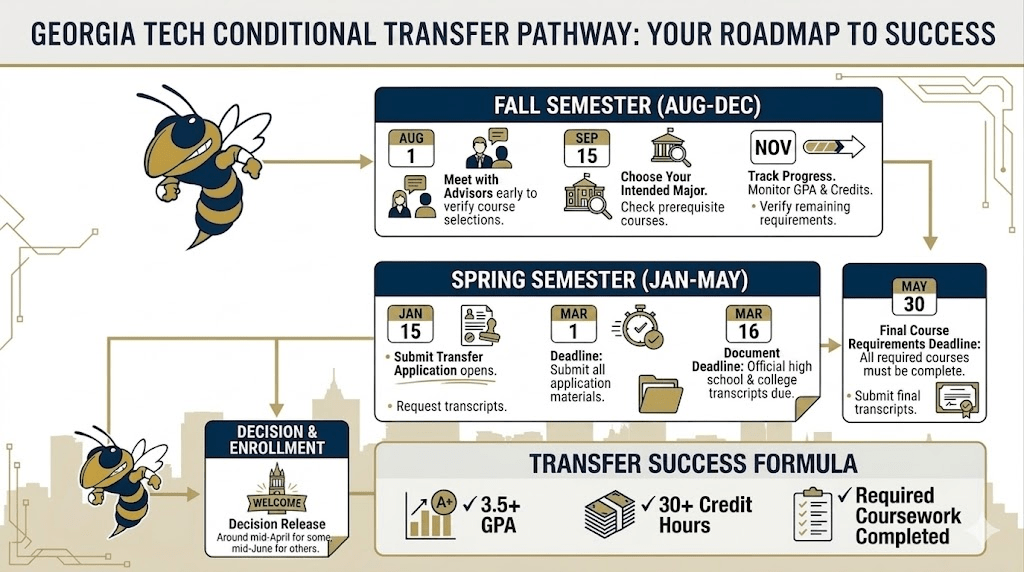
Table of Contents
- Step 1: Choose Your Major
- Step 2: Meet the GPA, Credit, and Course Requirements
- Step 3: Use the Transfer Equivalency Table to Choose Classes
- Step 4: Plan Your Freshman Year Schedule
- Step 5: Submit Your Transfer Application
- Step 6: Acceptance & Next Steps
- Step 7: Plan for Graduation with DegreeWorks
Step 1: Choose Your Major
One of the first things you’ll want to do is decide which Georgia Tech major you plan to pursue. Your conditional transfer pathway is tied to specific majors based on your original first year admission offer, so check your pathway agreement in your admission portal to see which majors you are eligible for.
Holistically Reviewed Majors
Not every major follows the same admission process. While many pathway students are guaranteed admission if they meet the required GPA and course requirements, Computer Science uses a holistic review process. In addition to your grades, admissions may consider factors such as extracurricular involvement, leadership experience, and your application essays. If you are planning to apply as a Computer Science major, staying involved on campus and building a well rounded application during your freshman year can strengthen your application.
Graduation Requirements by Major
Every major has different graduation requirements, including required courses, total credit hours, and, in some cases, specialized concentrations or threads. Reviewing these requirements early can help you choose the right classes and avoid delays that could extend your time to graduation. You can find these requirements by major here!
Step 2: Meet the GPA, Credit, and Course Requirements
Your conditional transfer pathway includes specific academic requirements that must be completed before you enroll at Georgia Tech. A 3.5 overall GPA and a 3.5 math and science GPA is required to transfer. You will also need to complete the required number of transferable credit hours outlined in your pathway agreement.
In addition to GPA requirements, each major has prerequisite courses that must be completed before transferring. Checking these requirements before registering for classes can help ensure you stay on track.

Step 3: Use the Transfer Equivalency Table to Choose Classes
Before signing up for classes at your current institution, verify that they will transfer to Georgia Tech by using the Transfer Equivalency Table. This tool allows you to compare courses at your school with their Georgia Tech equivalents. If a course transfers only as elective credit, it may not fulfill a required course for your degree, so checking ahead of time can save you from taking unnecessary classes.
You can access the table here, or by visiting registrar.gatech.edu/info/transfer-credit-equivalency-tables.
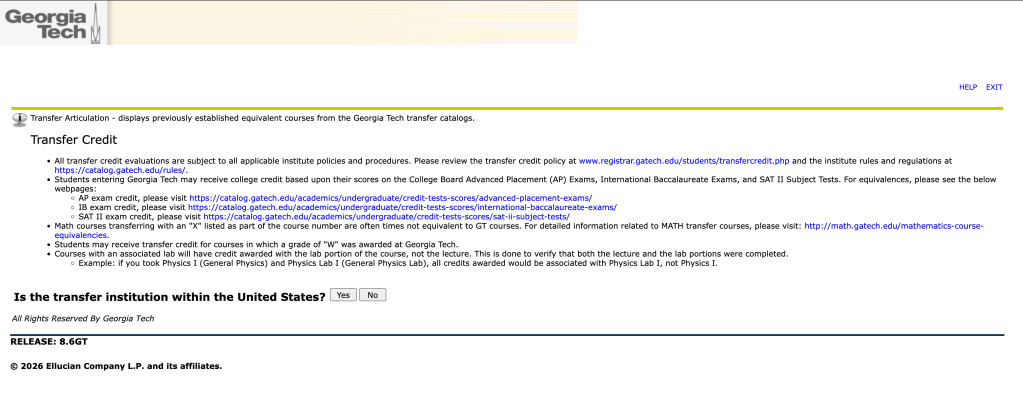
This is the first thing you will see when going to the transfer equivalency website, select if your current institution is within the USA. 
Now select the state or country your current institution is in. 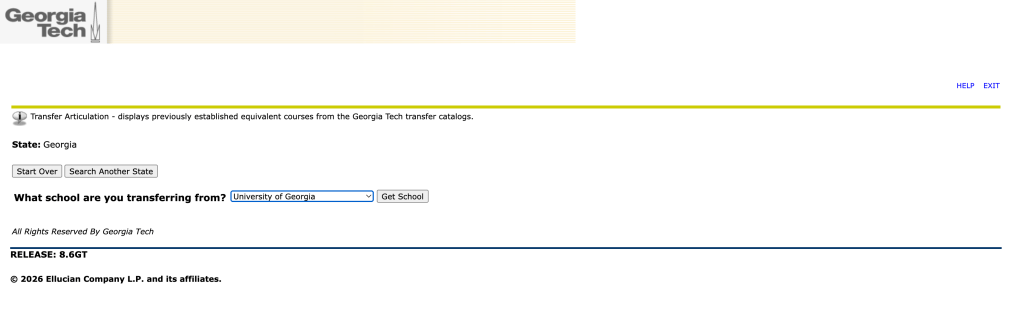
After you do that, you will see this page. This is where you select your current school. If you do not see your current school, then make sure you have picked your state correctly. 
Now you should select your subject of the course you are searching up as well as the term you are taking the class. This is the subject of your current institution, not what GT has it as. 
This is an example of your final transfer equivalency table after all your filters, you can see what your course transfer to and what credits you may get.
Step 4: Plan Your Freshman Year Schedule
Once you know which courses transfer, map out your first two semesters with your pathway requirements in mind. Careful planning now can prevent scheduling issues later and help you arrive at Georgia Tech with as many requirements completed as possible.
Step 5: Submit Your Transfer Application
When the application opens, gather all required materials and submit them before the deadline. This typically includes your transfer application and official transcripts. Make sure your transcript also shows any courses currently in progress so admissions can confirm that you are on track to complete your pathway requirements before enrollment.
Step 6: Acceptance & Next Steps
After you are admitted, accept your offer, complete any required enrollment steps, and activate your Georgia Tech accounts. Many conditional transfer students begin during the summer term. Summer courses are typically faster paced and can provide a helpful transition before the start of the fall semester.
Step 7: Plan for Graduation with DegreeWorks
After your transfer credits have been evaluated, use DegreeWorks to see how they apply to your degree requirements. The tool shows which requirements you have already completed and which ones remain. Using DegreeWorks alongside GT Scheduler and meeting with your academic advisor can make it easier to build future schedules and stay on track for graduation.
Conclusion
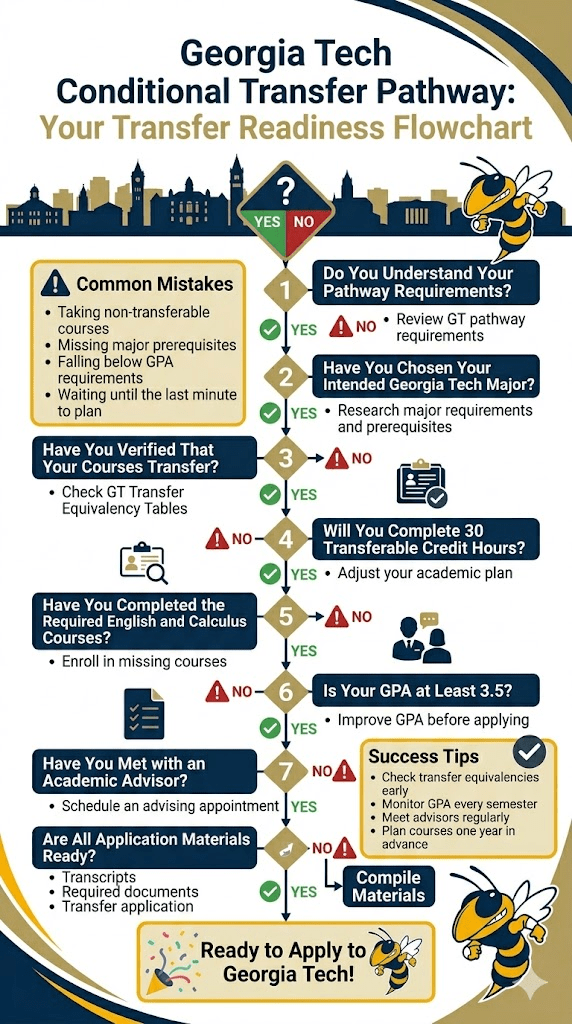
Successfully transferring through Georgia Tech’s Conditional Transfer Pathway comes down to planning ahead, staying organized, and consistently monitoring your academic progress. By understanding the requirements, completing the necessary coursework, and preparing your application early, you can put yourself in the strongest possible position for admission. Use the flowchart below as a final checklist to make sure you’ve completed every step before submitting your application.


Leave a Reply