
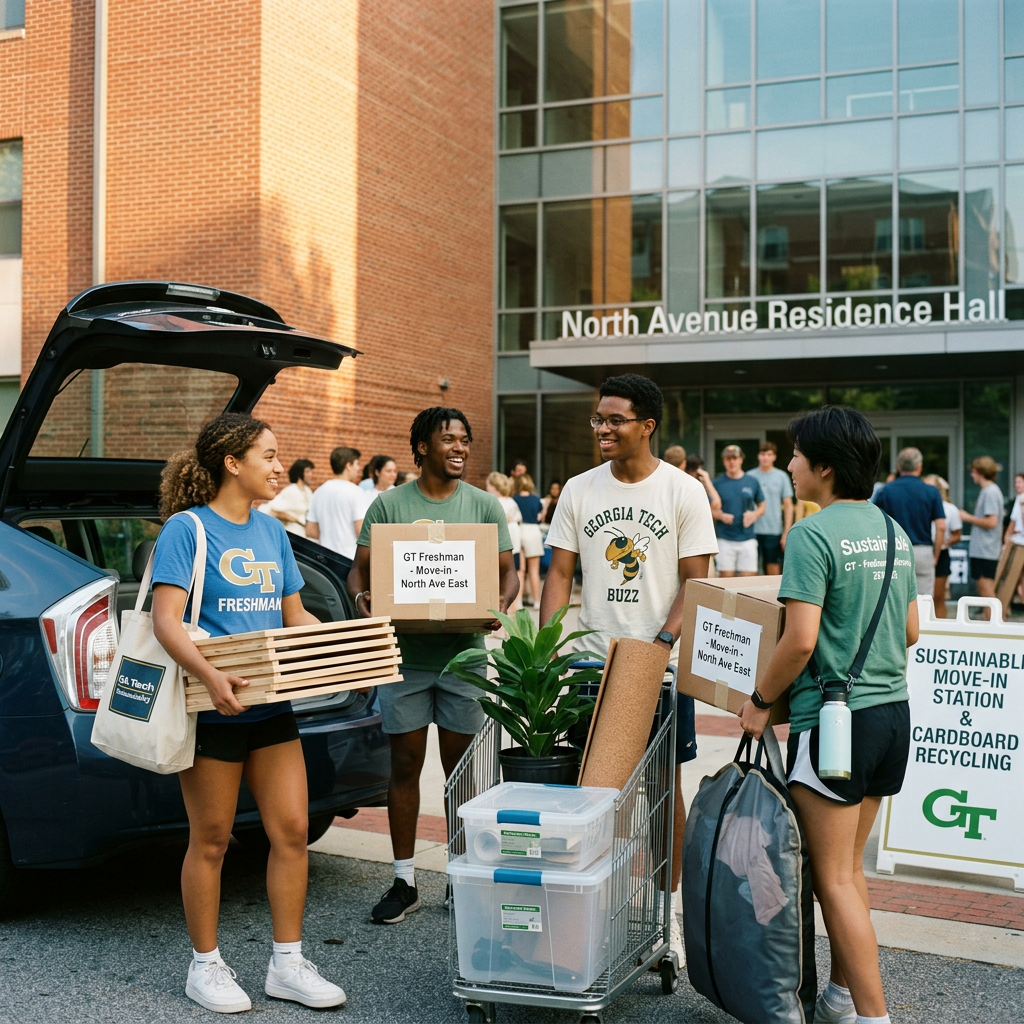
A new student’s guide to buying less but still having more!
Created by Akshat Channashetti and Daksh Parekh
By planning ahead and making intentional purchasing decisions, students can reduce waste, save money, and contribute to Georgia Tech’s sustainability goals from the first day they move in.
Table of Contents:
- Check Georgia Tech Housing Rules
- Coordinate With Your Roommate
- Sort Items Into Buy, Borrow, Skip, or Buy Later
- Choose Multi-Use Items
- Reduce Packaging Before Move-In
- Sort Waste While Unpacking
- Share or Donate Extra Items
- Review What You Actually Used
- Quick Checklist
- Conclusion
- Check Georgia Tech Housing Rules Before Shopping
Make checking Georgia Tech Housing’s official move-in and “items to bring” guidance your first step because it helps you avoid buying items that are unnecessary, unsafe, or not allowed in the residence hall. This should be your primary source over TikTok, retail checklists, or random dorm videos.
Pay close attention to:
- Bedding size
- Furniture rules
- Appliance limits
- Prohibited items
- What your room already includes
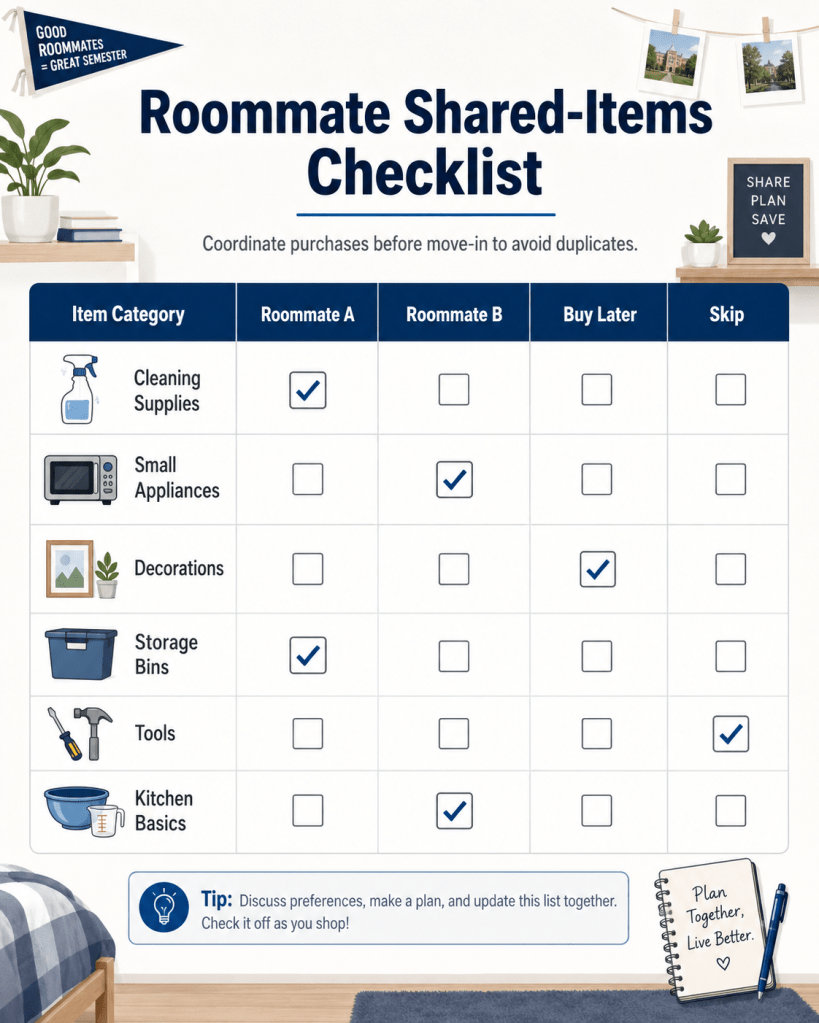
2. Coordinate With Your Roommate Before Buying Shared Items
Coordinate with your roommate on who brings shared items before either person shops. This will help stop and prevent duplicate purchases, wasted money, and extra clutter.
Shared items may include:
- Microwave or mini fridge, if allowed
- Cleaning supplies
- Rugs
- Storage bins
- Decorations
- Tools
- Basic kitchen items
This is one of the largest factors to reducing move-in waste. Being open and willing to share common items can help cut down waste by almost 50%.
3. Sort Items Into Buy, Borrow, Skip, or Buy Later
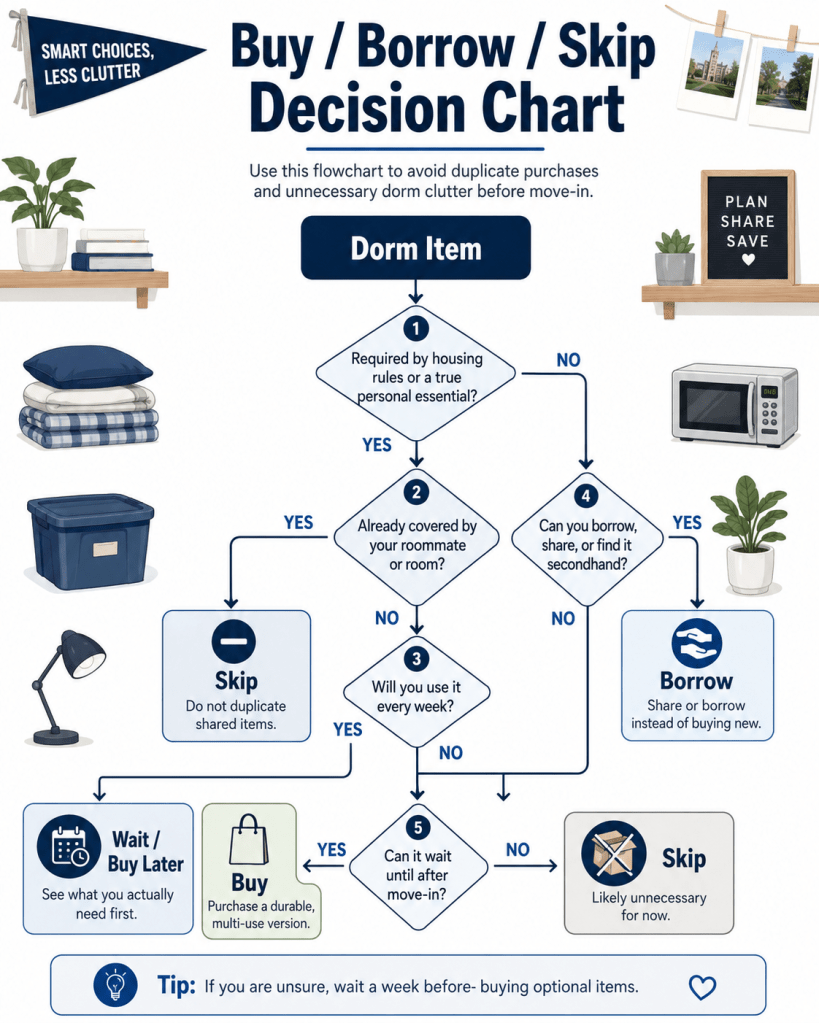
Divide your supplies into four groups AFTER a conversation with your roommate.
Buy
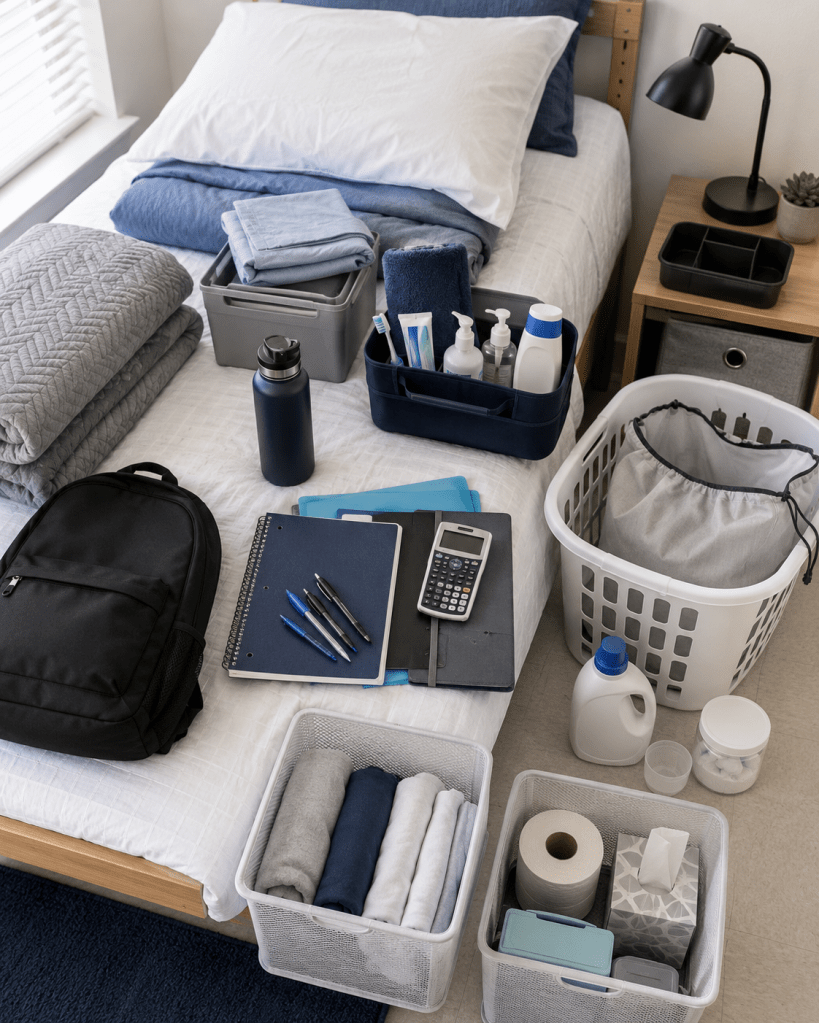
These represent true essentials like bedding, toiletries, medications, laundry supplies, and basic school materials. You should prioritize getting your own.
Borrow
These are items you may be able to borrow from family, friends, or your roommate. These can be items like microwaves or mini-fridges.
Skip
These are items that are prohibited, duplicated, too large, too expensive, or unlikely to be used. For instance, a space heater may be either dangerous or unnecessary in your dorm.
Buy Later
These are optional items you can wait on until you understand your room better. For example, choosing to buy a futon or TV may have to wait until you’re in your room and understand how much space you have to work with.
4. Choose Multi-Use Items When You Do Buy
Choose items that serve more than one purpose when you buy something. Avoid fragile, trendy, or hyper-specific items just because they appear on dorm inspiration lists. Think about function over form.
Some examples:
- Move-in storage containers can also be move-out containers.
- Reusable laundry bag can replace disposable bags.
- A small fan improves comfort without taking up much space.
- Durable bins are reusable every semester.
5. Reduce Packaging Before Move-In
Packaging is the primary source of move-in waste. Items like cardboard boxes, plastic wrap, foam inserts, shopping bags, and general product packaging are common sources of waste.
When possible, remove unnecessary packaging at home and recycle it correctly before arriving on campus. Ensure that you try and buy items with minimal packaging and ensure that you don’t remove the packaging off items that you may potentially return.
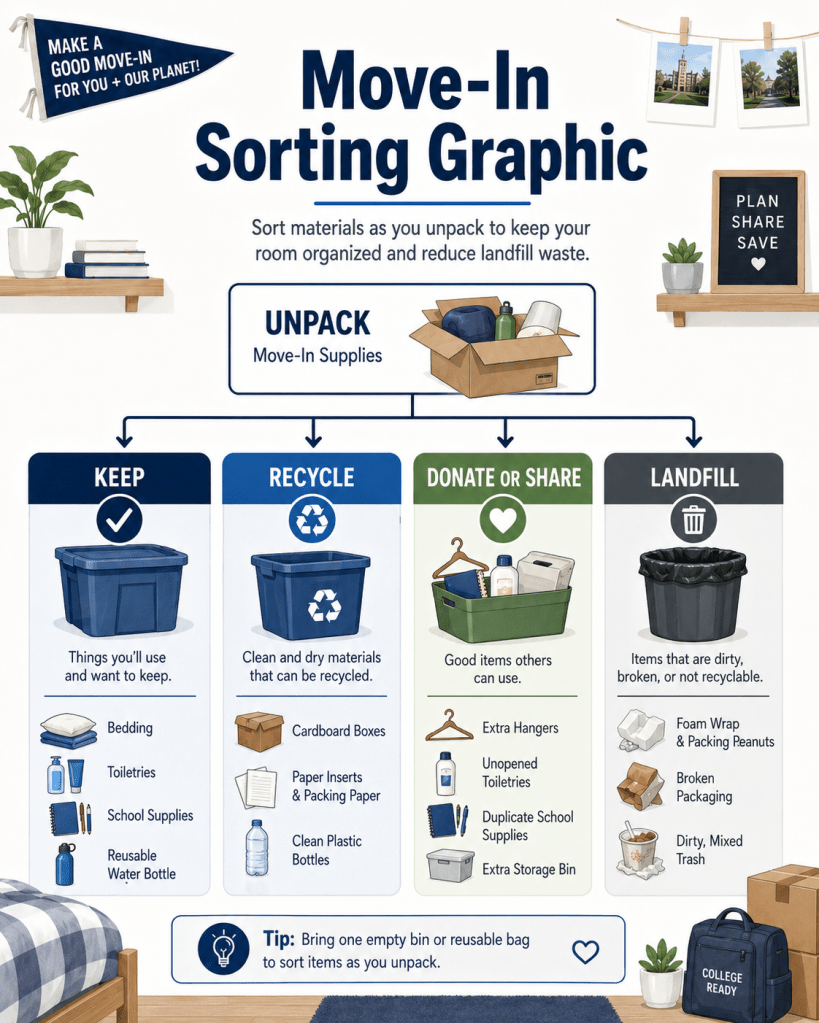
6. Sort Waste While Unpacking
Do not wait until the end of unpacking to deal with trash. Instead, sort materials as you unpack. Keep cardboard separate from plastic film, foam, and general trash.
Use four temporary piles:
- Keep
- Recycle
- Donate or share
- Landfill
7. Share or Donate Extra Items During the First Week
After unpacking, identify items you brought but do not need.
Instead of throwing them away, offer them to:
- Your roommate
- A friend
- A floor group chat
- Thrift store (https://news.gatech.edu/news/2024/08/08/green-goodbyes-thrift-shop-expands-tech-square)
This is useful for extra storage bins, hangers, unopened toiletries, duplicate cleaning supplies, and school supplies
Act early! If extra items sit in your room all semester, they are more likely to become move-out waste later
8. Review What You Actually Used After Two Weeks
Items that are still unopened or untouched after two weeks in the dorm may be returned, shared, stored, or donated.
Ask yourself key questions to assess whether you really need an item:
- Did I use this item at least once?
- Does this item solve a real problem in my room?
- Would I bring this item again if I moved tomorrow?
9. Quick Checklist
Before arriving on campus:
- Check Georgia Tech Housing’s official move-in guidance.
- Confirm what your room already includes.
- Talk with your roommate before shopping.
- Mark each item as buy, borrow, skip, or buy later.
- Prioritize durable and multi-use items.
- Avoid duplicate shared items.
- Reduce unnecessary packaging before move-in.
- Sort materials while unpacking.
- Share, donate, return, or store items you do not need.
- Review unused items two weeks after move-in.
10. Conclusion
Planning ahead can make your move-in even more sustainable. Georgia Tech provides several resources to help students reduce waste throughout the year. Before moving in, review the Georgia Tech Housing move-in information to understand what is provided in your residence hall. You can also explore the Office of Sustainability’s Zero Waste Resource Hub for recycling, composting, and waste reduction tips. If you no longer need usable items at the end of the semester, consider donating them instead of throwing them away so future students can benefit.
A low-waste move-in does not require a perfect sustainability plan. It requires better decisions before, during, and after move-in. This is achieved by checking housing rules, coordinating with roommates, buying only what you need, and sorting materials while unpacking, they reduce waste before it starts. This approach also makes move-in less overwhelming. You spend less money, carry fewer things, create less clutter, and build habits that help again during move-out.
The best plan isn’t always the longest or most complex. It’s the one that gets you started with college right away.


Leave a Reply