
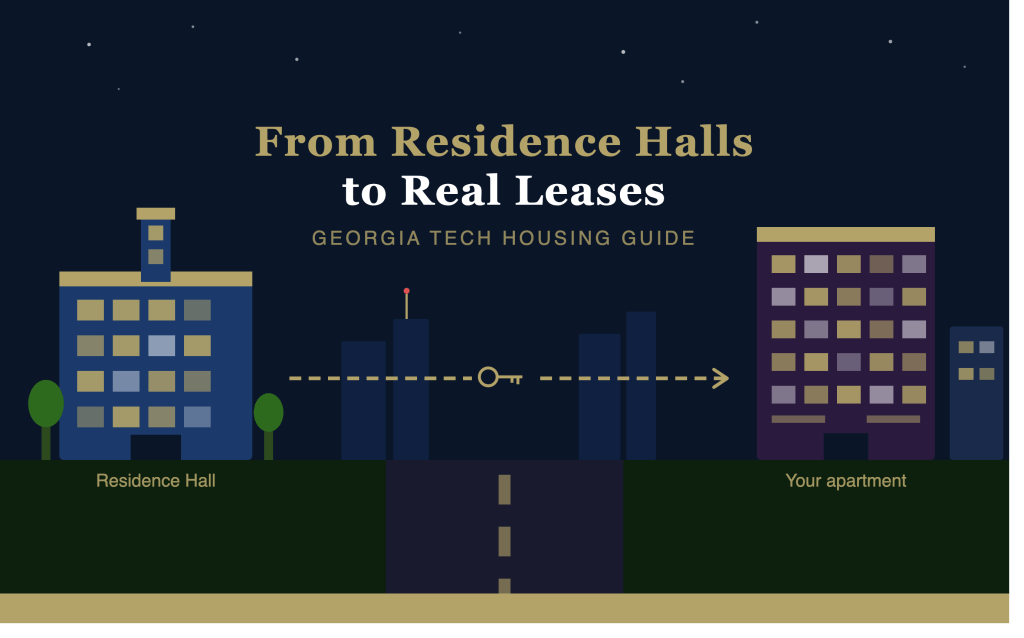
A Practical Guide for Georgia Tech Students Transitioning to Off-Campus Living
Written by Eric Lu, Tucker Mansfield, and Ava Williams
Introduction
Moving off campus is one of the first major steps toward independent living for many Georgia Tech students. While having an apartment can offer more privacy, freedom, and flexibility than a residence hall, it also comes with responsibilities that many students have never handled before. Students may need to compare rent prices, understand lease terms, coordinate with roommates, set up utilities, buy furniture, document apartment damage, and pay bills on time.
Without a clear plan, the process can become stressful and expensive. A student might sign a lease too quickly, overlook hidden fees, forget to ask about parking, or fail to document damage before moving in. These mistakes can lead to roommate conflict, unexpected costs, or problems getting a security deposit back.
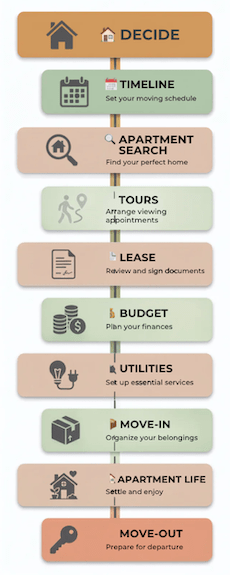
This guide breaks the process into ten clear steps. Instead of only helping students find an apartment, it walks them through the full transition from residence hall life to independent apartment living.

Quick Navigation
Before You Search:
Step 1: Decide If Off-Campus Living Is Right for You
Finding a Place:
Preparing to Move:
Step 8: Move In and Document Everything
Living off Campus:

Step 1: Decide If Off-Campus Living Is Right for You
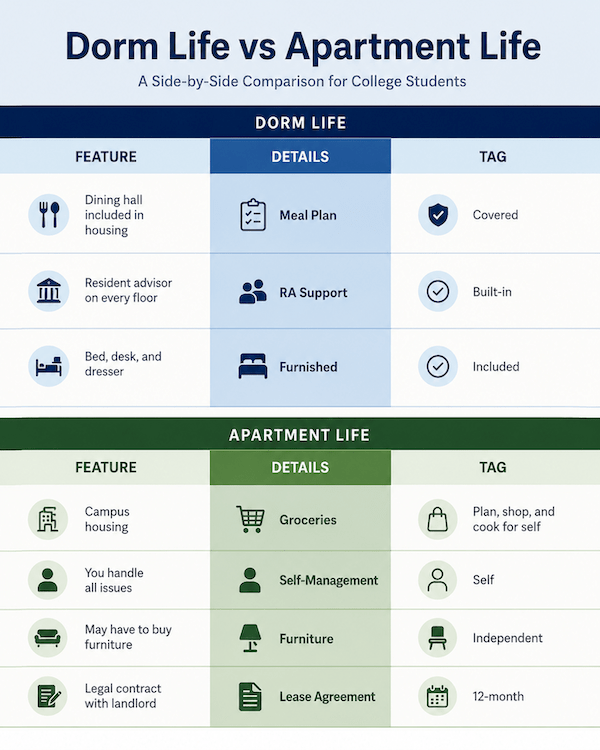
Before searching for apartments, decide whether off-campus living fits your budget, schedule, and lifestyle. Dorm life usually includes easier access to campus, meal plans, residence hall support, and fewer monthly responsibilities. Apartment living gives you more independence, but it also requires more planning.
Ask yourself:
- Can I afford rent, utilities, groceries, parking, and furniture?
- Am I ready to communicate with roommates about bills and chores?
- Do I want to commute, walk, bike, or use public transportation?
- Am I comfortable handling maintenance requests and lease responsibilities?
Pro tip: Do not move off campus just because your friends are doing it. Make sure the choice works for your personal budget and daily routine.
Step 2: Create Your Off-Campus Housing Timeline
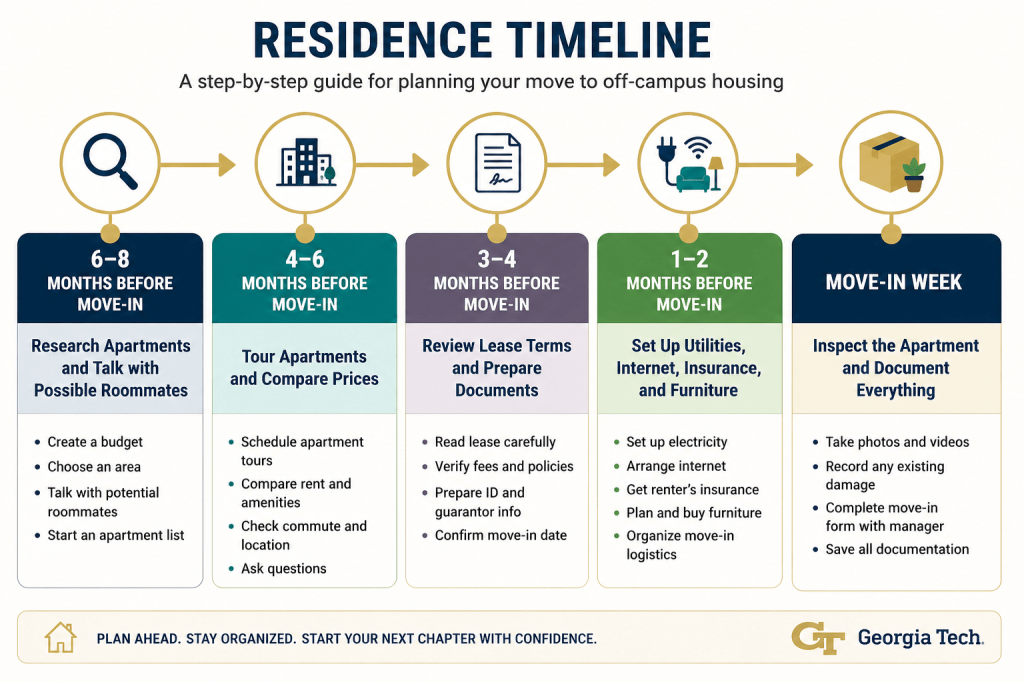
Start early. Many apartments near Georgia Tech lease months before the school year begins. Waiting too long can limit your choices or force you into a more expensive option.
A strong timeline might look like this:
Step 3: Build Your Apartment List
Once you know your timeline, create a list of possible apartments. Do not rely on only one property or one website. Compare multiple options based on rent, location, safety, transportation, parking, amenities, and lease terms.
Use a table like this:
| Apartment | Distance from Campus | Monthly Rent | Parking | Utilities Included? | Notes |
|---|---|---|---|---|---|
| Option A | 0.5 miles | $$$ | Yes | No | Walkable |
| Option B | 1.5 miles | $$ | Yes | Some | Cheaper |
| Option C | 2 miles | $ | No | No | Requires commute |
When comparing apartments, look beyond the advertised rent. Application fees, parking, trash fees, utilities, and internet can make the real monthly cost much higher.
Step 4: Tour Apartments and Ask the Right Questions
Apartment tours help you see what online photos do not show. During the tour, pay attention to the condition of the building, appliances, locks, windows, water pressure, laundry access, parking areas, and overall property maintenance. Taking notes and photos during each tour can make it easier to compare apartments later.
The Rambler Atlanta + The Standard Atlanta


Before scheduling tours, students should also review the Georgia Tech Off-Campus Housing website, which provides resources for apartment searching, roommate matching, renter education, and housing-related questions. This resource can help students identify reputable housing options and better understand what to look for during the apartment search process.
Ask questions such as:
- What utilities are included?
- How much is parking each month?
- How are maintenance requests handled?
- Is there a security deposit?
- Are leases individual or joint?
- Are there guest, noise, or pet policies?
- What happens if a roommate moves out?
- How quickly are maintenance issues typically resolved?
- Are there any additional fees not included in the advertised rent?

Common Mistake: Students sometimes focus only on the room layout and amenities while overlooking important details such as hidden fees, safety features, parking costs, lease policies, and maintenance procedures. A great apartment on a tour may become much less attractive once all costs and responsibilities are considered.
Step 5: Understand the Lease Before You Sign

A lease is a legal agreement, not just a form. Read the entire document before signing. Pay close attention to rent, payment dates, security deposits, lease length, late fees, maintenance responsibilities, renewal terms, and move-out rules.
Important lease terms to know:
A security deposit is money paid before move-in to protect the property owner against unpaid rent or damages beyond normal wear and tear. Deposits near Georgia Tech apartments can range from a few hundred dollars to one month’s rent or more.
Before signing a lease, ask:
- How much is the security deposit?
- Is the deposit refundable?
- What deductions can be taken from the deposit?
- How long does management have to return the deposit after move-out?
- Are there cleaning fees that are automatically deducted?
- What documentation is required to receive the full deposit back?

Tips for getting your deposit returned:
- Photograph every room during move-in and move-out.
- Complete and submit all inspection forms before the deadline.
- Keep copies of maintenance requests.
- Clean thoroughly before leaving.
- Return keys, parking passes, and access devices on time.
- Save written communication with property management.
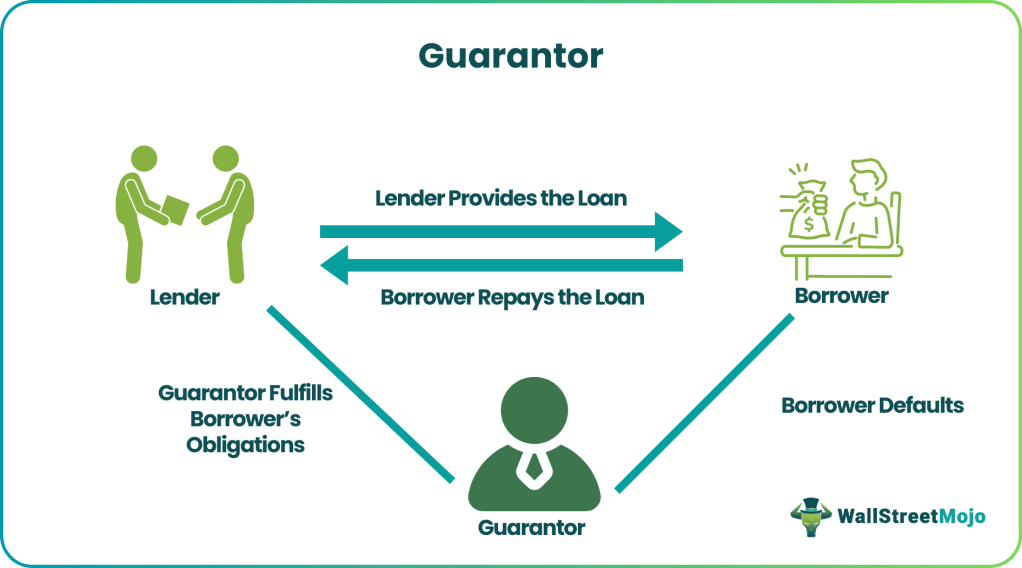
Many student apartments require a guarantor because students often do not have sufficient income or credit history to qualify independently.
A guarantor is usually a parent, guardian, or other financially responsible adult who agrees to cover rent payments if the tenant cannot.
Typical guarantor requirements include:
- Proof of income (often 3–5 times the monthly rent)
- Recent pay stubs or tax returns
- A satisfactory credit score
- Completion of the apartment’s guarantor application
Before applying, students should:
- Ask the apartment community whether a guarantor is required.
- Review the income and credit requirements.
- Notify the guarantor about required documents ahead of time.
- Submit guarantor paperwork early to avoid delays in lease approval.
Pro Tip: If you do not have a qualified guarantor, ask whether the property offers alternatives such as an increased security deposit, prepaid rent, or third-party guarantor services.
Step 6: Prepare Financially for Independent Living
Rent is only one part of off-campus living. Students should make a monthly budget before signing a lease.
Example monthly budget:
| Expense | Estimated Cost |
|---|---|
| Rent | $1,200 |
| Utilities | $120 |
| Internet | $50 |
| Parking | $50 |
| Groceries | $350 |
| Emergency savings | $100 |
| Total | $1,870 |
Your actual costs may be higher or lower, but this type of budget helps you avoid surprises. You should also plan for move-in costs such as furniture, cleaning supplies, kitchen items, and renter’s insurance.
Pro tip: Keep emergency savings for unexpected costs like broken items, replacement keys, parking tickets, or utility deposits.
Step 7: Set Up Your New Apartment
After signing the lease, set up the services you need before move-in day. This may include electricity, water, internet, renter’s insurance, trash service, and online rent payment portals.
Make a setup checklist:
- Create your resident portal account.
- Confirm your move-in date and key pickup time.
- Set up electricity and water if they are not included.
- Schedule internet installation.
- Buy renter’s insurance if required.
- Coordinate furniture and moving supplies.
- Confirm who pays each shared bill.
This step is especially important for roommates. Decide early how bills will be split and who is responsible for each account.
Step 8: Move In and Document Everything

Don’t forget to submit the move-in inspection form on time if your apartment provides one.
Step 9: Successfully Manage Life Off Campus
Living off campus requires organization. Once you move in, create systems for paying bills, cleaning shared spaces, requesting maintenance, and communicating with roommates.
Helpful habits include:
- Set rent reminders.
- Keep a shared roommate calendar.
- Save copies of lease documents.
- Report maintenance problems early.
- Clean common areas regularly.
- Keep records of payments and requests.
Roommate communication matters. Talk about guests, noise, cleaning, groceries, and shared costs before small issues become major problems.
Step 10: Plan Ahead for Renewal or Move-Out

Do not wait until the last month to think about renewal or move-out. Many leases require advance notice if you plan to leave. Read your lease to find the deadline.
Before moving out:
- Give notice if required.
- Clean the apartment.
- Repair minor damage if allowed.
- Take final photos.
- Return keys and parking passes.
- Save move-out paperwork.
- Ask about the security deposit timeline.
Planning ahead can help you avoid extra fees and improve your chances of getting your deposit back.
Final First Apartment Checklist
Before Signing
- Compare multiple apartments.
- Confirm the full monthly cost.
- Ask about parking and utilities.
- Read the full lease.
- Understand roommate responsibility.
Before Move-In
- Set up utilities.
- Buy renter’s insurance.
- Schedule internet.
- Confirm move-in instructions.
- Plan furniture and supplies.
After Move-In
- Take photos of damage.
- Submit inspection forms.
- Set rent reminders.
- Organize roommate bills.
- Save all important documents.


Leave a Reply