
Find the support resource that best fits your learning needs.
By Kylie Nash & Afsheen Mohammad

Introduction
Georgia Tech offers a variety of academic support resources such as office hours, PLUS sessions, Knack tutoring, drop-in tutoring, and study groups. However, it can be overwhelming at times to determine which resource best fits your own learning needs. Many students waste time attending sessions that do not fit their needs, leading to frustration, discouragement, and in some cases, students stop seeking support altogether.
This guide helps students select the academic resource best fit for their needs. Rather than listing every resource, this guide walks students through a decision-making process that considers factors such as course difficulty, learning preferences, urgency, and the level of assistance the student is seeking.
Students will be able to determine whether they need one-on-one tutoring, collaborative support in a group setting, direct assistance from professors, or simply a structured study session. This guide will allow students to compare and contrast resources with visual guides.
Overall, the goal of this guide is to save students time and frustration while encouraging proactive help-seeking behaviors that will contribute to Academic Success at Georgia Tech.
Table of Contents
📚 Step 1: Identify Your Academic Challenge
⏰ Step 2: Determine How Urgent the Problem Is
🎯 Step 3: Decide What Kind of Help You Need
👥 Step 4: Consider Your Learning Style
🔍 Step 5: Match Your Needs to a Support Resource
📝 Step 6: Prepare Before Attending
✅ Step 7: Evaluate Whether the Resource Helped
🔄 Step 8: Adjust and Try Another Resource if Needed
📊 Comparing Academic Resources
Step 1: Identify Your Academic Challenge
Before choosing a resource, start by identifying the specific problem you are trying to solve.
- If you are not sure where to start, visit Georgia Tech’s Academic Success and Advising website because it connects students to tutoring, learning support, and academic coaching resources.
- Write down the course, assignment, concept, or exam you need help with.
- Decide whether your challenge is about understanding concepts, solving practice problems, preparing for an exam, completing homework, or managing your time.
Step 2: Determine How Urgent the Problem Is
Next, consider when you need assistance
- If your exam or assignment is due very soon, prioritize office hours, drop-in tutoring, or Knack tutoring.
- If you have more time and want to build understanding throughout the semester, consider PLUS sessions or a study group.
- If the issue is ongoing, academic coaching may help you build better study routines and time-management strategies.
Step 3: Decide What Kind of Help You Need
Different resources are useful for different types of support.
- Choose PLUS sessions or study groups if you want collaborative practice and structured review with other students.
- Choose office hours if you need clarification from your professor or TA about course expectations, lecture material, or assignment instructions.
- Choose Knack or one-on-one tutoring if you want personalized explanations and direct help with specific questions.
Step 4: Consider Your Personality and Learning Style
Everyone learns differently.
Your learning style can also help you choose the best resource.
- If you learn best through conversation, try office hours or one-on-one tutoring.
- If you learn best by practicing with others, try PLUS sessions or a study group- where you may study and discuss ideas with peers.
- If you prefer independent preparation first, review your notes and bring specific questions to a tutor, TA, or professor.
Step 5: Match Your Needs to a Resource
Once you have identified your challenge, urgency, learning preferences, and support needs, you can begin matching those factors to the appropriate resource.
Use the Academic Support Decision Tree infographic below to guide your decision.
Academic Support Decision Tree
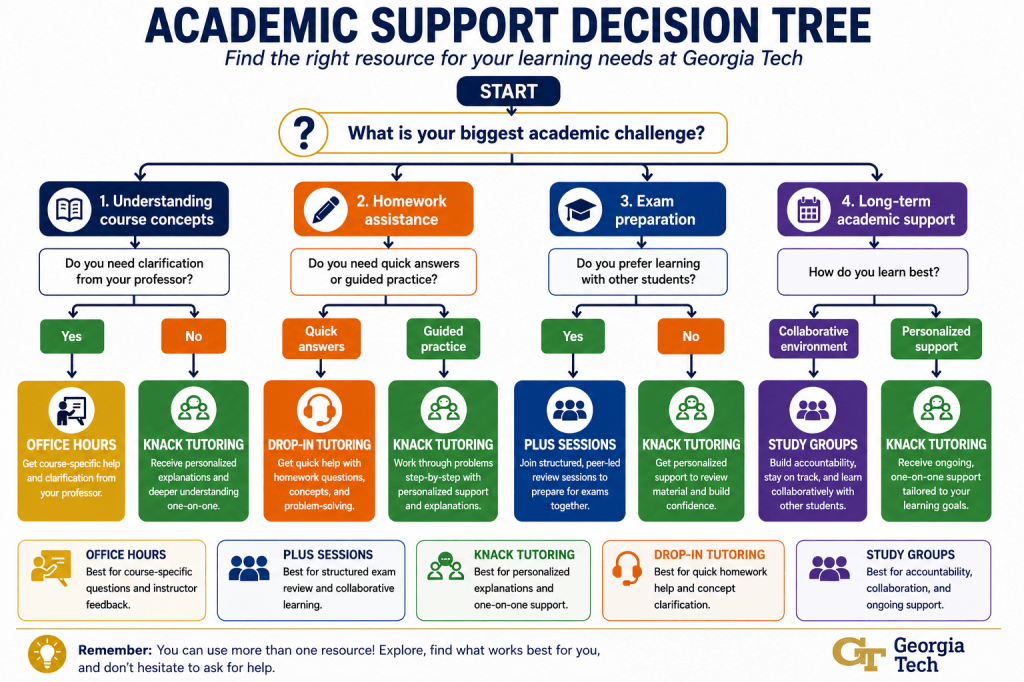
The decision tree will help you determine whether office hours, PLUS sessions, Knack tutoring, drop-in tutoring, or study groups are the best fit for your situation.
Step 6: Prepare Before Attending
To get the most value from any academic support session, come prepared.
- Bring lecture notes, homework assignments, study guides, previous assessments, and a list of specific questions.
- Take a few minutes to organize your materials beforehand can help tutors, professors, and peer leaders provide more effective assistance. Preparation also allows you to make better use of the time available during the session.
Step 7: Evaluate the Resource
After attending a session, reflect on whether it helped you achieve your goal.
- Ask yourself if your understanding improved, whether your questions were answered, and if you feel more confident about the material.
- Consider what aspects of the resource were most helpful and what could be improved. Evaluating your experience can help you make better decisions about future support options.
Step 8: Try Another Resource if Needed
Not every academic resource will work equally well for every student or every situation. If one option does not meet your needs, do not be discouraged.
Use the comparison chart below to explore alternative resources that may better match your learning style and academic goals.
Comparing Tech Academic Resources
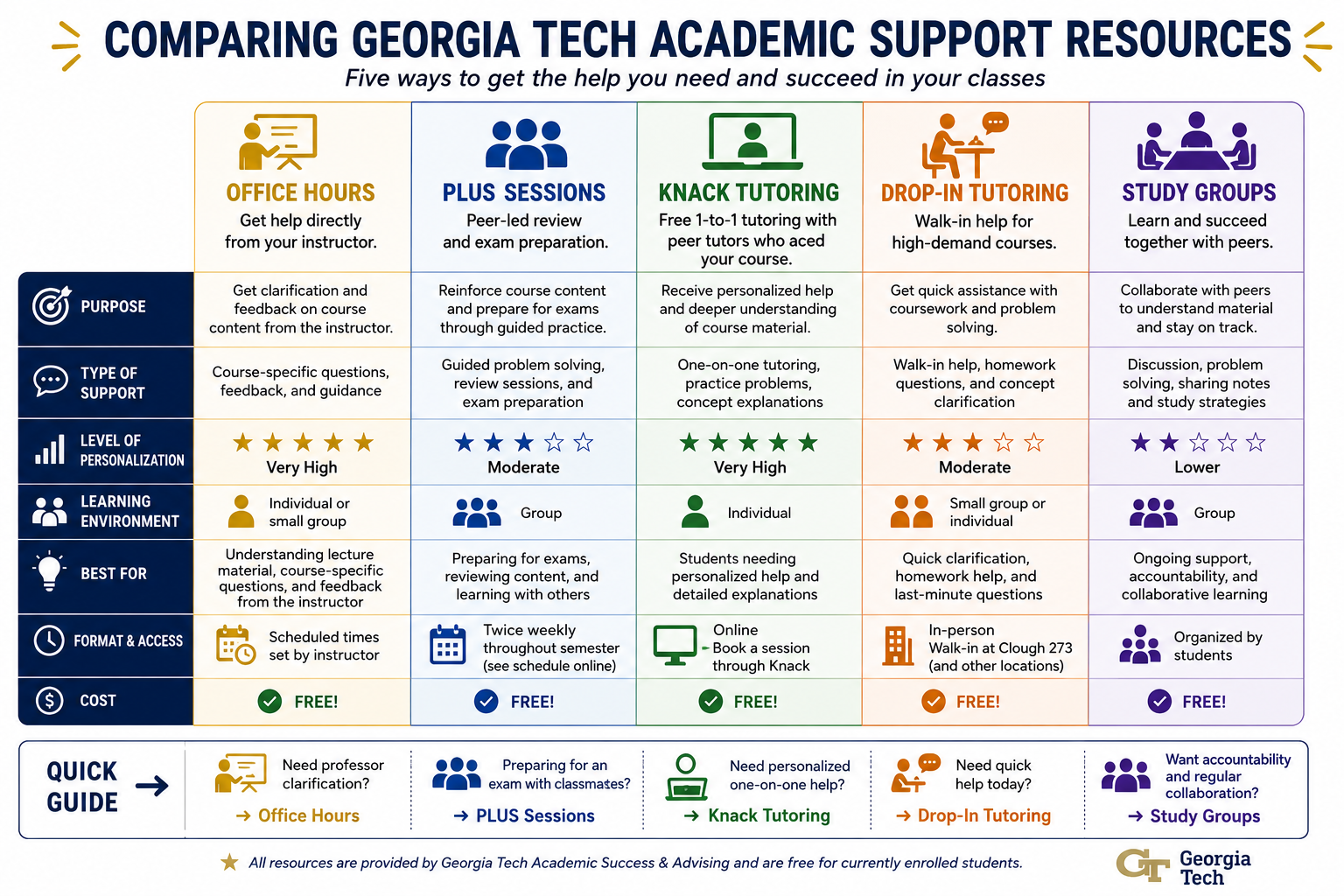
Finding the right support often involves some trial and error, and being flexible can help you achieve greater academic success. Using the chart above will best guide you in that decision.
Additional Resources
If you are still unsure which academic support resource is right for you, the following websites provide additional information about Georgia Tech’s academic support services. These resources include service descriptions, eligibility requirements, tutoring schedules, and information about how to get started. Exploring these websites can help you find the support option that best matches your academic goals and learning preferences.
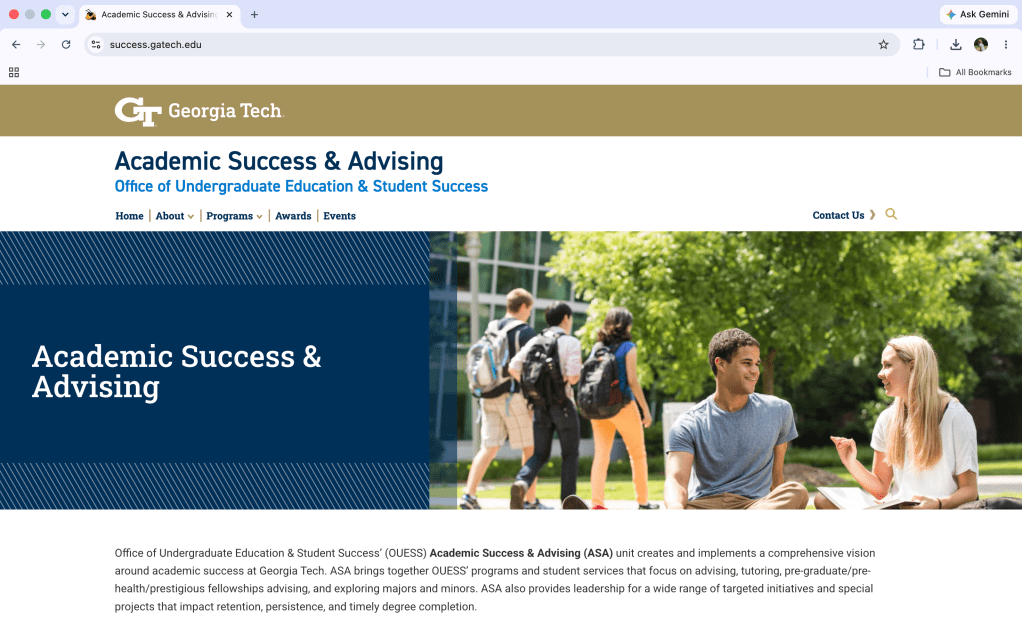
Academic Success and Advising Homepage
The Academic Success and Advising website serves as a central hub for Georgia Tech’s academic support resources. Students can explore tutoring options, learning enrichment programs, academic coaching services, and other resources designed to support student success.
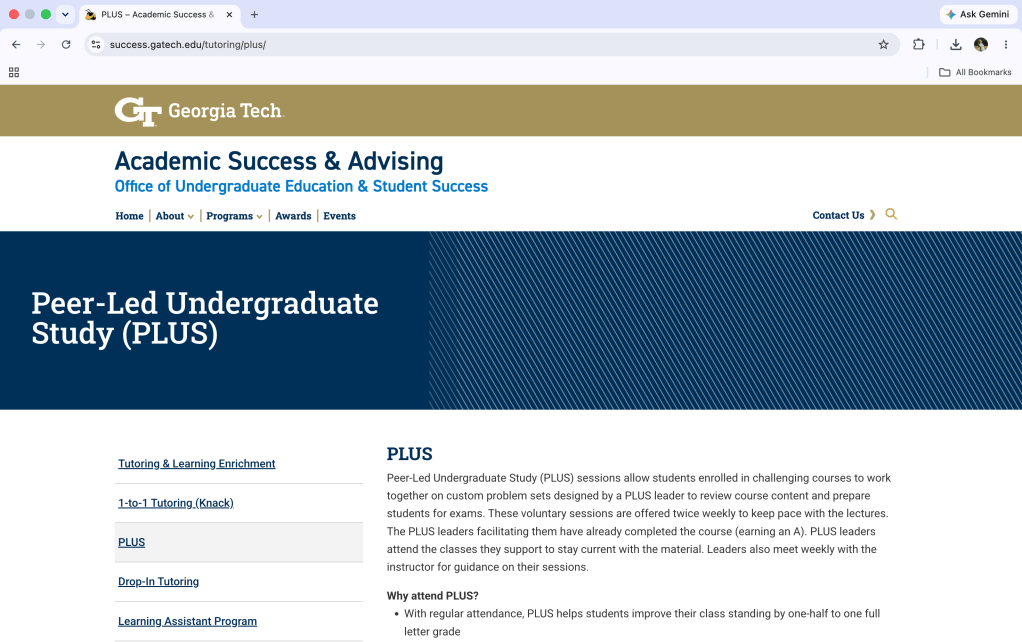
PLUS Program Website
The PLUS Program website provides information about peer-led review sessions that help students strengthen their understanding of course material and prepare for exams. Students can learn about the benefits of PLUS sessions, view participation information, and access current schedules.
Helpful Links
- Georgia Tech Academic Sucesss and Advising
- Georgia Tech Tutoring and Learning Enrichment
- 1-on-1 Tutoring with Knack
- Peer-Led Undergraduate Study (PLUS)
- Drop-in Tutoring
Conclusion
Georgia Tech offers a variety of academic support resources designed to meet different learning needs. By identifying your academic challenge, learning preferences, and support goals, you can select the resource most likely to help you succeed. Remember that seeking support early and exploring multiple resources can make a significant difference in your academic experience.
 GT-How
Leave a comment