

Authors: Krishin Wadhwani and Joshua Wang
Table of Contents
- Introduction
- Understanding Your Constraints
- Choose Your Eating Strategy
- Build a Weekly Eating Plan
- Plan Your Week
- Shop Smart on a Budget
- Prep Food Efficiently
- Build Balanced Meals
- Stay Consistent Over Time
Introduction
College life at Georgia Tech brings new independence as well as new challenges, especially when it comes to maintaining a healthy diet. Between demanding class schedules, late nights in the library, and the convenience of dining halls like North Avenue and West Village, many Tech students struggle to make nutritious choices that support their energy, focus, and overall well-being. This guide is designed specifically for GT students, breaking down what a balanced diet looks like and how to realistically achieve it using campus dining options, dining dollars, and simple cooking setups. Whether you’re grabbing meals between classes, living in a dorm with just a microwave, or cooking in an off-campus apartment, we’ll provide practical, affordable strategies and easy recipes tailored to the fast-paced Georgia Tech lifestyle.
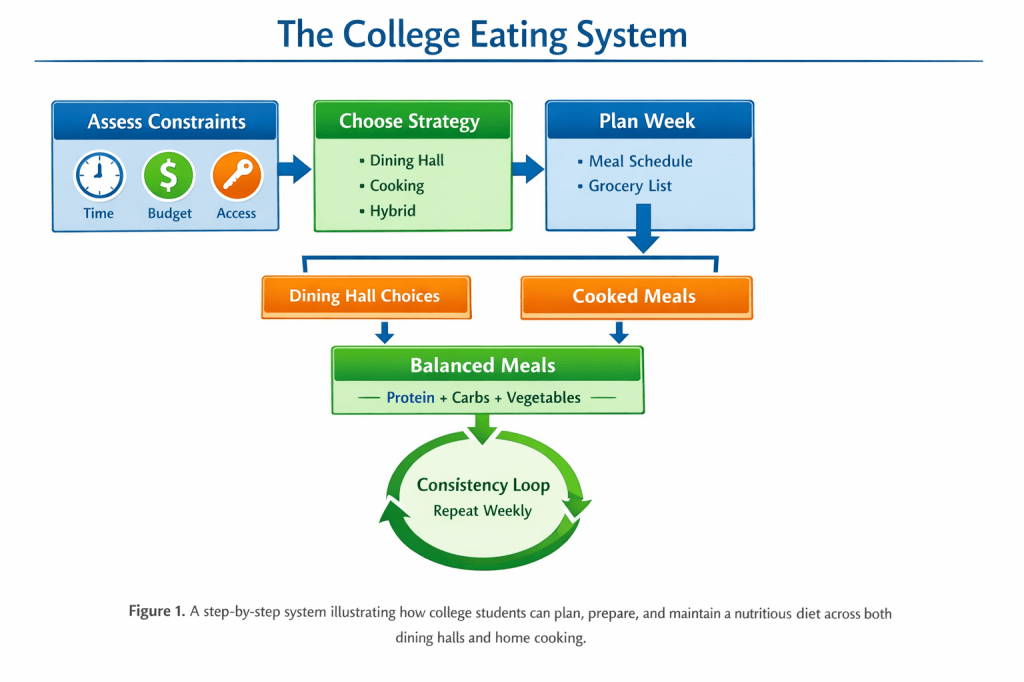
Step 1: Understand Your Constraints
Before improving your diet, it is important to understand what factors shape your eating habits in college. Most students are balancing time, money, and access to food.
Some students rely heavily on dining halls, while others cook for themselves. Many fall somewhere in between.
Sub-steps:
- Identify your weekly food budget
- Determine how often you eat in dining halls vs. cooking
- Consider your schedule (classes, clubs, work)
Recognizing these constraints helps you build a realistic and sustainable plan.
Step 2: Choose Your Eating Strategy
There is no single “correct” way to eat in college. The most effective approach is to choose a strategy that fits your lifestyle.
Common strategies:
- Dining hall-based: Most meals come from campus dining
- Cooking-based: You prepare most meals yourself
- Hybrid approach: A mix of both (often the most practical option)
Most students benefit from a hybrid approach, using dining halls for convenience and cooking for cost control and flexibility.
Step 3: Build a Weekly Eating Plan
Step 3A: Navigate Dining Halls Effectively
Dining halls are often the most convenient option, but without a strategy, it is easy to default to high-calorie, low-nutrient meals.
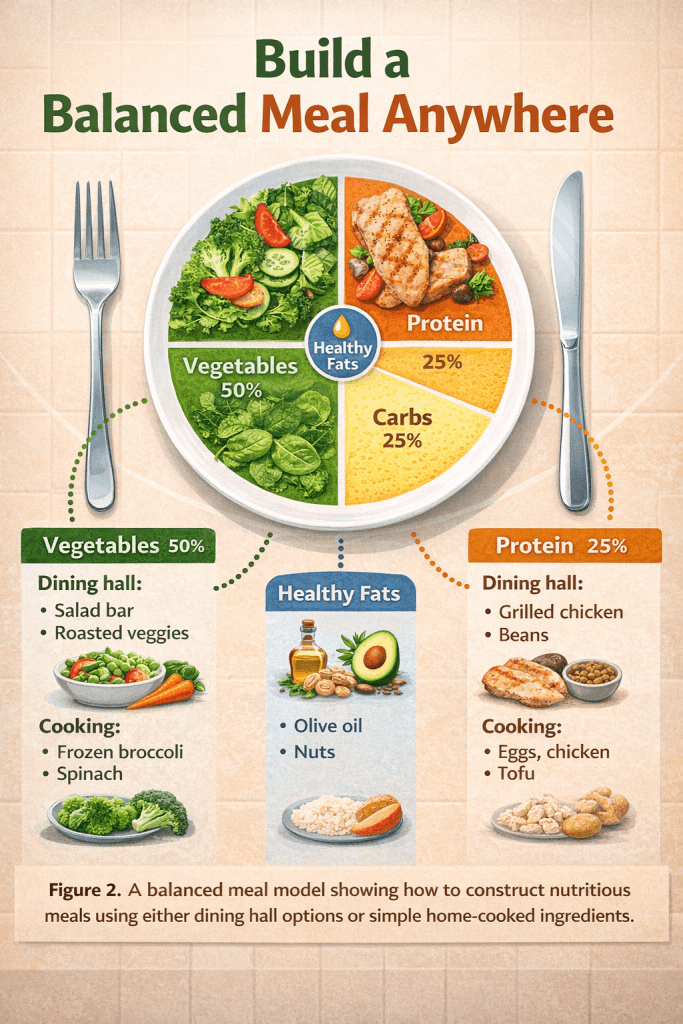
Use this simple rule when building your plate:
Sub-steps:
- Fill half your plate with vegetables (salad bar, roasted vegetables)
- Add one protein (grilled chicken, eggs, beans)
- Add one carbohydrate (rice, pasta, bread)
- Avoid combining multiple heavy options (e.g., pizza + fries + dessert)
Example:
Instead of:
– Pizza + fries + soda
Choose:
– Grilled chicken + rice + vegetables + water
This small shift can reduce excess calories while improving nutrient intake.
See this student’s meal tray from North Ave Dining Hall for an instance of a balanced, nutritious dining hall meal.

Step 3B: Cook Simple, Repeatable Meals
Cooking becomes manageable when you reduce complexity. Instead of learning new recipes every week, rely on a small system of repeatable meals.
Sub-steps:
- Pick 2 meals you can cook in under 30 minutes
- Buy ingredients that overlap (e.g., rice used in multiple meals)
- Cook in batches to reduce daily effort
Example Weekly Setup:
Sunday:
– Cook 2 cups of rice (lasts ~4 meals)
– Cook 2 chicken breasts
– Roast a tray of vegetables
This gives you:
– 3–4 ready-to-eat meals for the week
Additional quick meal:
– Pasta + jarred sauce + ground meat (20 minutes)
This system minimizes cooking time while ensuring consistent access to food.
You can check out more easy recipes here on BudgetBytes.
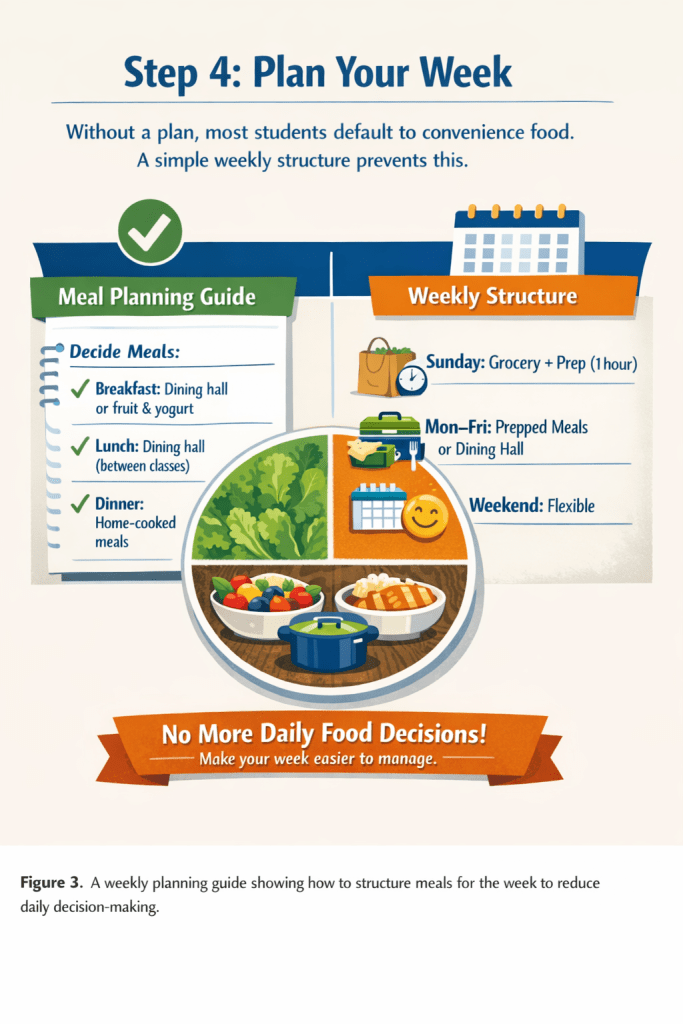
Step 4: Plan Your Week
Without a plan, most students default to convenience food. A simple weekly structure prevents this.
Sub-steps:
- Decide which meals are dining hall vs. cooked
Example plan:
- Breakfast: Dining hall or quick (fruit + yogurt)
- Lunch: Dining hall (between classes)
- Dinner: Home-cooked meals (prepped earlier)
Weekly structure:
- Sunday: grocery + prep (1 hour)
- Monday–Friday: eat prepped meals or dining hall
- Weekend: flexible
This removes the need to make food decisions every day.
Step 5: Shop Smart on a Budget
Grocery shopping can be affordable with the right approach. Prioritizing staple foods helps maximize both nutrition and value.
According to the USDA MyPlate guidelines, focusing on whole foods supports a balanced diet.
Sub-steps:
- Buy store-brand products
- Choose frozen vegetables for cost and convenience
- Purchase in bulk when possible
- Avoid impulse purchases
Step 6: Prep Food Efficiently
Meal preparation saves time and ensures that healthy food is always available, even during busy days.
Even minimal preparation can make a noticeable difference.
Sub-steps:
- Cook large portions of grains or protein
- Store meals in containers for easy access
- Prepare ingredients (washing, chopping) in advance
Step 7: Build Balanced Meals
Regardless of where your food comes from—dining hall or kitchen—each meal should be nutritionally balanced.
The Harvard Healthy Eating Plate emphasizes combining food groups for optimal nutrition.
Sub-steps:
- Include a protein source (chicken, tofu, eggs)
- Add a carbohydrate (rice, pasta, potatoes)
- Incorporate vegetables
- Use healthy fats in moderation
Balanced meals help maintain energy levels and support long-term health.
Step 8: Stay Consistent Over Time
Healthy eating is not about perfection. It is about building habits that you can maintain over time.
Consistency matters more than occasional setbacks.
Sub-steps:
- Stick to a routine for meals and groceries
- Allow flexibility for social events and treats
- Adjust your system as your schedule changes
Small, consistent improvements lead to lasting results.


Leave a Reply