
By Lizzie Powley and Samuel Chen

START HERE
A practical guide for first-year Georgia Tech students. You do not need previous internship experience to begin.
In This Guide
- Set career goals
- Find internship openings
- Build a shortlist
- Create your LinkedIn profile and resume
- Gain experience
- Tailor and submit applications
- Track, interview, and follow up
Introduction: Why Start Your Search Now
Many first-year Georgia Tech students arrive knowing they want an internship but not how to start. They may not have a LinkedIn profile, a resume, or any idea where to find opportunities and when applications open. At the same time, competition for internships can be intense, and some companies begin recruiting early in the academic year. Starting now gives you time to explore, practice, and improve your materials without expecting everything to be perfect.
This tutorial walks students through the internship search process in seven steps. First, set career goals, find openings through job boards and networking, and narrow down roles that fit your interests.
Step 4 covers creating a professional LinkedIn profile, even without prior work experience, and building a strong one-page resume using coursework, class projects, volunteer work, and extracurricular activities. Step 5 explores ways to gain experience through student organizations, research opportunities, and campus involvement. Step 6 covers preparing application materials, tailoring resumes, and submitting strong applications. Step 7 focuses on tracking applications, preparing for interviews, and following up with employers professionally.
By the end of this guide, students will have a clearer plan for beginning their internship search. With a polished LinkedIn profile, a strong resume, relevant experiences, and a clear application strategy, they can take meaningful steps toward securing their first internship and building a foundation for their future careers.
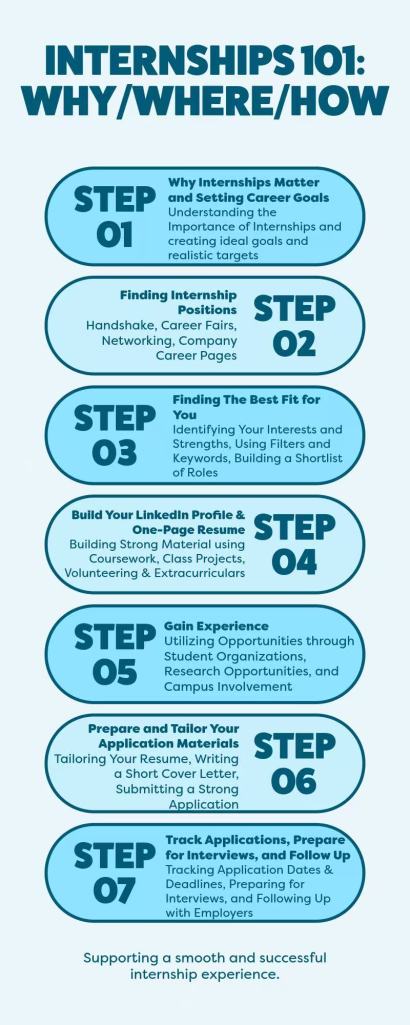
Figure 1. The seven steps of the internship search, from setting career goals to following up with employers.
Step 1: Understand Why Internships Matter and Set Career Goals
Identify What You Want to Learn
An internship lets you explore how classroom skills apply to workplace tasks. Begin by listing two interests, two skills you already have, and one skill you want to develop. You do not need to choose your entire career now; you need a starting direction.
Set a Manageable Goal
Turn that list into a goal: “I want to explore data analysis and practice explaining results.” Identify practical needs, including pay, location, transportation, and availability. Then schedule two short search sessions each week. Focus on actions you can control, such as finding three suitable openings, rather than promising yourself an offer by a particular date. Return to these steps as needed: building experience and applying can happen at the same time.
Step 2: Find Internship Openings
Use Job Boards and Company Pages
Start with Georgia Tech’s CareerBuzz platform, which supports internship searches and applications. You can also explore Handshake and company career pages. Search several related role titles and save useful postings. Confirm requirements and deadlines on the employer’s application page before applying.
Attend Career Fairs and Start Conversations
Before a career fair, choose a few employers to research. Prepare a short introduction with your name, major, interests, and one project. Ask whether they consider first-year students. When speaking with classmates, alumni, or organization leaders, ask how they found opportunities and what skills helped them prepare. Approach networking as learning and relationship-building, rather than immediately requesting a referral.
Step 3: Narrow Down Jobs to Fit Your Major and Interests
Use Filters and Check Eligibility
Filter results by internship type and location where those options are available. Try keywords such as “engineering intern,” “marketing intern,” or “research assistant.” Read the duties, required skills, graduation-year restrictions, and work-authorization requirements. Separate required qualifications from preferred ones; do not assume every role accepts first-year applicants.
Build a Shortlist
Save five promising roles. For each, record the company, title, deadline, link, and one reason it interests you. Prioritize roles where you meet the essential requirements and can explain your fit through coursework or activities. Revisit this list during your weekly search sessions.
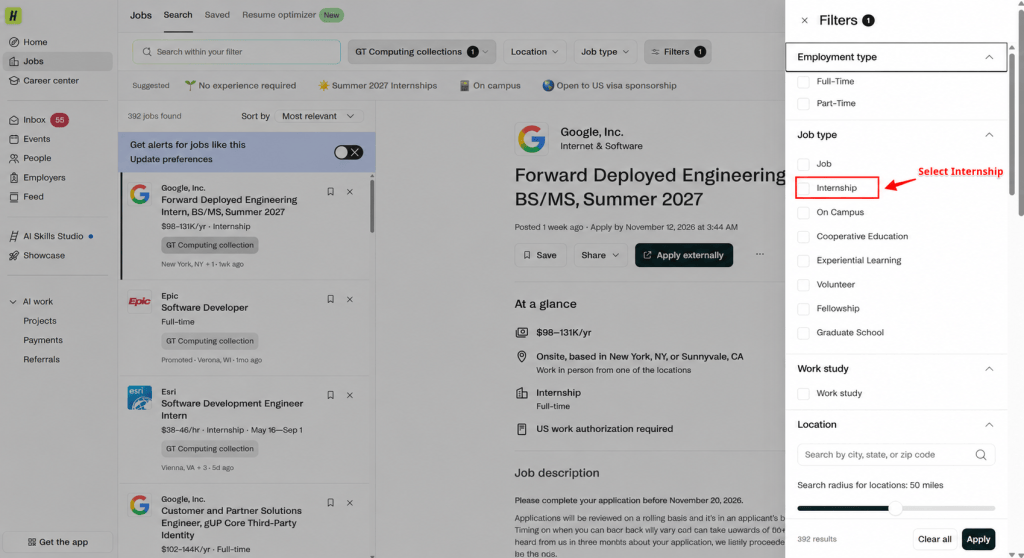
Select Internship under Job type, add a location if needed, then select Apply to update your results.
Figure 2. In Handshake’s Filters panel, select Internship under Job type, enter a location if needed, and select Apply. The Internship box is not yet selected in this example.
Step 4: Build Your LinkedIn Profile and One-Page Resume
Create a Professional LinkedIn Profile
Add a clear photo if comfortable, your education, and a headline describing your interests. For example: “First-Year Georgia Tech Student | Interested in Sustainable Engineering.” In your About section, briefly explain what you study, what you enjoy working on, and what you hope to learn. Add relevant projects and skills you can discuss honestly. Columbia’s guide to using LinkedIn for career exploration offers further guidance.

Figure 3. LinkedIn can support professional networking and career exploration; add your education, interests, and projects to your profile.
Build a Strong One-Page Resume
Include contact information, education, relevant projects, experience, and skills. Class projects, volunteering, and organization responsibilities count. Browse Georgia Tech’s resume guides and examples; under Scheller College of Business, choose First Year for a student sample. Adapt its organization, not its personal details or accomplishments.
Use the XYZ formula: “Accomplished [X], as measured by [Y], by doing [Z].” This format, often associated with Google’s resume advice, connects a result, evidence, and your actions. See Yale’s guide to writing impactful resume bullets.
Hypothetical example: “Increased club event attendance from 20 to 35 students by creating weekly social-media reminders.” X is increased attendance; Y is the change from 20 to 35; Z is the reminder campaign. Use only truthful numbers. When no numerical measure exists, describe a specific outcome without inventing one.
Here is an example of Georgia Tech’s Business Resume:
Download Georgia Tech’s first-year business resume example
Step 5: Gain Experience Through Organizations, Research, and Campus Involvement
Choose an Opportunity You Can Contribute To
Find a student organization, research opportunity, campus job, or volunteer role connected to your interests. Ask what beginners can contribute and how much time is expected. Choose a manageable commitment where you can practice a skill or help complete a project.
Record What You Learn
Keep notes about your responsibilities, challenges, contributions, and results. Save work samples when permitted. These details can become resume bullets and interview examples. Continue applying while gaining experience; you do not need to finish every activity before beginning your search.
Step 6: Prepare and Tailor Your Application Materials
Match Your Experience to the Role
Highlight two or three important skills in the job description. Move your most relevant projects or experiences higher on your resume and clarify how they demonstrate those skills. Keep a master resume, then save a separate version for each application. Never add skills you cannot explain.
Review and Submit
If a cover letter is requested, explain why the role interests you and support your fit with one specific example. Check names, dates, links, spelling, and uploaded files. Follow the requested file format, review any automatically filled fields, and save the submission confirmation.
Step 7: Track Applications, Prepare for Interviews, and Follow Up
Track Your Applications
Use a spreadsheet with columns for company, role, application date, deadline, status, and next action. Check your email and spam folder regularly. Record assessment deadlines and interview times as soon as they arrive.
Practice and Follow Up Professionally
Review interview preparation guidance and practice explaining a project, a challenge, and a teamwork experience. Use the STAR structure: situation, task, action, and result. For example, explain a group-project deadline, your responsibility, how you organized the work, and what the team completed. Research the employer and prepare questions about the work and mentorship. After an interview, send a brief thank-you message. Respect the employer’s stated timeline before asking for an update, and continue your search while waiting.
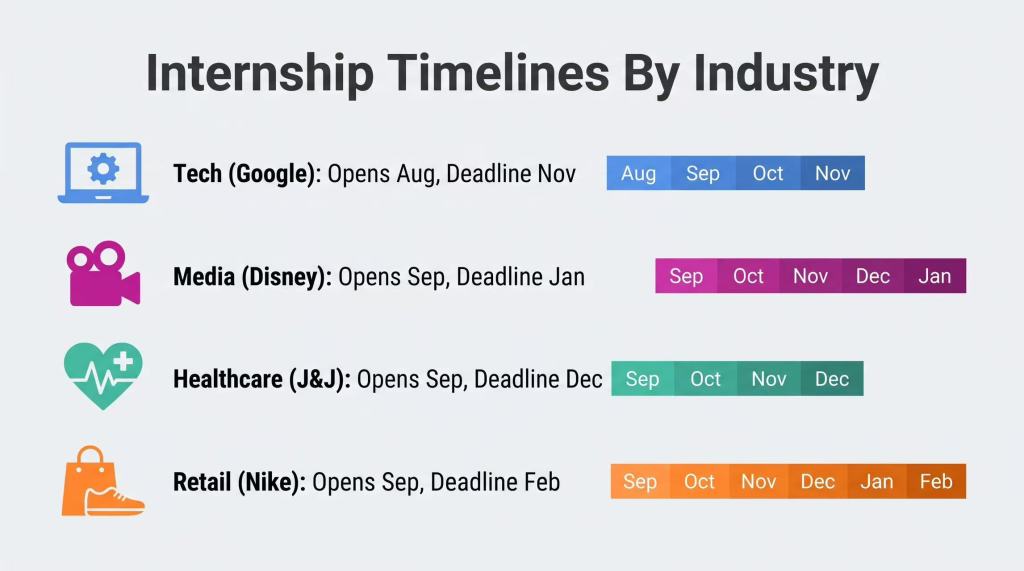
Figure 4. An example hiring process: application, optional assessment, interviews, and decision. Stages and timing vary by employer.
Conclusion: Your Next Steps
Your first internship search is a process of learning, revising, and trying again. Start this week by choosing a career interest, saving a few suitable openings, and drafting your resume. Ask someone you trust to review your materials, then submit a thoughtful application. If an opportunity does not work out, keep building skills and exploring alternatives. Each project, conversation, and application can help you prepare for the next opportunity.


Leave a Reply