

By Asfa Karim & Muhammad Hamza Iftikhar
A useful guide for first-year students at Georgia Tech who are dealing with academic shock, imposter syndrome, burnout, and too many opportunities. Learn what to prioritize, what to ignore, and how to build sustainable momentum without sacrificing your GPA or mental health.
Navigation
Jump to a section
- Understanding First Semester Challenges
- Expect Academic Shock
- Managing Comparison Culture
- Choosing the Right Commitments
- Studying the Georgia Tech Way
- Avoiding Burnout
- Thinking About Internships
- Building Long-Term Momentum
Introduction: Why the First Semester Feels Overwhelming
The first week at Georgia Tech can be a lot to handle. Syllabi look like contracts, the campus feels like a small city, and everyone around you seems sure of themselves and is already talking about internships, research labs, or starting their own business. In the meantime, you might still be trying to figure out where your classes are and how to use Canvas or Piazza.
A lot of new students get general advice like “join clubs,” “network early,” or “manage your time.” These tips sound helpful, but they don’t always tell you what really matters in your first semester. Academically, socially, and in terms of opportunities, Georgia Tech is tough. Students often take on too much, compare themselves to others, and get burned out by mid-October if they don’t have a clear plan.
You don’t have to do everything in your first semester. Instead, you should put the right things first at the right time. Students can build momentum without hurting their GPA or mental health by focusing on the basics of school, limiting their commitments, managing the culture of comparison, and making habits that will last.
In the end, getting through your first semester is all about finding stability and confidence so you can do well in the future.
Your first semester is not about doing everything, it is about doing the right things well.
Understanding the First Semester Experience
The first semester at Georgia Tech is a unique mix of academic challenges, social pressure, and too many opportunities. A lot of students go from structured high school settings to a fast-paced, self-directed system all at once. The Georgia Tech Academic Success Center says that students often have the hardest time managing their time and changing their study habits during their first semester. The main goal of this guide is to help you deal with these problems in a structured and realistic way.
Step 1: Expect Academic Shock and Plan for It
Georgia Tech classes go by quickly and expect you to be well-prepared. A lot of students are shocked by how different college classes are from high school classes in the first few weeks. Exams usually test your ability to solve problems instead of your memory, and assignments may require you to learn on your own.
When the workload goes up, don’t freak out. Instead, plan for a period of adjustment. Knowing that the first semester will be hard on your study habits can help you get used to it faster.
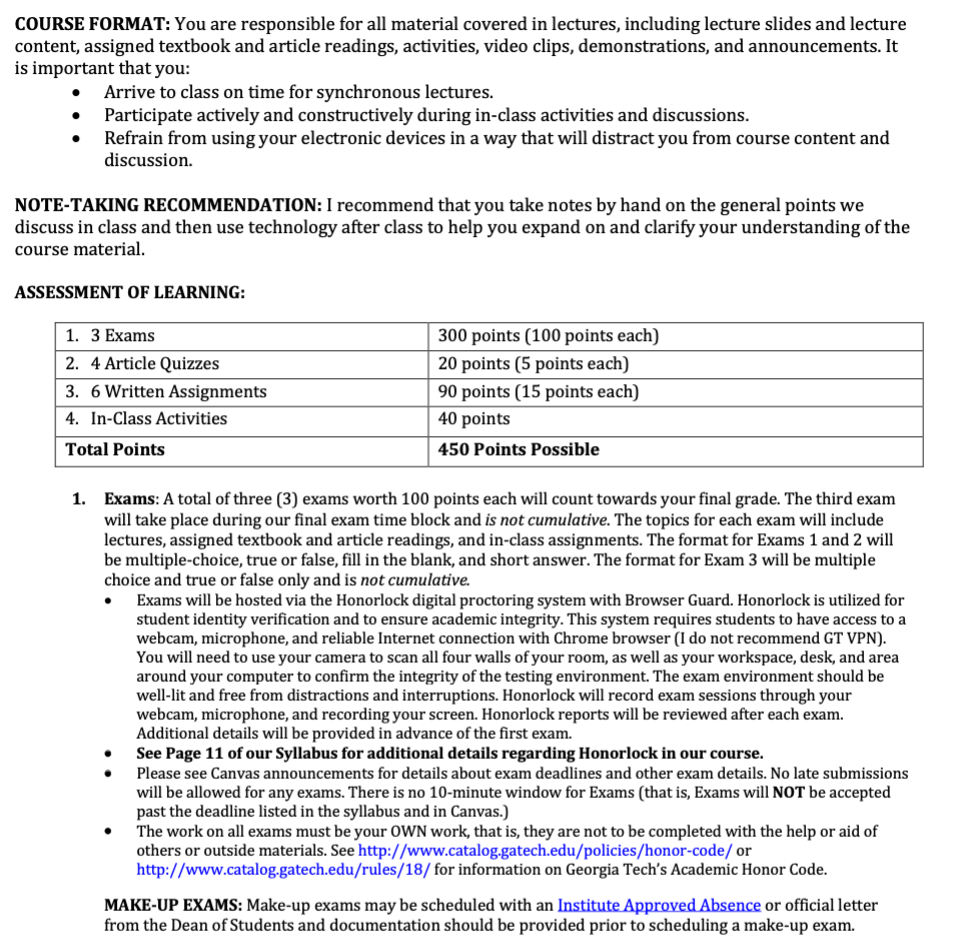
Students are encouraged to review syllabi early and use campus academic resources such as the
Georgia Tech Academic Success Center
Review your syllabus early
Every course syllabus has important information about how grades are broken down, when tests are, what the rules are, and what is expected of you. You can learn what each professor values and how the class will be set up by carefully reading the syllabus during the first week.
Track deadlines in a calendar
Use a digital calendar or planner to record all exam dates, homework deadlines, and project milestones. Seeing the entire semester timeline helps you avoid last-minute stress.
Start studying before exam week
A lot of students don’t start reviewing until the week of the test. This strategy doesn’t work very often at Georgia Tech. At least a week before major tests, start going over your lecture notes and practice problems.
Step 2: Stop Comparing Yourself to Everyone Around You
At Georgia Tech, the culture of comparing things can be very strong. Internships, coding competitions, research positions, and personal projects are things that students often talk about. Sometimes, hearing these talks can make first-year students feel like they are already behind.
But every student comes from a different background and has had different experiences. Some students may have been programming for years, while others are just starting to learn these ideas.
Instead of comparing your progress to that of others, concentrate on your own growth.
Define your own starting point
Your academic journey is unique. Accept where you are starting from and focus on improving each week.
Measure growth, not status
Progress is more important than comparison. If you understand concepts better than you did last month, you are moving in the right direction.
Limit comparison triggers
Social media and constant discussions about achievements can create unnecessary pressure. Focus your attention on learning and personal goals rather than competition.
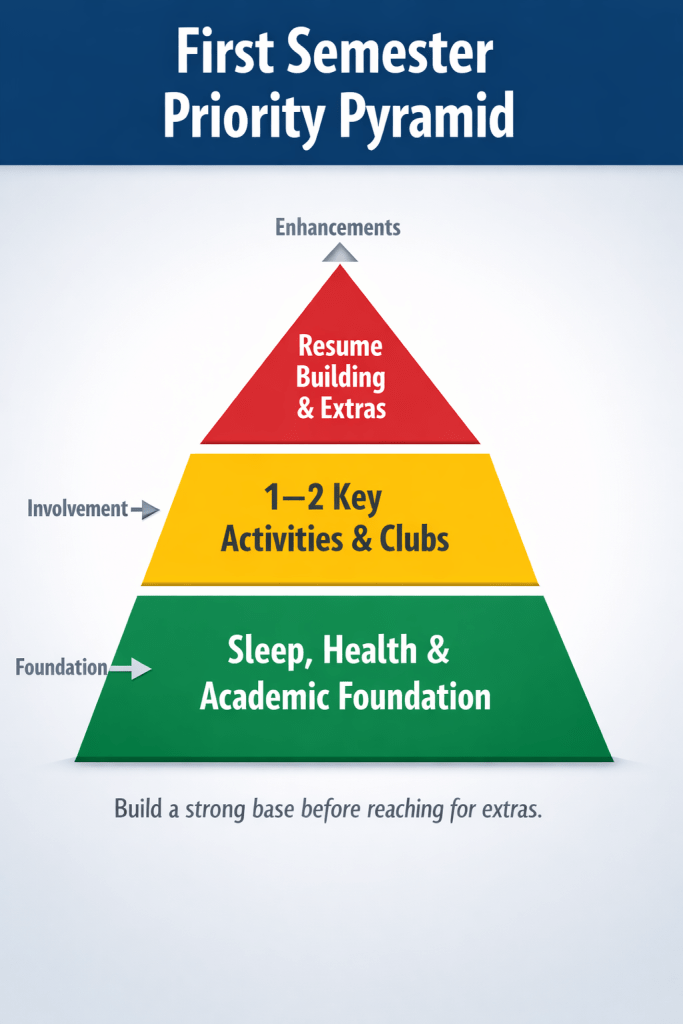
Step 3: Focus on One or Two High-Impact Commitments
In the first month of college, students learn about hundreds of clubs and groups. It’s great to join activities, but if you commit to too many too soon, your schedule can get out of hand quickly.
It’s better to pick one or two groups that really interest you.
Choose activities aligned with your interests
Look for organizations related to your academic interests, hobbies, or personal goals. This will make your involvement more meaningful.
Avoid joining too many clubs at once
Trying to attend five or six club meetings every week can quickly lead to burnout. Start small and add more activities later if you have time.
Prioritize depth over quantity
Employers and graduate schools value meaningful involvement and leadership more than a long list of memberships.
Step 4: Learn How to Study the Georgia Tech Way
Many high school study habits do not work well in college engineering and computer science courses. Instead of relying on passive review, successful students use active learning techniques.
Practice problem solving regularly
Courses at Georgia Tech often test your ability to apply concepts rather than memorize information. Solving practice problems is one of the most effective ways to prepare.
Use spaced repetition
Reviewing material repeatedly over time helps strengthen memory and understanding. Studying a little each day is more effective than cramming.
Form study groups
Collaborating with classmates can help you understand difficult topics faster and expose you to new problem-solving strategies.
Treat studying like scheduled work
Instead of studying only when you feel stressed, schedule dedicated study blocks during the week. Consistent effort leads to better results.
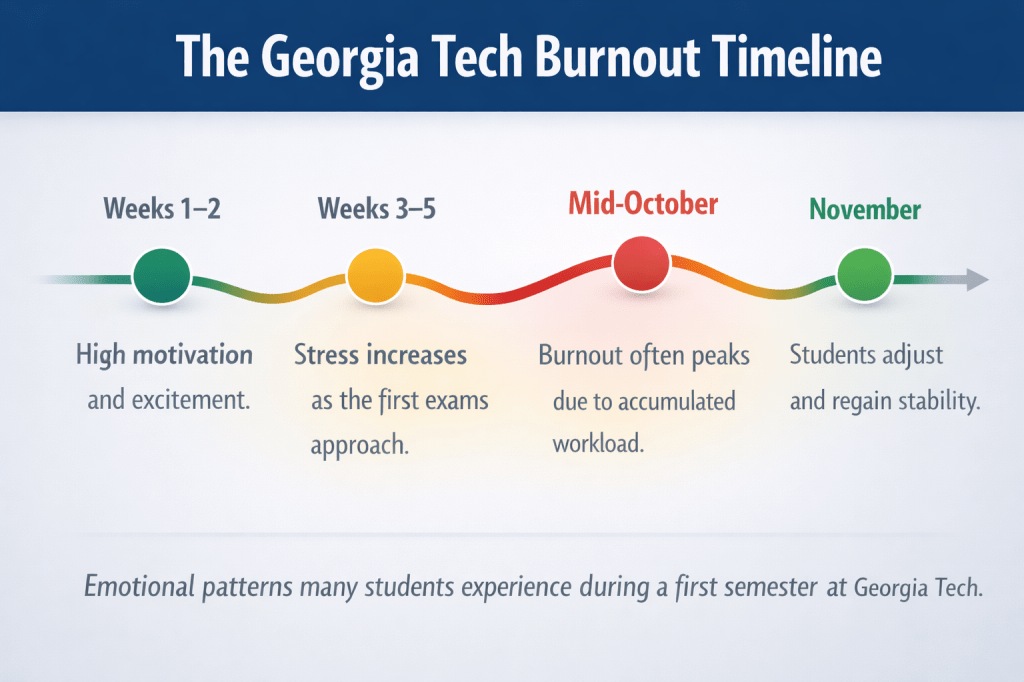
Step 5: Avoid the Mid-October Burnout Trap
Many Georgia Tech students experience burnout around mid-October. By this time, the excitement of the semester has faded, exams have piled up, and workloads feel overwhelming.
Preventing burnout requires managing your energy, not just your time. Resources like the Georgia Tech Counseling Center provide support for stress and burnout.
Protect your sleep schedule
Sleep plays a critical role in memory, concentration, and overall well-being. Consistently getting enough sleep helps you perform better academically.
Schedule breaks intentionally
Taking short breaks while studying can improve focus and reduce fatigue.
Maintain physical activity
Exercise is one of the most effective ways to manage stress and maintain energy levels throughout the semester.
Step 6: When (and When Not) to Worry About Internships
Many first-year students feel pressure to secure internships immediately. While internships are important later in college, they are not the most urgent priority during your first semester.
Attending events hosted by the Georgia Tech Career Center can help students understand recruiting timelines without unnecessary pressure.
Focus on building foundational skills
Courses in programming, mathematics, and engineering fundamentals will provide the skills needed for future internships.
Work on small personal projects
Projects help you apply what you learn in class and demonstrate initiative when applying for opportunities later.
Attend career fairs to learn
Even if you are not actively applying, attending career fairs helps you understand what companies look for and how recruiting works.
Build connections gradually
Networking does not need to happen all at once. Building relationships with professors, classmates, and mentors takes time.
Step 7: Build Momentum Without Destroying Your GPA
Success at Georgia Tech comes from consistent progress rather than perfection.
Complete assignments early
Finishing assignments before the deadline gives you time to review your work and ask questions if needed.
Ask for help when necessary
Office hours, tutoring centers, and study groups exist to help students succeed. Using these resources early can prevent bigger problems later.
Reflect on mistakes
Every challenging exam or assignment provides an opportunity to improve. Learning from mistakes helps you build stronger academic habits.
Over time, small improvements compound into long-term success.
First Semester Priority Pyramid
The Georgia Tech Burnout Timeline
Conclusion: Building a Strong Start at Georgia Tech
The first semester at Georgia Tech is a time to get used to things. It tests your ability to study, manage your time, and believe in yourself. But it also gives you a chance to build strong academic and personal foundations.
Instead of trying to do everything at once, focus on learning how the world works. Put your health first, make good study habits, and only make a few important commitments.
These habits will help you build momentum and confidence over time. You will not only have made it through your first semester, but you will also have laid the groundwork for long-term success at Georgia Tech.
Sources
Georgia Tech Academic Success Center
https://success.gatech.edu
Georgia Tech Career Center
https://career.gatech.edu
Georgia Tech Counseling Center
https://counseling.gatech.edu


Leave a Reply