
By Ziyan Ishani and Trisha Nittala
Introduction
Many Georgia Tech students assume that strong grades alone will secure them internships. However, recruiting is a time sensitive process that often begins earlier than students expect. As a result, many freshmen and sophomores apply inefficiently, attend career fairs unprepared, or miss key deadlines in the recruitment process. This can create unnecessary stress and disadvantage students who lack insider knowledge of the industry.
This guide will provide students with a Georgia Tech specific internship roadmap that walks you through each stage of the recruitment process. From understanding timelines to preparing for interviews, this guide will provide key insights into the field of Computer Science and level the playing field for new Georgia Tech students.
Step 1: Understand the Recruiting Timeline
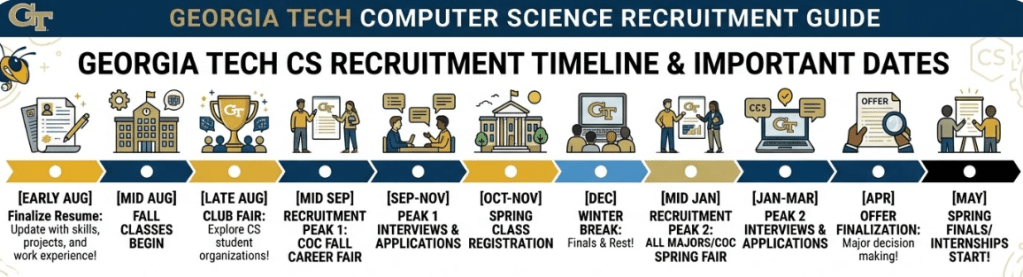
One of the biggest misconceptions students have is that recruitment starts just a few months before the summer. In reality, many companies begin reviewing applications for the next summer as early as July or August. Students who wait until spring are already behind.
Key Dates to Know
- July–August: Large tech companies (FAANG, Quant, Etc) open internship applications for the following summer.
- September–October: Peak recruiting season for Computer Science. Best time to attend career fairs, info sessions, and on-campus interviews at Georgia Tech.
- November–December: Second wave of applications opens. This is usually a great time to apply to mid-size companies.
- January–March: Final push to land a summer internship. Many roles are still open but competition is lower and companies are in less of a rush.
Below is a timeline of how a typical recruitment year looks like at Georgia Tech
GT-Specific Resources
- Sign up for Georgia Tech Career Center newsletters to stay updated on recruiting events.
- Register on Handshake. This is GT’s primary job and internship platform that new students should be targeting
- Attend the GT Club Fair in August to find organizations that can strengthen your resume before recruiting peaks.
Step 2: Choose a Direction Without Overcommitting
When students first start their college career, there is often a sense of pressure to commit to a specific career path. However, the goal of your first internship should be to help you gain exposure into what a career in an industry looks like. From this, students should hope to gain a general sense of direction for exploration rather than define their career perfectly.
Explore Through Classes and Clubs
- Take electives in areas you’re curious about, even if they are outside your major.
- Pursue a small personal or class project in a domain you’re considering. This can help you find out if you are interested in the field and doubles as resume material.
- Talk to upperclassmen in your major about their internship experiences. The Georgia tech community is generally very open about sharing advice and can be a great resource!

Step 3: Build a Resume That Signals Potential
Your resume is often the first impression a recruiter will have of you. Even without prior internship experience, a well crafted resume can signal strong potential.
Core Resume Rules for CS Students
- One page only. Recruiters tend to scan resumes very quickly. It is important to not overload them will unnecessary information.
- Use a clean format. Avoid tables, columns, or graphics that could come across as unprofessional.
- Most successful CS resumes use sections to highlight accomplishments. Here are some common sections to include: Education, Technical Skills, Projects, Experience, Leadership/Activities
- Quantify your impact wherever possible. Focusing on the impact of your work carries much more weight than simply stating what you did.
- Use the Action, Task, Result format for each bullet
What to Put When You Have No Experience
One of the biggest challenges of getting your first internship is deciding what to put on your resume. If you feel like you have no experience, you probably have more relevant material than you think. Class projects are a great way to signal potential, especially when you can explain the problem you solved, and the result you achieved. Personal projects such as GitHub repositories, apps, or scripts, also show initiative and an interest in the field. Club participation is another great way to highlight teamwork, leadership, and responsibility. In your first semester, high school experience can also help but you should gradually remove these as you progress through your major.
Step 4: Learn How to Network
One of the most complicated aspects of the recruitment process is the role that networking can play in helping land an internship. Many students assume that networking means meeting recruiters and asking for an internship as soon as possible. This is not the case. In fact, the most effective way to network involves continuously meeting new people and learning from their experiences. Over time, these connections will gradually introduce you to other people in the field which may eventually help you land an internship.
Where to Network at Georgia Tech
- Career Fairs: GT hosts several career fairs per semester. You can find a schedule of upcoming career fairs here
- Info Sessions: Many companies host information sessions on campus in September and October. Students looking to secure an internship should attend even if they are not ready to apply yet. This can be good experience when learning how to network
- GT Alumni Network: Georgia Tech alumni are generally very responsive to cold messages from current students. Students should check career buzz for potential points of contact

Craft Your Elevator Pitch
An elevator pitch is a 30–45 second introduction covering who you are, your experience, and what you’re looking for. Students should practice until this sounds natural. This can be a great way to land an internship at a campus recruiting event!
Step 5: Track Applications Like a System
Landing your first internship is often a numbers game. Many students send over 100 applications before receiving their first offer. Treating your job search like a system can help keep you consistent with applying and prevents things from falling under your radar.
Build an Application Tracker
Student’s should use a spreadsheet to track the status of the applications they have sent out. This can help keep students up to date with the number of applications they have sent out as well as the number of roles they are still under consideration for.
A good rule of thumb is to include the following information.
- Company
- Role
- Date Applied
- Status
- Recruiter
- Follow-up Date
- Notes
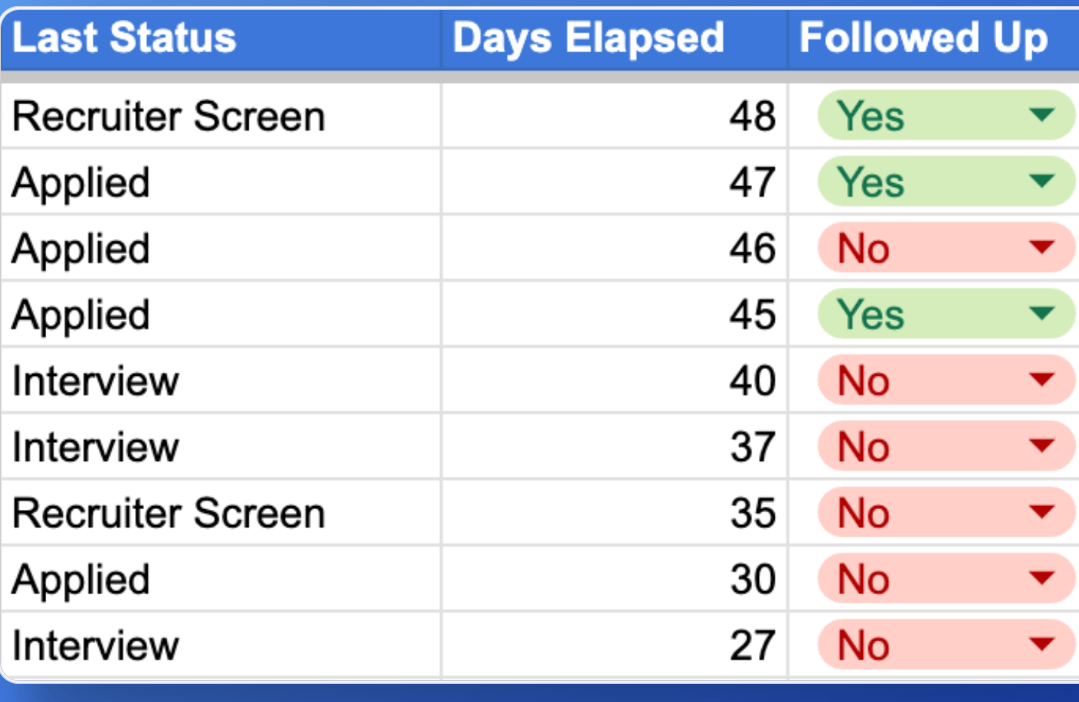
In general, students should aim to send 10-15 applications a week to maximize their chances of securing an internship. Try to target a wide variety of companies and not only focus on big tech. If you receive an OA, complete it within 48hrs.
Step 6: Prepare for Interviews Strategically
After submitting their resume, students may be invited to interview with a company if they seem like they would be a good fit. It is critical that students are prepared for these interviews as success at this stage is the best way to move from application to offer. Most tech internship interviews have two components, behavioral and technical.
Behavioral Interviews
The best way to prepare for a behavioral interview is to reflect on your past relevant experiences and practice phrasing them in a coherent manner. Students should aim to follow the STAR format (Situation, Task, Action, Result) when giving a response in order to clearly communicate why their work is important.
Technical Interviews
Computer Science positions often test candidates on how well they are able to implement data structures and algorithms (DSA) or design a system. In general, students looking for their first internship should get familiar with programming DSA as soon as possible. Websites such as LeetCode can provide students with practice questions that are very similar to what they can expect in a real world interview.
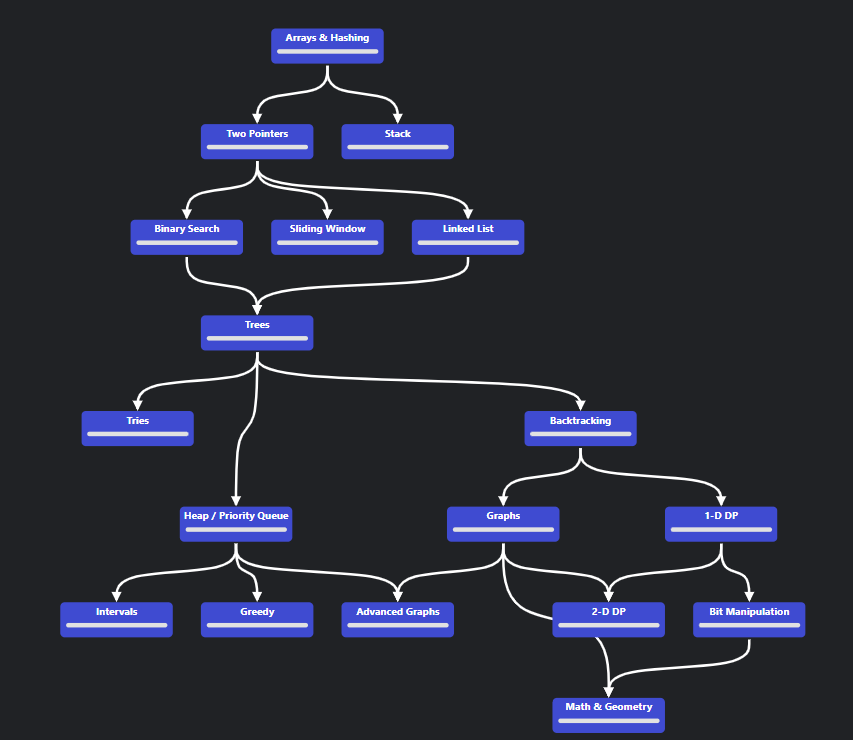
DSA Roadmap
- Beginner: Arrays, strings, hashmaps, basic recursion
- Intermediate: Trees, graphs, BFS/DFS, two pointers, sliding window
- Advanced:Dynamic programming, advanced graph algorithms, system design basics.
Below we give a general guide that beginners should use to get familiar with DSA concepts.
Step 7: Iterate, Follow Up, and Handle Rejection
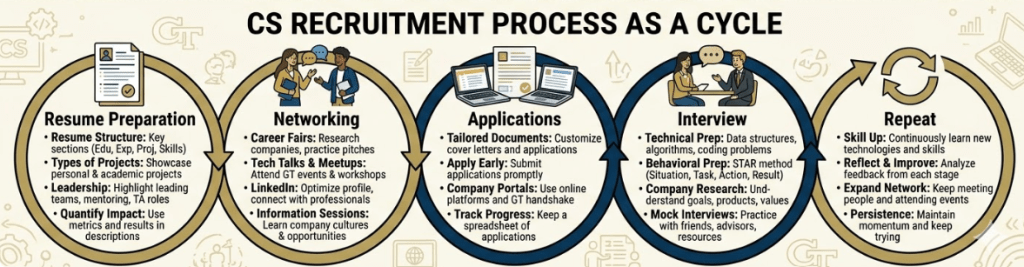
One of the most important parts of the recruitment process is learning how to handle rejection. It is rare for students looking for their first internship to succeed on their first attempt. However, students should avoid viewing setbacks as a reflection of themselves and instead use them to improve their recruitment process.
Diagnosing Where to Improve
- Not getting any interviews -> Your resume likely needs work.
- Getting interviews but no offers -> Focus on mock interviews and interview prep.
- Unable to solve technical problems -> Practice DSA basics and focus on leetcode
Below is an example of how this process can look. Be sure to follow these steps and iterate.
Maintain a Growth Mindset
The recruiting process is long and can often feel demoralizing. Students should try to set process-based goals rather than outcome-based ones. Even if you do not get the offer you are hoping for, the work that you put in for this cycle can help be be better prepared for the next.


Leave a Reply