

Georgia Tech is known for its difficult learning curves and fast paced environment. Many students experience stress and burnout which lead to difficulty focusing in the long run, especially during midterms, finals, and project-heavy weeks. When overwhelmed, students often look for relief off campus, assuming they need to leave to truly reset. However, many do not realize that calming, accessible green spaces already exist throughout Georgia Tech’s campus.
Students often look for relief off campus, but they do not realize that accessible, calming nature spaces already exist throughout Georgia Tech. This guide will solve this problem of students feeling overwhelmed by showing them how to find and intentionally use on campus green spaces as a tool for mental reset and well-being. Our GT How guide will walk students through how to identify the type of outdoor environment they need and direct them to specific locations such as the Kendeda area, the Biquad, and the Clough Undergraduate Learning Commons rooftop.
By combining research backed benefits of nature exposure with clear, step by step guidance, this tutorial helps students reduce stress, improve productivity, and build healthier study habits. Brief exposure to natural environments can help reduce stress and enhance productivity. Students will gain clear guidance on how to use these spaces effectively by reading this GTHow article, with practical strategies they can immediately apply to feel more focused and balanced during their time at Georgia Tech.
Step 1: Recognize When You Need a Mental Reset
The first step is recognizing when your mind and body need a break. Many students try to push through exhaustion during long study sessions, but doing so often reduces productivity and increases stress. Before starting another assignment or continuing to study, take a moment to check in with yourself and assess how you are feeling.
Signs to look for include:
- Difficulty concentrating on reading or problem solving
- Mental fatigue after studying for long periods
- Feeling irritable or overwhelmed by small tasks
- Procrastinating even when deadlines are approaching
Step 2: Identify the Type of Environment You Need
Once you recognize that you need a break, the next step is identifying what type of environment will help you reset most effectively. Not every outdoor space provides the same experience, so it is important to think about what will help your mind recover.
Ask yourself:
- Do I need quiet solitude?
- Do I want sunlight and open space?
- Do I need structured seating for studying?
- Do I want light social energy but not noise?
Matching your needs to the right environment increases the effectiveness of your break. Choosing a space that aligns with your current mental state can help your mind recover faster and maintain that focus for longer when you return to work.
Step 3: Visit the Kendeda Building Green Area
One of the best places on campus for a calm and quiet reset is the green space surrounding the Kendeda Building. This environmentally sustainable building is surrounded by natural landscaping, shaded seating areas, and walking paths that make it ideal for relaxation.
- Calm, shaded seating
- Nature immersion
- Quiet reflection
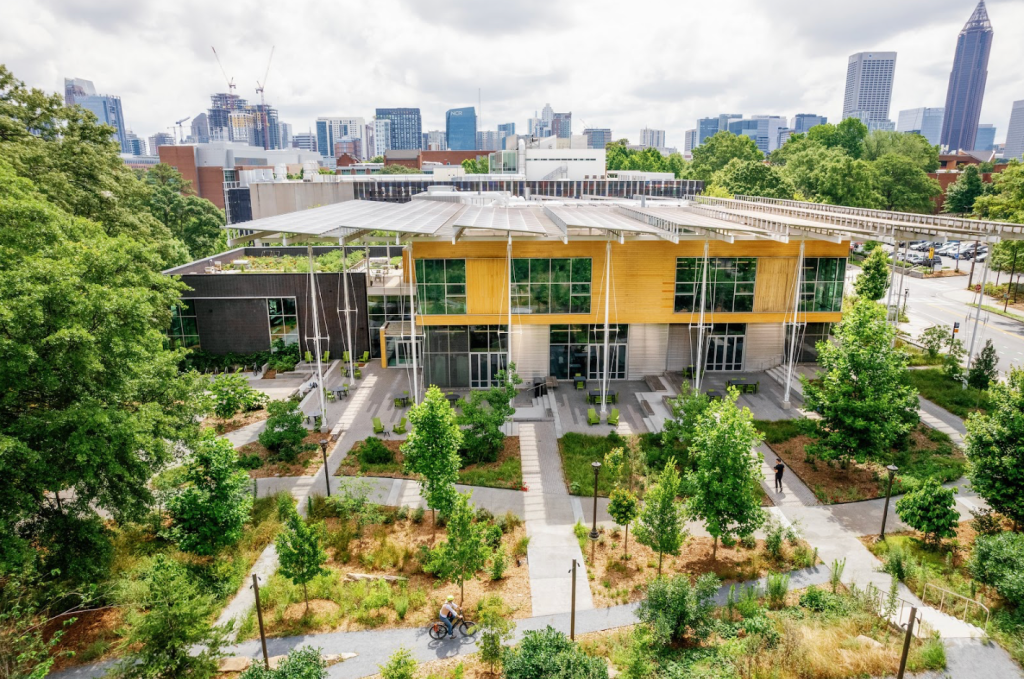
To use this space effectively, find a shaded seat or bench and take a few minutes to disconnect from your devices. Focus on the natural surroundings, such as the trees, plants, and open air. This environment can help reduce mental overload and create a sense of calm before returning to your academic work.
Step 4: Use the Biquad for Open Space and Sunlight
If you feel restless or mentally drained, the BioQuad is a great place to recharge. Unlike quieter spaces, the BioQuad offers a wide open lawn and plenty of sunlight, making it ideal for movement and light activity.
This area is best for:
- Walking breaks
- Light movement
- Group studying outdoors
Spending time in open green areas can improve mood and reduce mental tension. Walking across the lawn or sitting in the sun for a few minutes can help restore energy levels and refresh your mind after long hours of studying.
Step 5: Study at the Clough Rooftop Garden
For students who want to continue studying while enjoying fresh air, the rooftop garden at the Clough Undergraduate Learning Commons is an excellent option. This space combines outdoor greenery with structured seating and tables, making it ideal for productive study sessions.
- Productive outdoor studying
- Structured seating
- Moderate background activity

Unlike quieter reflection spaces, the rooftop still maintains a light academic atmosphere. The background activity of other students studying nearby can help you stay motivated while still benefiting from the refreshing effects of being outdoors.
Step 6: Practice a 15–20 Minute Nature Reset Routine
Once you arrive at one of these spaces, it is helpful to follow a simple routine that allows your brain to reset. Research shows that even short exposure to nature can improve focus and reduce stress.
- 5 minutes device-free
- 5 minutes slow walking
- 5–10 minutes focused breathing or light review
This short routine helps reduce mental fatigue and prepares your brain to return to focused work.
Step 7: Build Nature Breaks into Your Weekly Schedule
While occasional breaks are helpful, building outdoor time into your regular routine can make an even bigger difference. Instead of waiting until burnout occurs, plan intentional nature breaks throughout the week.
- Schedule outdoor study blocks
- Take walking breaks between classes
- Review notes outside when possible
Making nature exposure part of your routine can improve long-term stress management and help maintain consistent productivity throughout the semester.
Step 8: Reflect on What Works for You
Finally, take time to reflect on which environments help you the most. Every student has different preferences, so it is important to personalize your approach.
- Did I feel more focused after this break?
- Was this the right type of environment for my needs?
- Should I try a different location next time?
By reflecting on your experience, you can identify which spaces help you recharge most effectively. Over time, this strategy can become a reliable tool for managing stress and maintaining focus during demanding academic periods.
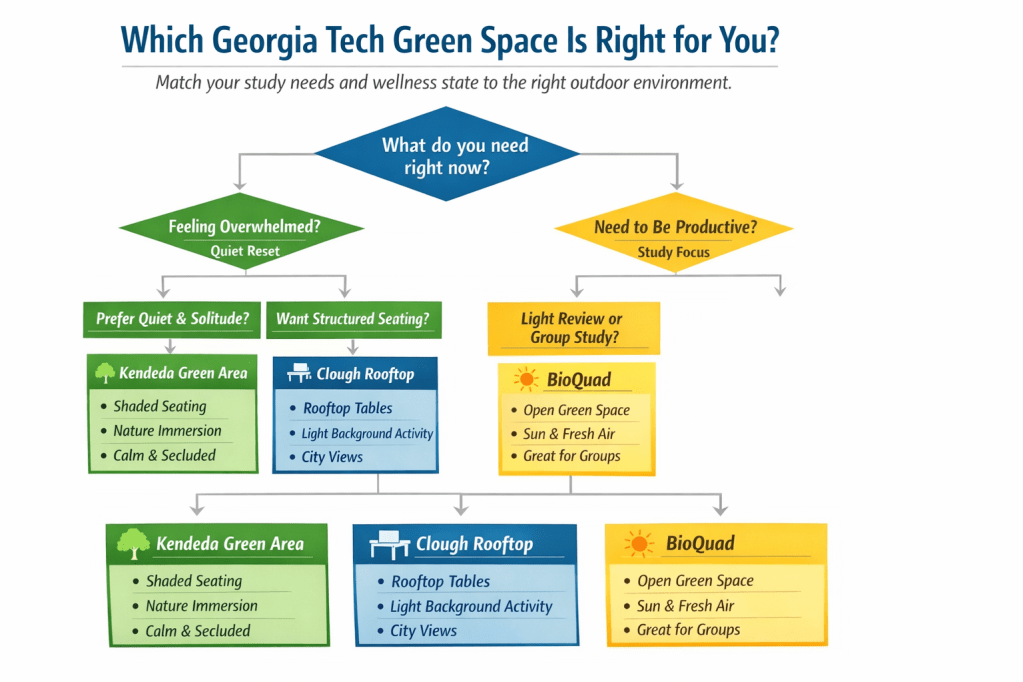
Infographic 1: “Which Green Space Is Right for You?” Decision Guide
Description:
A decision tree beginning with the question “What do you need right now?” The chart branches into options such as “Quiet & Solitude,” “Sun & Movement,” and “Structured Study Space,” directing students to Kendeda, BioQuad, or the Clough Rooftop.
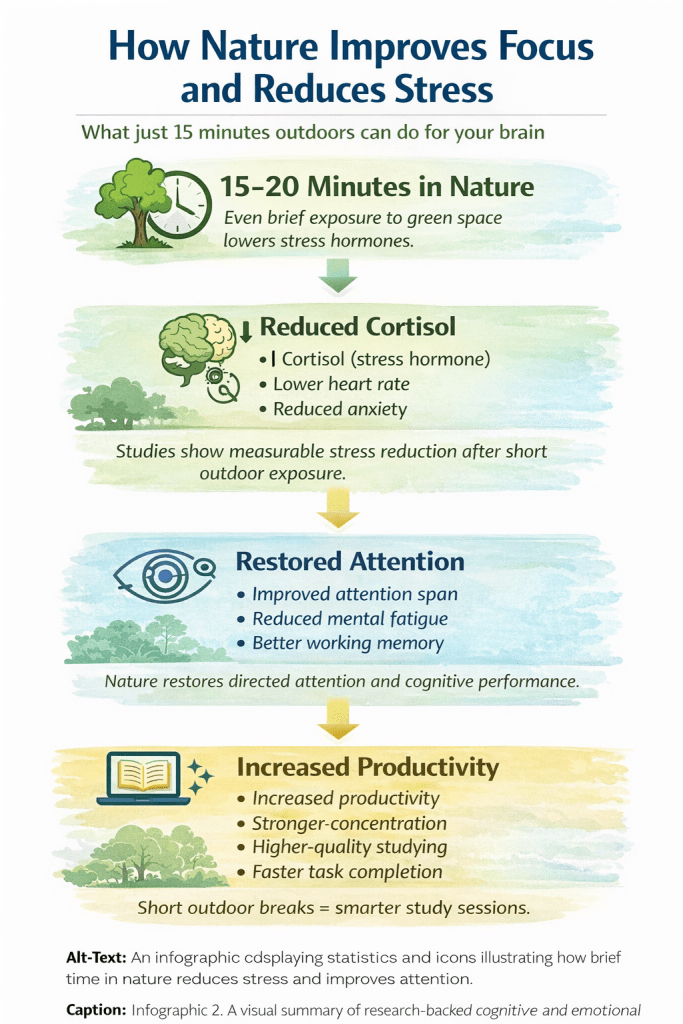
Infographic 2: “How Nature Improves Focus and Reduces Stress”
Description:
A visual showing:
- 15 minutes in nature → reduced cortisol
- Improved attention span
- Lower mental fatigue
- Increased productivity
Includes simple icons and short research-backed statistics.


Leave a comment