A Guide for Out-of-State First-Year Students With Busy Schedules
Authors: Aaron Luu, Francis Wu, Rudra Singh
Getting Used to a New School and City
Starting college is already a pretty big change, but moving to a different state can make it even harder. You have to get used to a new school, new people, harder classes, a different city, and being away from your family all at the same time. If you are also an athlete, working, or involved in a lot of activities, it can be even harder because you might not have much free time.
When we talked with LJ, a first-year student from Florida who plays football at Georgia Tech, a lot of the problems he talked about had more to do with adjusting to college than actually doing poorly in school. He said the workload at Georgia Tech was a lot different from his high school, Atlanta took some time to get used to, and meeting people outside of the people he already knew was not always easy. His schedule is also packed with football, classes, practice, and study hall, so he does not really have unlimited time to go to every club or event.
Georgia Tech also has programs specifically meant to help new students make connections and get comfortable at Tech. FASET, Wreck Camp, and Week of Welcome are some examples of programs made to help students learn about campus and meet other people. Georgia Tech New Student & Transition Programs
This guide is meant to help students in a similar situation slowly get more comfortable at Georgia Tech. Instead of just telling people to join clubs or explore Atlanta, we want to give actual steps for building a routine, meeting people, staying connected with home, finding resources, and making Georgia Tech start to feel more familiar.
Step 1: Figure Out What Your Week Actually Looks Like
Before trying to add more things to your schedule, it helps to first see where your time is already going. Put classes, studying, practices, work, meals, sleep, and other responsibilities into one calendar. You should also actually leave some free time instead of filling every open hour with work.
Georgia Tech’s GT 2000 time management guide recommends creating a weekly schedule that includes schoolwork, sleep, normal daily tasks, and time for things you enjoy. It also suggests looking at your entire semester ahead of time so tests and large assignments do not randomly sneak up on you. GT 2000 Time Management Guide
For someone with a really packed schedule, seeing everything in one place can make it a lot easier to know when you actually have time.
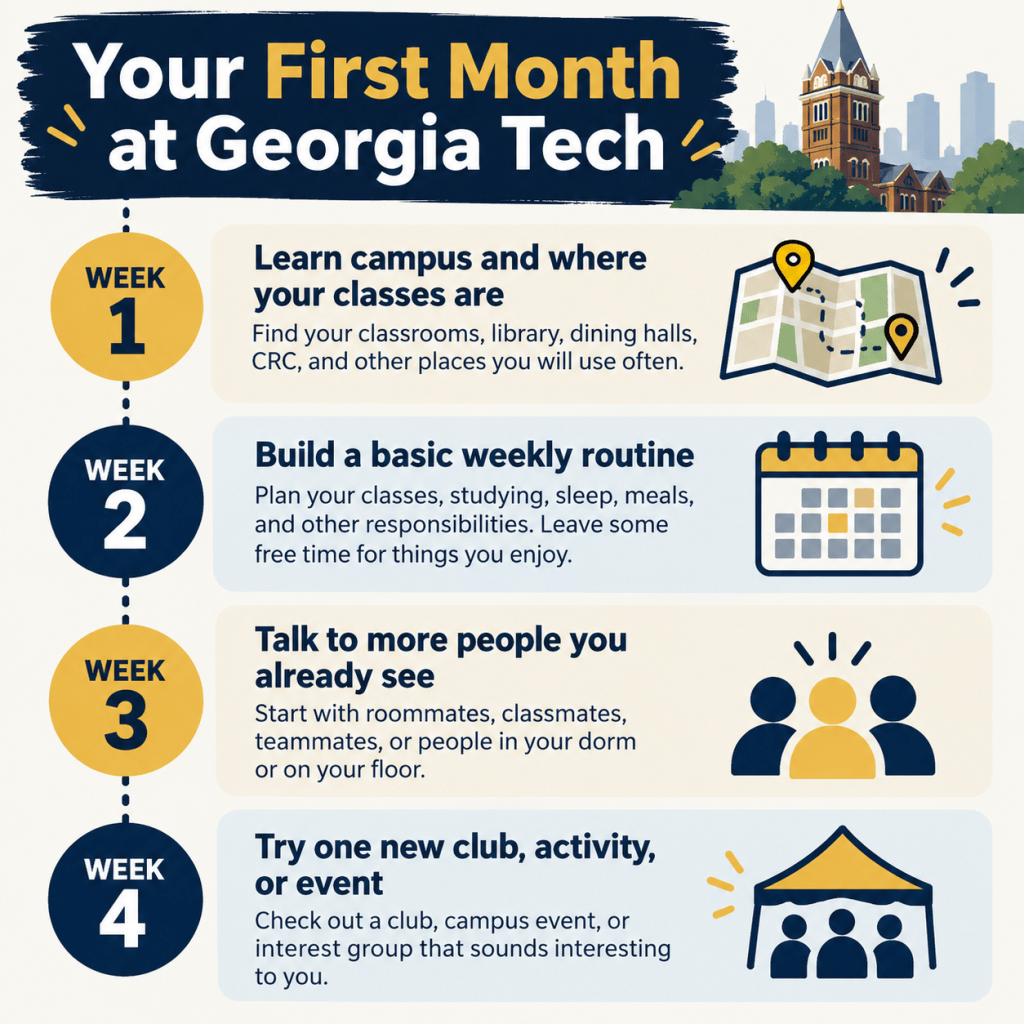
Figure 1. A simple four-week checklist for getting more comfortable during your first month at Georgia Tech. AI-generated with ChatGPT (OpenAI), prompted and reviewed by the authors, 28 Oct. 2026.
Step 2: Learn the Important Places Around Campus
Spend some time figuring out where the places you will actually use are. This could include your classes, the library, CRC, Student Center, dining halls, health services, and a couple places where you like studying.
You do not need to know every building at Georgia Tech. The main goal is just to stop feeling lost every time you need something. Once you know the places that are important to your normal week, campus starts feeling a lot smaller.
You can also save important locations on your phone or look at your route before leaving if you have never been somewhere before.

Figure 2. Week of Welcome event for first-year students at the Mega Mixer on Stamps Field. Source: GT-How media library.
Step 3: Make a Routine That Actually Works for You
You do not need some perfect schedule where every hour is planned out. Having a general routine can still make things easier though.
For example, you might normally do assignments after your last class, eat dinner around the same time, and have one night where you finish anything left over from the week. Another student might have practices or work that completely change what their schedule looks like.
The important part is making something that works with your life instead of copying somebody else’s routine. After a while, things like studying, eating, exercising, and sleeping become easier because you are not deciding when to do everything from scratch every day.
Step 4: Start With the People You Already See
Meeting people does not always mean walking into some huge event alone and introducing yourself to random people.
Start with roommates, classmates, teammates, people in your dorm, or people you regularly see. Ask somebody if they want to get food after class, study together, go to the CRC, or go to an event.
This is probably easier for someone with a busy schedule because you are meeting people during things you were already going to do anyway.
Even if those people do not become your closest friends, they can introduce you to other people and make campus feel less unfamiliar.
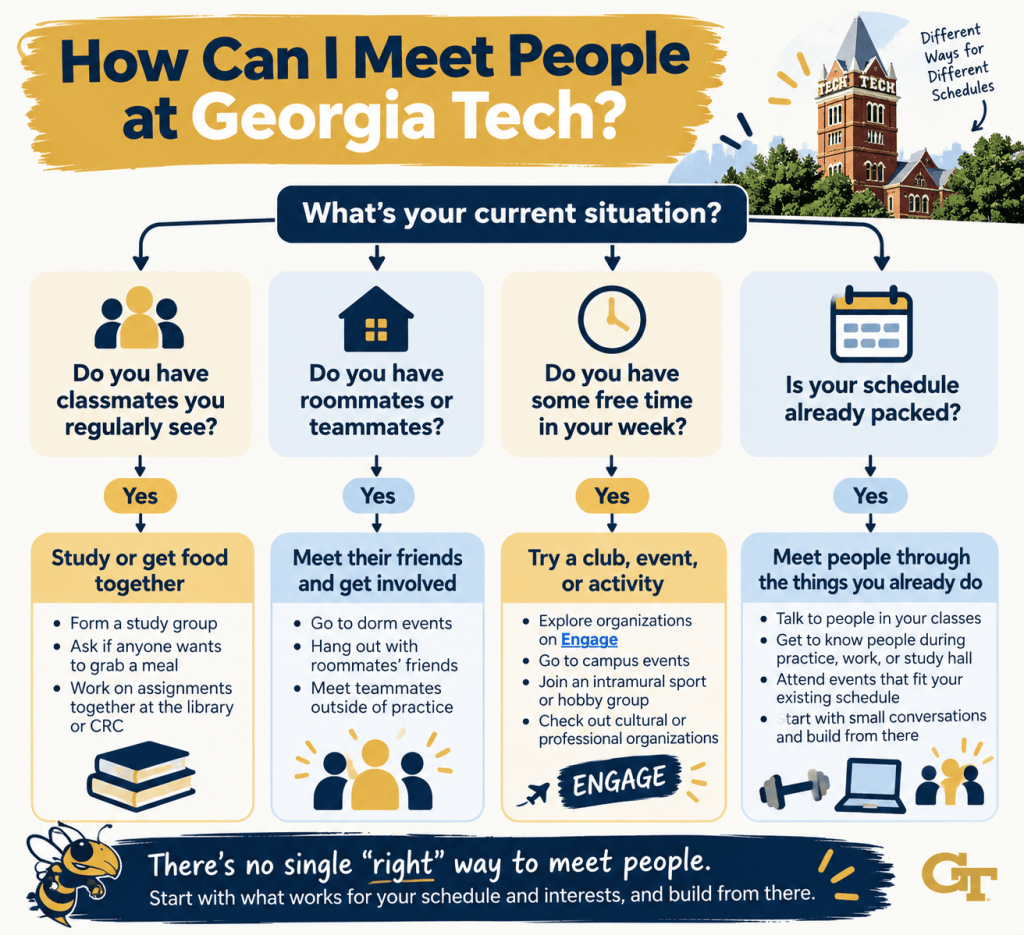
Figure 3. Different ways Georgia Tech students can meet people depending on the time and connections they already have. AI-generated with ChatGPT (OpenAI), prompted and reviewed by the authors, 28 Oct. 2026.
Step 5: Join One Thing Outside of Your Normal Group
Once you are more comfortable, try joining one thing that is outside of the people you already spend time with. This could be a cultural organization, hobby club, volunteering group, intramural sport, professional organization, or basically anything you are interested in.
You also do not need to join five clubs at once. If your schedule is already busy, start with one.
Georgia Tech has more than 600 registered student organizations, and Engage lets students look through organizations based on their interests. Instead of joining something just because everyone else is doing it, find something you would actually want to show up to. Georgia Tech Student Organizations Resource Guide
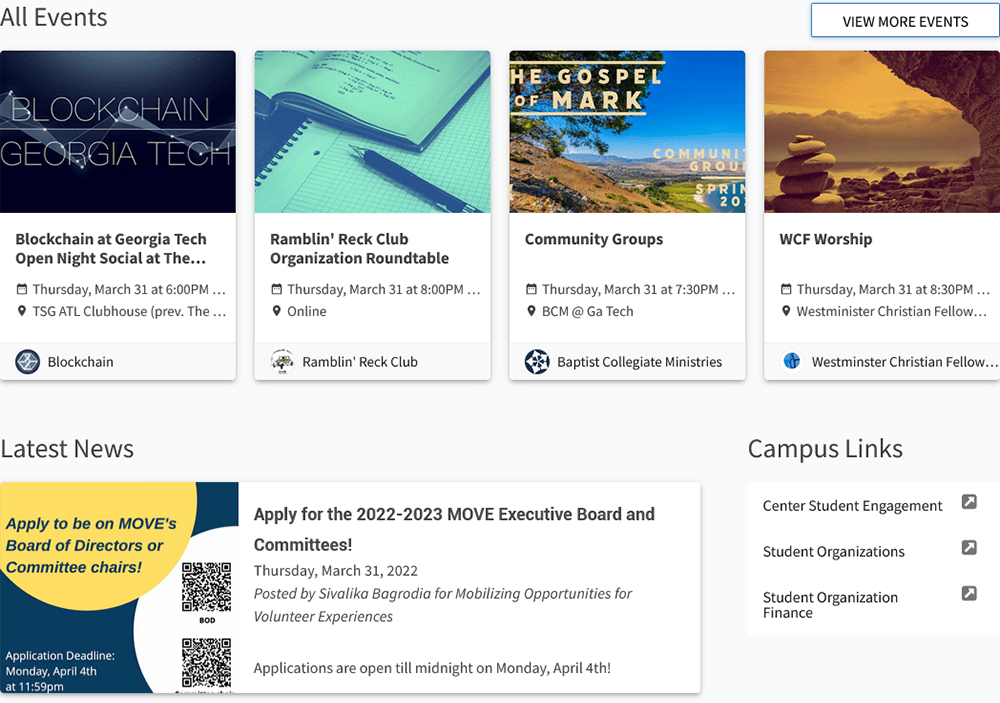
Figure 4. Georgia Tech students can use Engage to search for organizations that match their interests. Source: Georgia Tech Engage.
Step 6: Stay Connected With People Back Home
Moving away does not mean you have to stop talking to the people you were close with before college.
Try finding time to call or FaceTime family or friends back home every once in a while. If your schedule is too busy for a long call, even sending a quick text can help.
At the same time, try not to spend all of your free time talking to people back home. You still want to give yourself chances to build a life at Georgia Tech too.
There is not really one correct balance. Some people might call home every day while somebody else might call once or twice a week. Do whatever makes the transition easier for you.
Step 7: Get Used to Atlanta a Little at a Time
Atlanta can feel pretty different if you are coming from somewhere smaller or have never lived in a city before. You do not need to explore everything during your first few weeks.
Start around campus and Midtown. Go somewhere to eat with friends, learn where the Midtown MARTA station is, or visit nearby places before trying to travel farther away.
Georgia Tech’s Stinger buses can also help you get around campus and nearby areas. Georgia Tech currently has routes that connect campus with places such as Midtown MARTA and Atlantic Station. Learning the basic transportation options can make the city feel a lot easier to navigate without needing a car. Georgia Tech Stinger Shuttle Information
Step 8: Give Yourself Time
You probably are not going to have your entire college life figured out during the first few weeks. It takes time to find your friends, figure out your schedule, learn the campus, and get comfortable living somewhere new.
If something is not working, change it and try something else. Maybe the club you joined is not for you. Maybe your study routine is not working anymore. Maybe you thought you would become really close with one group of people and it just did not happen.
That does not mean you are doing college wrong. The whole point is slowly figuring out what works for you.
Final Thoughts
Georgia Tech probably is not going to feel like home immediately, especially if you moved far away and already have a packed schedule. The main thing is slowly building things that make you more comfortable here.
Having a routine, knowing your way around campus, meeting a few people, staying connected with family, and learning Atlanta can make a pretty big difference over time. You also do not have to do all of these things immediately. Start with whatever is giving you the most trouble and work from there.
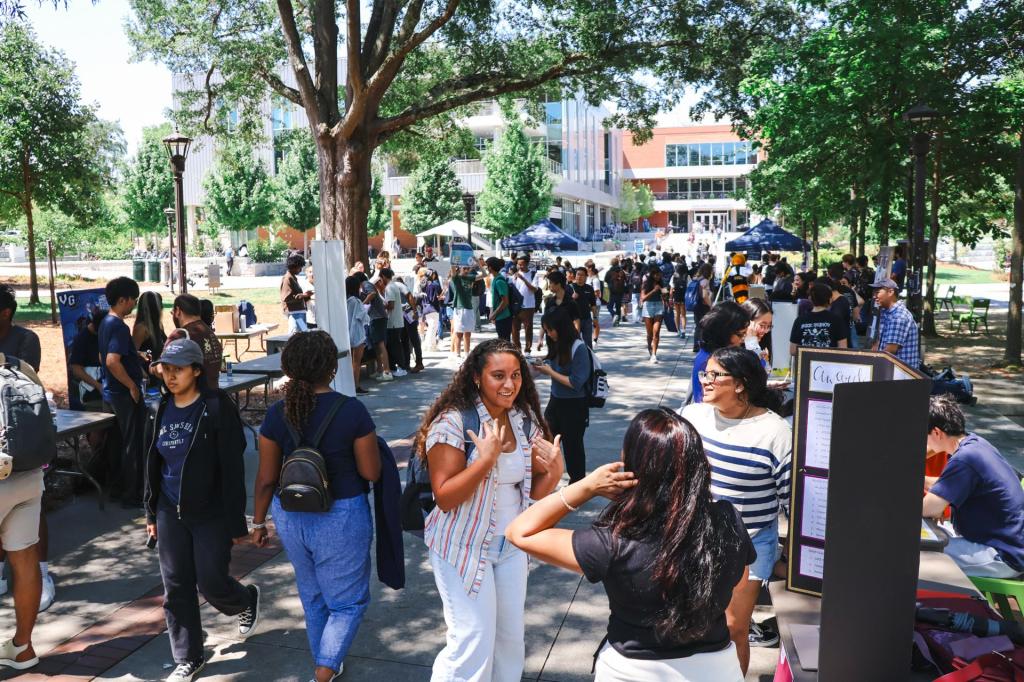
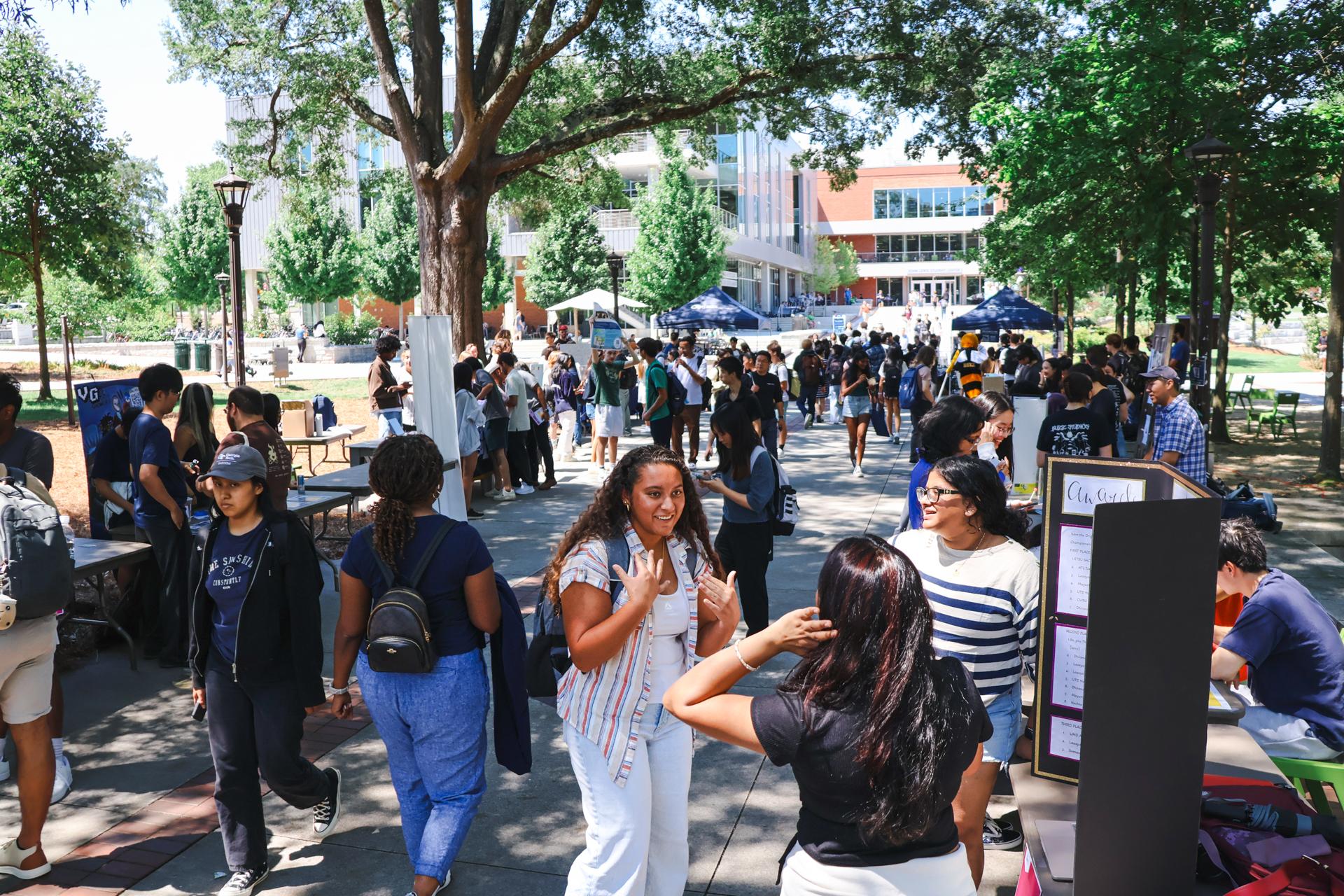
Figure 5. Students explore organizations at an outdoor campus club fair. Source: GT-How media library.
Sources and Resources
- Georgia Tech New Student & Transition Programs
- Georgia Tech GT 2000 Time Management Guide
- Georgia Tech Student Organizations Resource Guide
- Georgia Tech Stinger Shuttle Information
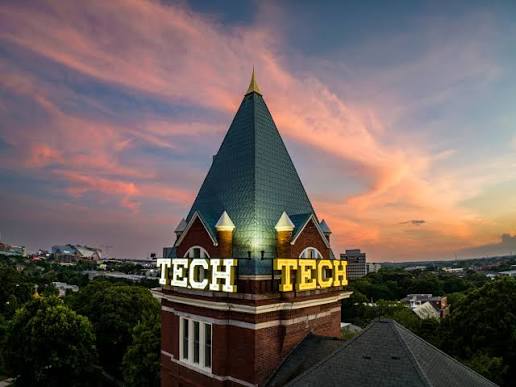
Featured image credit: Georgia Institute of Technology, George W. Woodruff School of Mechanical Engineering. Source: Georgia Tech Mechanical Engineering.