

How to Find Campus Opportunities and Turn Your Experience Into Work You Can Showcase
By Ian Valderas, Jack English, and Rohith Madhuker
Our GTHow guide focuses on how Georgia Tech students can start putting together a portfolio that stands out through opportunities available on and around campus. Newer students often hear that projects and extracurricular experience matter for internships and future careers, but figuring out where to find those opportunities can be difficult. Georgia Tech has organizations, hackathons, project teams, research opportunities, and events, yet students may only hear about the largest or most popular ones.
This guide gives students a clear process for identifying their interests, finding both popular and lesser-known organizations, joining events and hackathons, choosing meaningful projects, and documenting their work. Students do not need an impressive resume or years of experience to start. The resources around Georgia Tech will really help when to comes to gradually building skills and projects that demonstrate those skills you want to have shine.
Rather than simply listing organizations or events, this guide explains how students can turn involvement into experience they can showcase to employers and other professional audiences. It also helps students decide which opportunities match their interests and are worth their time, especially when they are still new to Georgia Tech. By following the steps in order, students can move from exploring an interest to creating a clear portfolio entry without needing to know every opportunity on campus beforehand.
On This Page
- Identify Your Interests and Skills
- Search for Georgia Tech Organizations
- Look Beyond the Most Popular Groups
- Attend Meetings and Campus Events
- Participate in Hackathons and Short-Term Events
- Choose a Project and Make a Clear Contribution
- Document Your Work
- Turn the Experience Into a Portfolio Entry
Start With What You Want to Build
Step 1: Identify Your Interests and Skills
Start by figuring out exactly what types of organizations and projects you actually want to put time into overall. Write down two or three interests, skills you already have, and one skill you want to improve. Then narrow broad interests into searchable areas. An example of this would be a student who might be interested in XR might look for Unity development, 3D design, or immersive media projects. This gives you a reason for choosing each opportunity instead of joining something only because it is popular.
Quick tip: Prioritize opportunities that strengthen a current skill or help you learn one you want to showcase later.
Find Opportunities at Georgia Tech
Step 2: Search for Georgia Tech Organizations
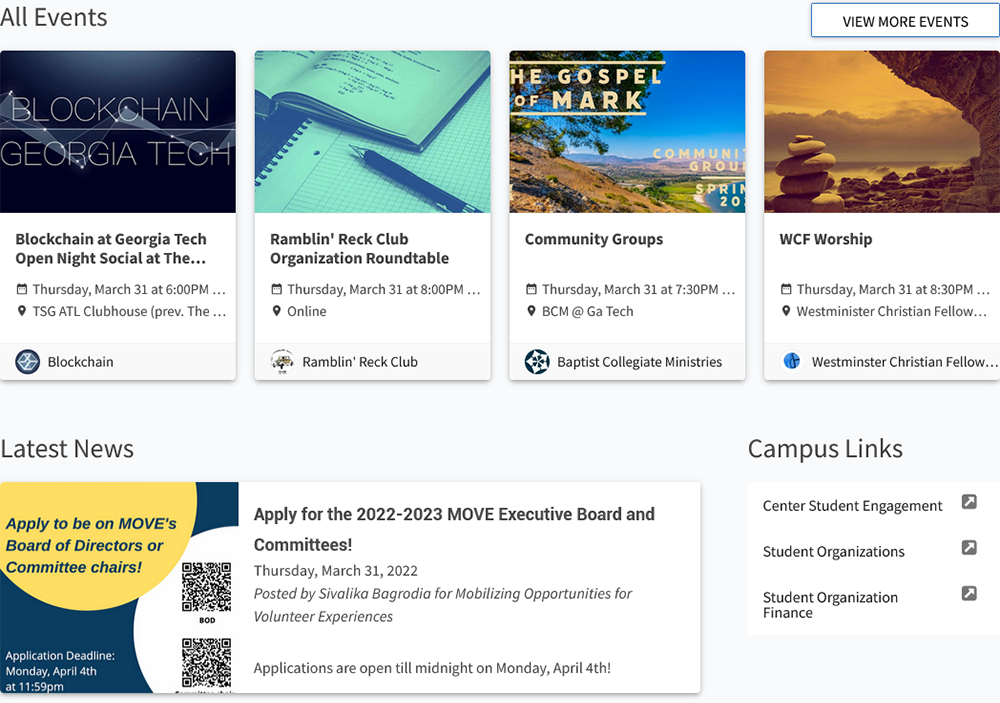
Use Georgia Tech resources to build a short list of organizations connected to your interests. The Georgia Tech Engage organization directory is a useful starting point when you do not know a group by name. Search several related terms instead of only one. Someone interested in product development, for example, could also search design, computing, entrepreneurship, or consulting. Save three to five promising groups and check their current meetings, events, and projects before choosing where to spend your time.
Step 3: Look Beyond the Most Popular Groups
Do not limit your search to organizations everyone already knows. Smaller or specialized groups may give you more direct chances to contribute to projects and take responsibility for part of the work. Georgia Tech’s Week of Welcome is also useful for newer students because it highlights campus events and involvement opportunities. Compare groups by what members actually do, whether beginners can contribute, how often they meet, and whether their work connects to your goals.
[INSERT STUDENT-CREATED INFOGRAPHIC 1: GT OPPORTUNITY PATH HERE]
Turn Involvement Into Experience
Step 4: Attend Meetings and Campus Events
Before committing to an organization, attend an introductory meeting, workshop, showcase, or project event. Ask what projects are active, what beginners usually do, how teams are formed, and how much time members normally commit. If possible, visit more than one group. After each event, write down one skill you could learn and one project you could contribute to. This lets you compare opportunities using what the group actually does rather than only its online description.
Step 5: Participate in Hackathons and Short-Term Events
Hackathons are useful when you want concentrated project experience without immediately making a semester-long commitment. Georgia Tech has several hackathons that focus on different interests, so you do not have to limit yourself to the biggest event on campus. HackGT, Georgia Tech’s largest hackathon, offers several project tracks and gives students opportunities to form teams, attend workshops, and build a project over one weekend.
You should also look for more specialized events that match what you actually want to learn. ImmerseGT focuses specifically on extended reality, giving students the chance to create VR, AR, and mixed-reality projects using XR hardware and tools. Students interested in artificial intelligence can look into AI ATL, a 36-hour hackathon focused on AI projects, workshops, networking, and demonstrations. More focused hackathons like these can make it easier to find teammates that might be also interested in the same work you are while creating a project that connects directly to the area you want represented in your portfolio.
Before attending any hackathon, choose a role or skill you want to practice, such as development, hardware, design, machine learning, XR development, or presentation. During the event, save screenshots, project links, and notes about your contribution so you can later explain the problem, your role, and what the team produced.

Step 6: Choose a Project and Make a Clear Contribution
Once you find a group or event you like, choose work where your contribution can be explained clearly. You do not need to lead the whole project. Try to own one specific piece, such as a feature, interface, model of some kind, test plan, data analysis, section just for documentation, or presentation. Before starting, define what you are responsible for and what a finished result should look like. A focused contribution is much easier to showcase than simply saying you were a team member.
Portfolio test: Be able to explain the problem, your personal contribution, and the result of the work.
Build Your Portfolio
Step 7: Document Your Work
Save evidence while the project is active instead of reconstructing everything months later. Keep useful content to show like screenshots, photos, design files, slides from presentations around that project, links allowing people to look deeper, and even stuff like short notes about important decisions. Record your role, tools, challenges, and any measurable result. For software work, keep the repository and documentation understandable. Also check whether the team has rules about what can be shared publicly. A small folder of organized evidence makes the final portfolio entry much easier to build.
Step 8: Turn the Experience Into a Portfolio Entry
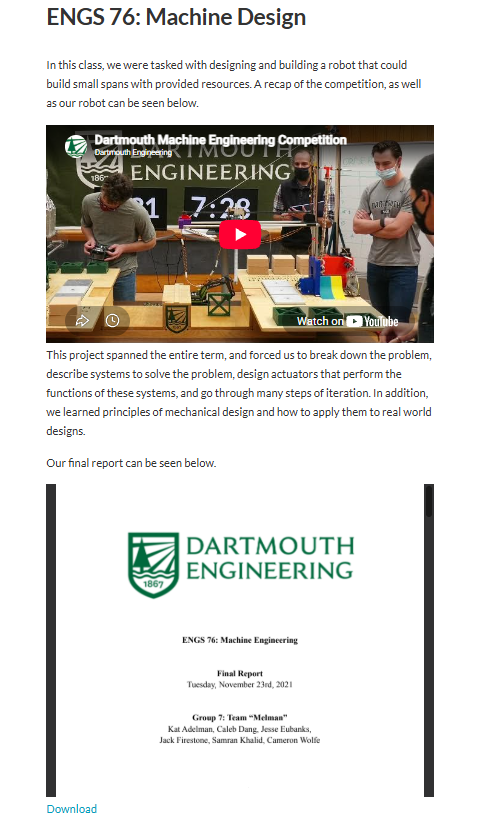
Turn the project into a short story another person can understand quickly. Explain the goal or problem, your role, what you completed, the tools or skills you used, the result, and what you learned. Add strong visuals and a project link when available. The Georgia Tech Career Center’s portfolio guidance describes portfolios as a way to demonstrate experience and capabilities to employers, so prioritize evidence of what you actually did. Update the entry as the project improves.
[INSERT STUDENT-CREATED INFOGRAPHIC 2: WHAT MAKES A STRONG PORTFOLIO ENTRY HERE]
Final Check Before You Publish Your Portfolio Entry
- Make the project goal understandable to someone who was not on the team.
- State your individual role instead of describing only what the full team did.
- Show the skills and tools you actually used.
- Include visuals, links, or other evidence when you are allowed to share them.
- Explain the result and what you learned.
- Keep the entry updated when the project changes or improves.
You do not need to wait for an internship to start building a portfolio. Begin with one opportunity that fits what you want to learn, make a contribution you can clearly explain, and document the work as you go. Over time, those experiences can show both what interests you and what you are capable of creating.


Leave a Reply