
By Aadarsh Battula and Sean Lynch
Introduction
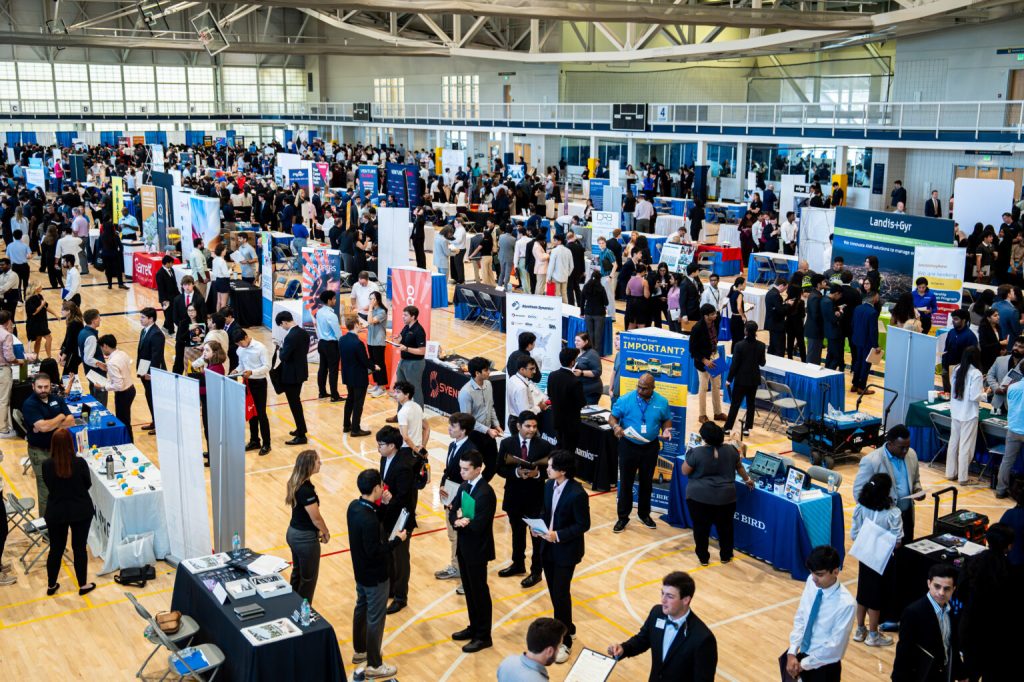
Walking into your first career fair at Georgia Tech can feel nerve-wracking. You’ve got a stack of resumes in your hand, recruiters all around, and it seems like everyone else knows exactly what to say. For many students, it can feel like a lot to handle.
But career fairs are also one of the best chances to land an internship or full-time job. With a bit of preparation, you can turn those five-minute conversations into real opportunities. This guide walks you through how to get ready, what to do during the fair, and how to follow up afterward.
Table of Contents
- Step 1: Research the Companies Before You Go
- Step 2: Update & Polish Your Resume
- Step 3: Prepare Your Elevator Pitch
- Step 4: Dress Professionally (What to Wear)
- Step 5: Pack Essentials
- Step 6: Navigating the Career Fair
- Step 7: Talking to Recruiters
- Step 8: Follow-Up After the Fair
Step 1: Research the Companies Before You Go
Before stepping into the career fair, take some time to research the companies that will be attending. Knowing who’s coming helps you focus your time, ask better questions, and make a stronger impression with recruiters.
Where to start:
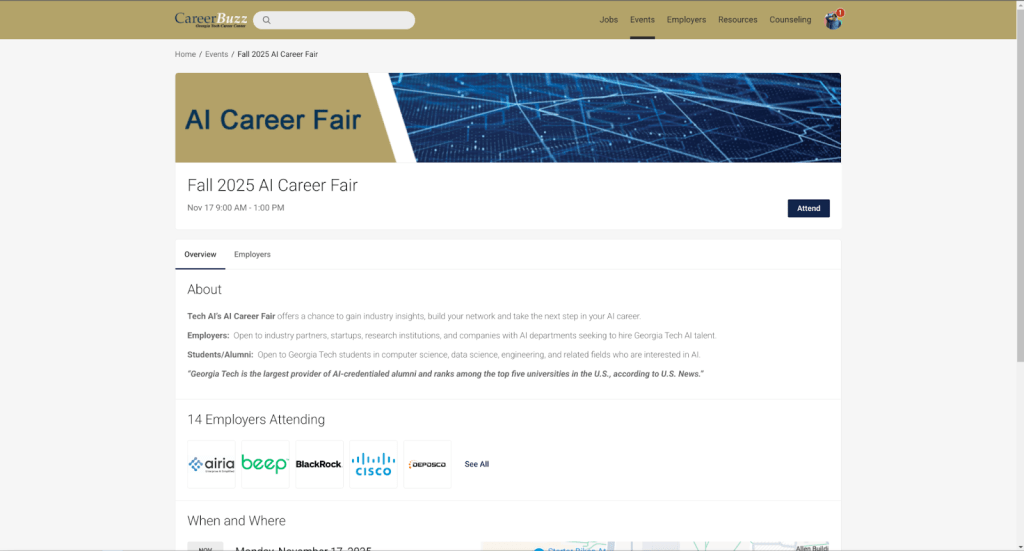
- Visit the Georgia Tech Career Fair website for the full list of attending employers.
- Browse through the list and note which organizations match your major, interests, or career goals.
- Make a short list of your top 5–10 companies and learn a few quick facts—what they do, current openings, and the skills they value most.
- Make sure to click Attend to register for the fair!
Pro Tip: If you complete and submit your company research assignment on Canvas (Career Services course), you can get early access to the career fair—up to one hour before it officially opens.
Step 2: Update & Polish Your Resume
Your resume is often the first impression you make, so keep it clean and easy to read.
Formatting Tips:
- Keep it to one page. Focus on experiences that relate directly to your target roles or industries.
- Use consistent formatting. Align headings, dates, and bullet points neatly; start each bullet with a strong action verb.
- Try LaTeX for layout. If you’re comfortable with coding, LaTeX templates auto-align sections (like Education, Experience, and Skills)—no manual formatting needed.
Before You Print:
- Run your resume through an online ATS evaluator or use ChatGPT for quick feedback on clarity, keywords, and structure.
- Bring a printed copy to the Career Center’s drop-in hours at the Bill Moore Student Success Center for personalized feedback.
Resume Do’s and Don’ts
| Do | Don’t |
|---|---|
| Use task–action–result (TAR) or XYZ format (Accomplished X by doing Y which resulted in Z) | Write vague qualitative descriptions of performance |
| Back up statements with data or evidence (Reduced downtime by 30%) | Make unsubstantiated claims (great communicator, team player) |
| Tailor your resume to each job posting | Reuse the same resume for every application |
| Begin bullets with strong action verbs (led, implemented, optimized) | Start bullets with weak verbs (helped, assisted, worked on) |
| Keep formatting consistent, simple, and ATS-friendly | Use fancy templates, tables, or graphics that break parsers |
| Emphasize relevant, recent experience | Include outdated or irrelevant jobs just to fill space |
| Include skills and tools that match the job requirements | List every skill you’ve ever tried regardless of relevance |
| Proofread for grammar, tense, and alignment | Submit with typos, inconsistent tense, or sloppy formatting |
| Maintain parallel structure across bullets | Mix styles or phrasing (Developed… / I was responsible…) |
Step 3: Prepare Your Elevator Pitch
Your elevator pitch is a quick, 30-second intro that helps recruiters remember who you are and what you’re looking for. It’s your chance to make a confident first impression and start a real conversation.
How to Structure It: Name → Major/Year → Key Experience or Extracurricular → Career Goal or Interest in the Company
Pro Tips:
- Keep it short: 45-60 seconds
- Personalize it depending on who you’re speaking with. If it’s someone technical, talk more about your technical projects. If it’s a recruiter, emphasize more of your career interests and soft skills.
Step 4: Dress Professionally (What to Wear)
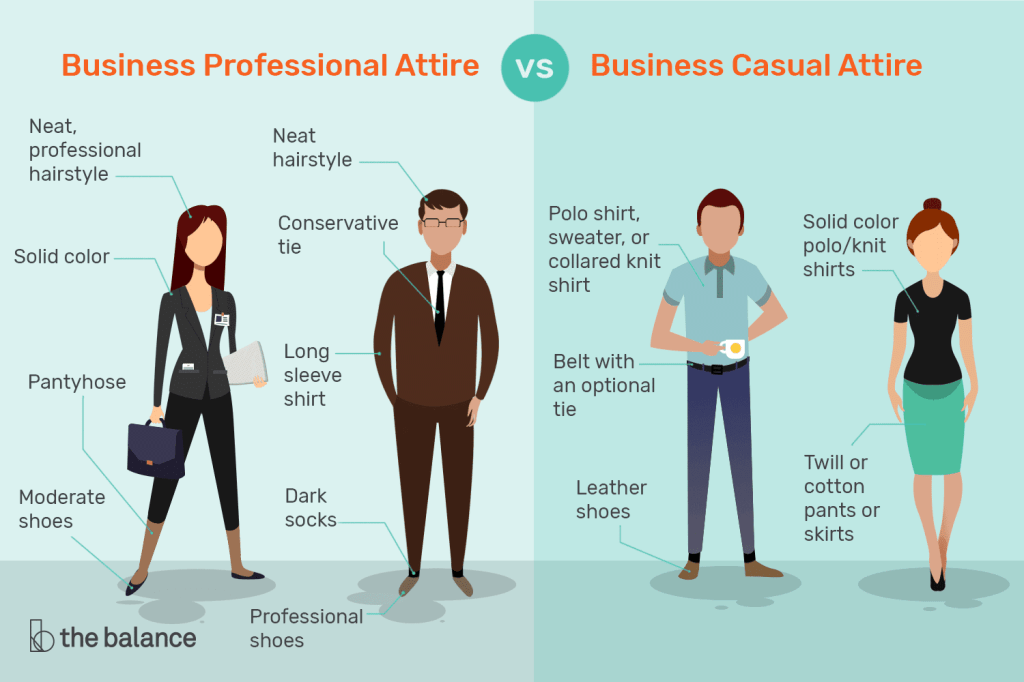
Even though many companies today have a more casual work culture, it’s still smart to dress business professional for the career fair. First impressions go a long way, and looking put-together shows recruiters that you’re serious about the opportunity.
Step 5: Pack Essentials
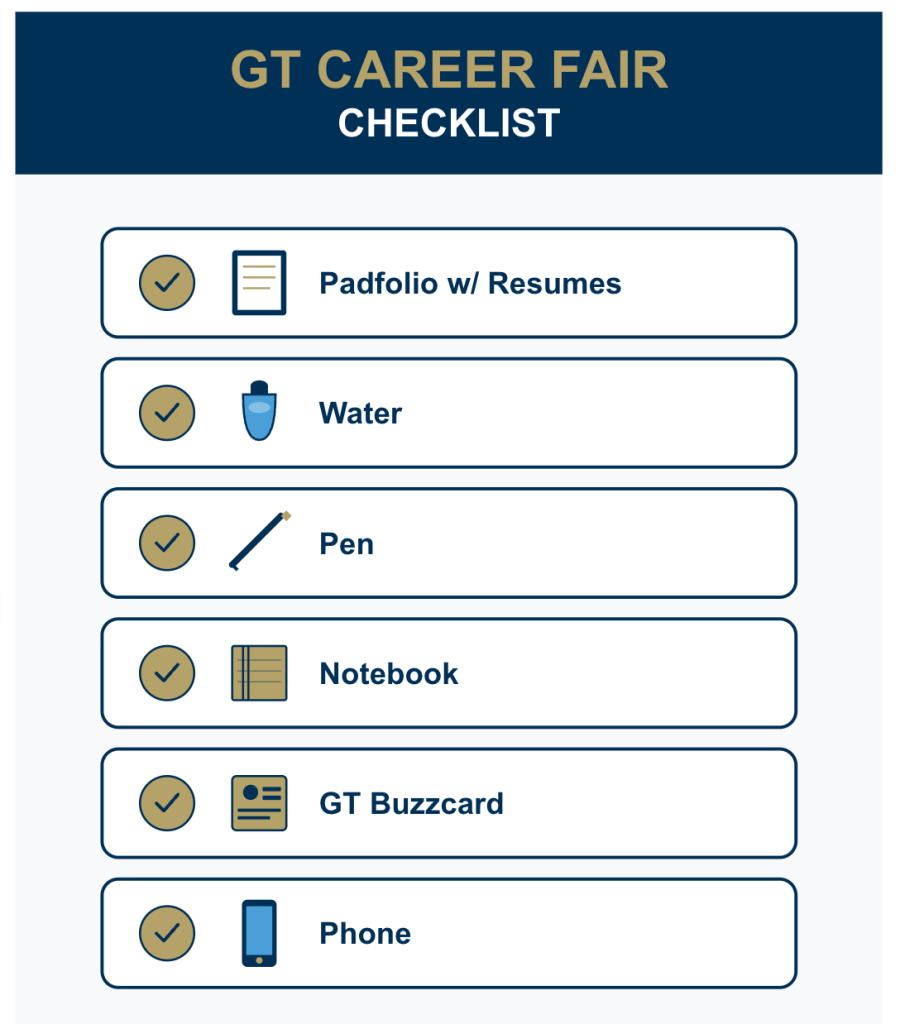
Bringing the right items can make your career fair experience much smoother. Print your resumes a day or two early since campus printers often get overloaded on the morning of the fair. Having everything ready ahead of time saves stress and helps you stay focused on networking instead of scrambling for supplies.
Step 6: Navigating the Career Fair
It’s nearly impossible to talk to every company, so focus on your top choices first. Use your company research and the fair map to plan your route and make the most of your time.
How to Navigate Efficiently:
- Plan your route. Start with your top-priority companies, then visit others nearby.
- Be strategic with time. Avoid long lines early on and circle back later when it’s less crowded.
- Stay flexible. If a smaller company has a short line or catches your attention while you’re walking around, stop by. Some of the best opportunities come from unexpected conversations.
Pro Tip:
Try to stay for the entire event. The last hour is usually less crowded, which means more one-on-one time with recruiters. Also, attending the career fair counts as an excused absence for classes, so take advantage of the full time to network and explore opportunities.
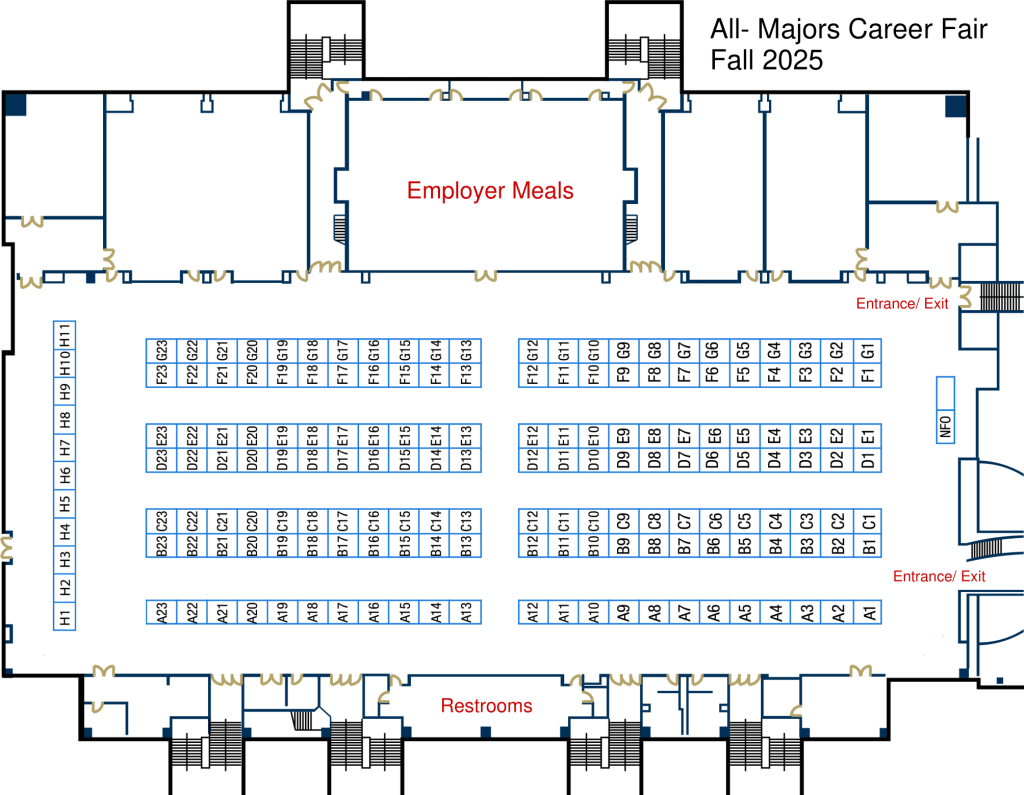
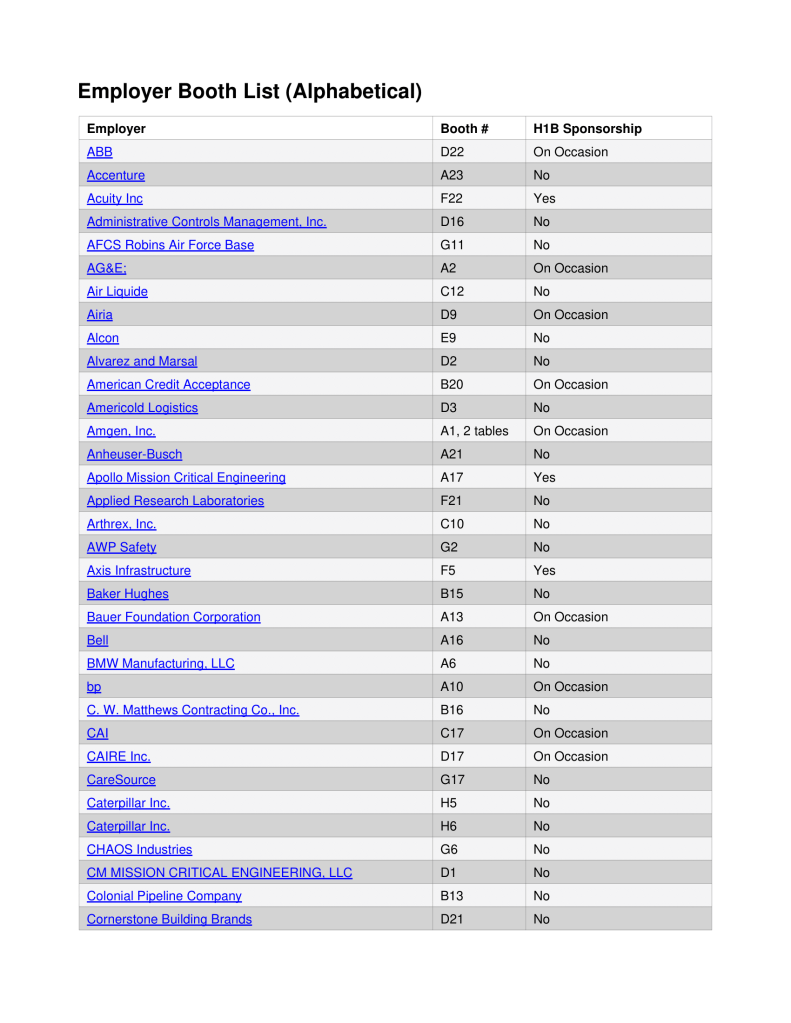
A screenshot of an arrangement of booths at the Fall 2025 Georgia Tech Career Fair. Includes list of employers and their respective booths.
Step 7: Talking to Recruiters
Making a great impression with recruiters is all about confidence and connection. When you walk up to a booth, know what you want to say and what role you’re interested in.
How to Approach Recruiters:
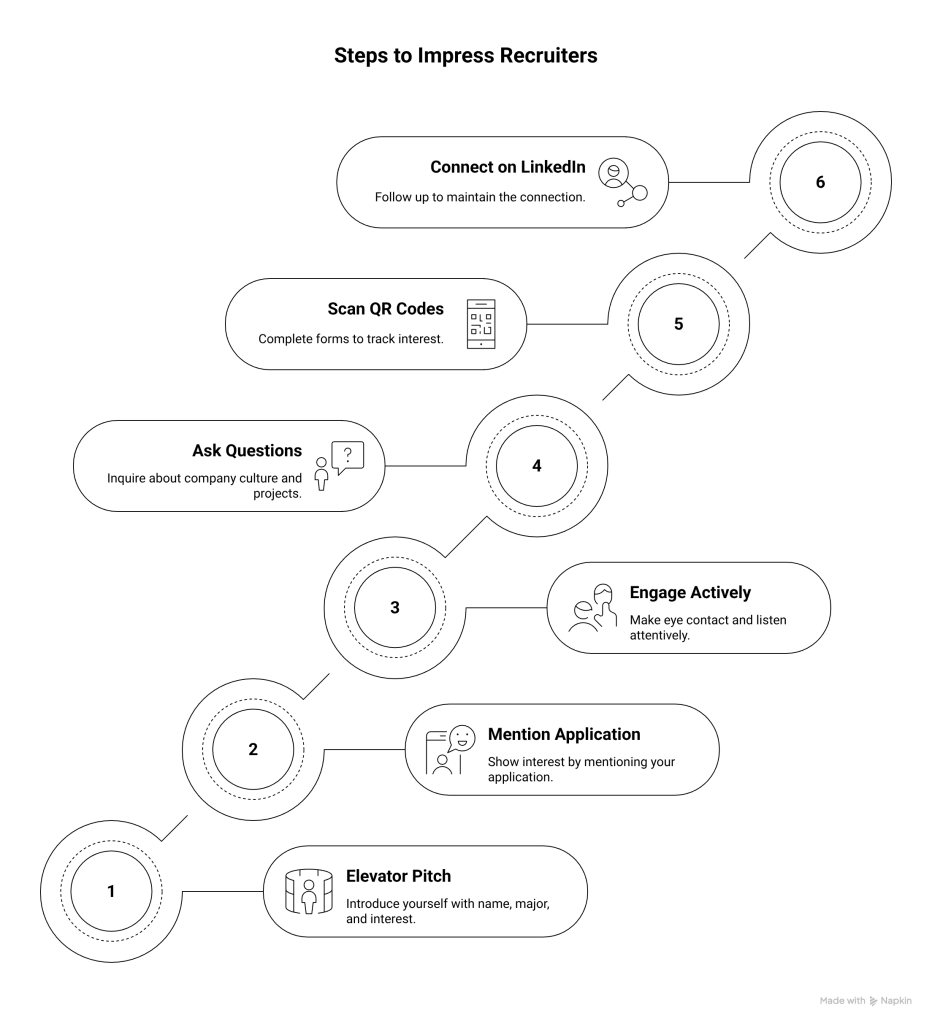
- Give your elevator pitch: your name, major, and the position or company you’re interested in.
- If you’ve already applied for a role, make sure to mention it to show interest.
- Make eye contact, smile, and actively listen while they speak.
- Ask about company culture, current projects, or what they look for in candidates from your company research.
Before You Leave:
- Scan QR codes or fill out forms. Many recruiters track interest through these forms, so don’t skip them.
- Connect on LinkedIn. Thank them for their time and send a follow-up message after the fair to keep the connection going.
Step 8: Follow-Up After the Fair
Your work doesn’t end when the fair does. Following up helps recruiters remember you and shows that you’re genuinely interested in their company.
How to Follow Up Effectively:
- Send a thank-you message on LinkedIn. Within 24–48 hours, connect with the recruiter you spoke with and send a short, personalized message.
- Keep researching. Many companies host info sessions, tech talks, or networking events right after the fair. Keep an eye on your email and CareerBuzz for invitations so you can continue building those connections.
- Apply to positions. After the fair, apply for any roles you discussed and make sure to list the Career Fair as how you heard about the position. This helps recruiters connect your application to your conversation and shows that you followed through.
Wrapping Up
Thanks for reading our guide! Getting ready for the Georgia Tech Career Fair can take some effort, but putting in the time to research companies, update your resume, and practice your pitch really pays off. Each step helps you feel more confident and prepared when it matters most. Good luck!
 GT-How
Leave a comment