

Authors: Athena Hung and Safi Uddin
Introduction
Starting college as a first year student is exciting but it can also feel overwhelming. First year students already have to adjust to the new environment, new classes and different forms of learning. On top of that, CS students are asked to pick their threads without being given a chance to figure out what they like and what the threads are. With this guide, first year students will feel less stressed and more informed before choosing their threads.
Table of Contents
- Learn about the Nine Threads
- Take Introductory Courses
- Recommended Thread Courses
- Declare Threads Officially
- Change Your Threads
- Learn about Careers Related to Each Thread
- Explore Threads
Step 1: Learn about the Nine Threads

The CS curriculum includes courses that study the fundamentals of programming and computing theory and specific threads that allow students to studying various computing paths in depth. Threads are designed for students to tailor their degree to specific areas in Computer Science. Students are required to choose two threads for their degree. This link specifies the requirements for all thread combinations. Explore the nine threads available in Georgia Tech’s Computer Science program below.

Cybersecurity and Privacy
The Cybersecurity and Privacy thread involves building security and privacy measures for computer systems to protect the system and its data against malicious actors who seek to misuse them. Students can expect to learn to anticipate potential threats, identify system vulnerabilities, and design strategies to prevent, detect, and respond to cyber attacks. Students will gain an understanding of how cybersecurity impacts individuals, organizations, and society. They explore questions such as how companies protect customer data, how governments address cyber threats, and how privacy concerns influence technology design.

Devices
The Devices thread involves creating computers that are embedded in physical objects and how they interact with the physical world. These are known as embedded systems, and they appear in many everyday technologies such as smartphones, robots, and smart home appliances. Students in this thread learn how to design and test devices that must work within physical limits, such as size, power and bandwidth. This thread teaches students how computing can extend beyond traditional computers to interact with the physical world around us. They gain hands-on experience working with sensors, actuators and other components that allow devices to sense and respond to their environment.

Information Internetworks
The Information Internetworks thread focuses on how information is represented, transformed, transmitted and presented in computer systems. It explores how raw data can be transformed into useful information by capturing, representing, organizing, transforming, communicating and presenting it effectively. Students in this thread learn how large-scale information systems used by multi-national organizations store, process, and deliver data securely and efficiently across different locations.
Intelligence
The Intelligence thread involves studying models of human-level intelligence and rational agents. Students explore how both artificial and natural agents (like humans, ants, or bees) gather information, make decisions, and respond to their environment. By studying these processes, they learn how to design and build intelligent systems that mimic or model aspects of human and animal cognition. The Intelligence thread provides a strong foundation for fields like artificial intelligence, machine learning, computer vision, cognitive science, and many other disciplines where intelligent systems play a central role.

Media
The Media thread involves building systems to integrate creative outlets and computing abilities. It teaches students how to design and build systems that combine technology with art, storytelling, and media. Students learn how computers can be used to create animation, digital art, video games, and photography by transforming creative ideas into digital content. In this thread, students develop technical and creative skills. They learn about the computational foundations behind digital media, such as graphics, sound and visual effects, and how to design computer architectures to control the interface between hardware and software.
Modeling and Simulation
The Modeling and Simulation thread involves using mathematics to represent natural and physical processes. Students in this thread learn how to model complex processes such as weather patterns, biological systems, supply chains and computer networks using mathematics and computer software. Students explore how these systems behave and predict how they might change under different conditions. This thread explore the intersection between mathematical theory, scientific principles, and computer programming. Students learn how to take abstract concepts such as equations or system behaviors and turn them into computer models that can be tested and analyzed.
People
The People thread involves studying the relationship between humans and computing systems. This thread prepares students to design, build, and evaluate systems that place people at the center, ensuring that technology is intuitive, accessible and effective for its users. Students in this thread develop an understanding of theoretical and practical foundations of human-computer interaction. Students study how humans think, learn and behave when using technology and apply this understanding to create systems that improve user experiences. This includes designing user interfaces, evaluating usability and considering how computing impacts society and everyday life.

Systems and Architecture
The Systems and Architecture thread involves creating computer architectures. Students learn about how computer hardware and software, such as processors, memory, operating systems, programming interfaces and languages, compliers, debuggers and profilers, work together to create a complete, functioning computing system. Students in this thread learn about the entire structure of computing systems, from low-level hardware design and memory organization to high-level programming interfaces and tools. Students explore a wide range of system types, from multi-core and distributed systems that power cloud computing, to specialized systems used in areas like gaming, healthcare, and aviation.

Theory
The Theory thread involves studying the theoretical knowledge that computing principles use. Students learn how problems can be solved efficiently as the size and complexity of the problems grow. This thread helps students learn to analyze and improve the performance of algorithms and computational systems in a precise, mathematical way. Students in the Theory thread study abstract models of computation, complexity classes and general strategies for designing algorithms. They also learn how to measure and compare the efficiency of different approaches. Students in this thread could pursue a Ph.D in theoretical computer science.
Step 2: Take Introductory Courses
Before you start taking classes related to your threads, there are a couple of classes that every Georgia Tech CS student has to take. These introductory courses are pre-requisites for thread related courses.
- CS 1301: Intro to Computing
- CS 1331: Object Oriented Programming
- CS 1332: Data Structures and Algorithms
- CS 2050: Discrete Mathematics
Step 3: Take Recommended Thread Courses
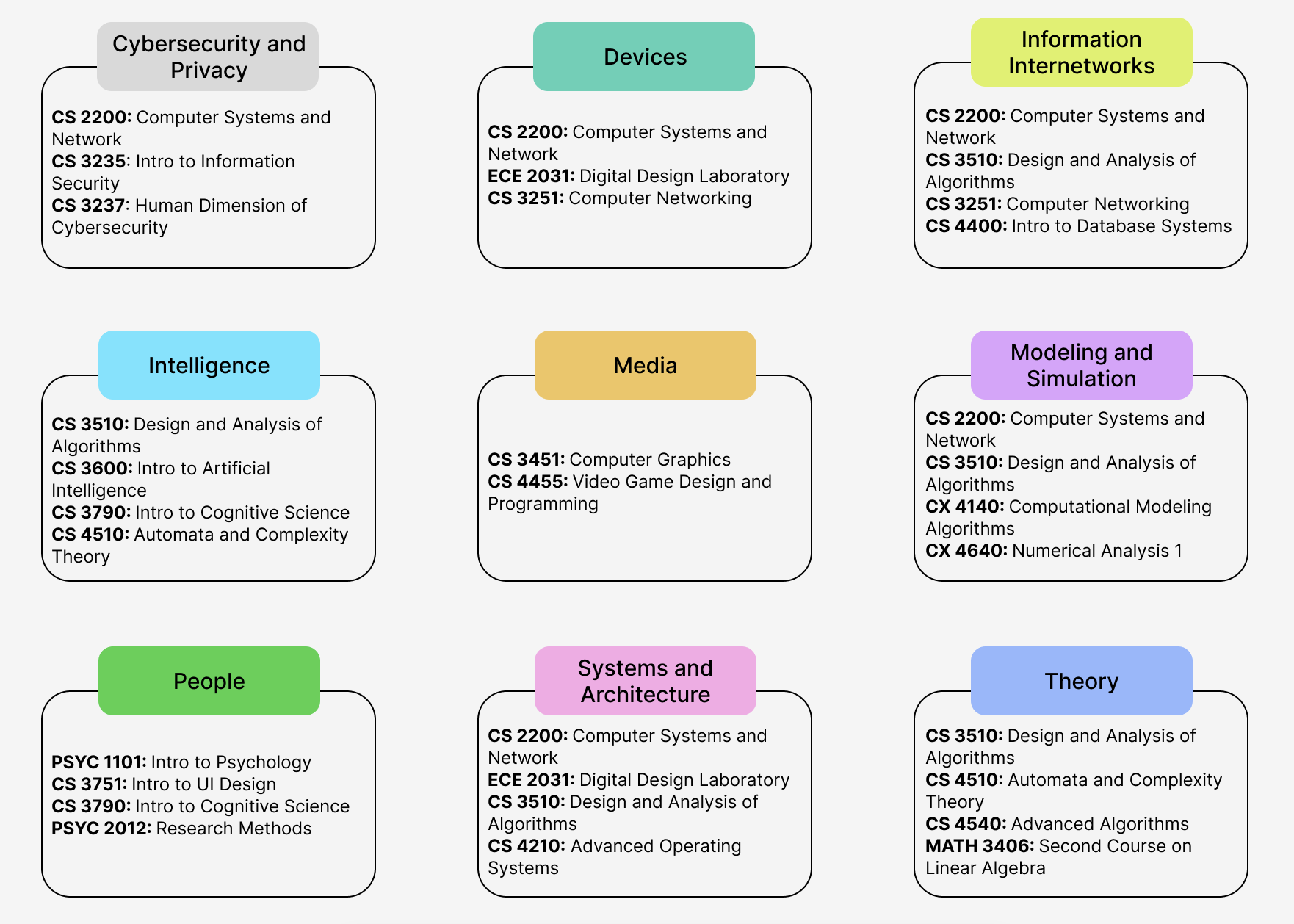
After completing your introductory courses, you can take upper level (3XXX-4XXX) courses that are thread specific. Taking a thread specific course can help you decide whether you would be interested in that thread. Here are recommended electives to understand the core concepts of each thread.
Step 4: Declare Threads Officially
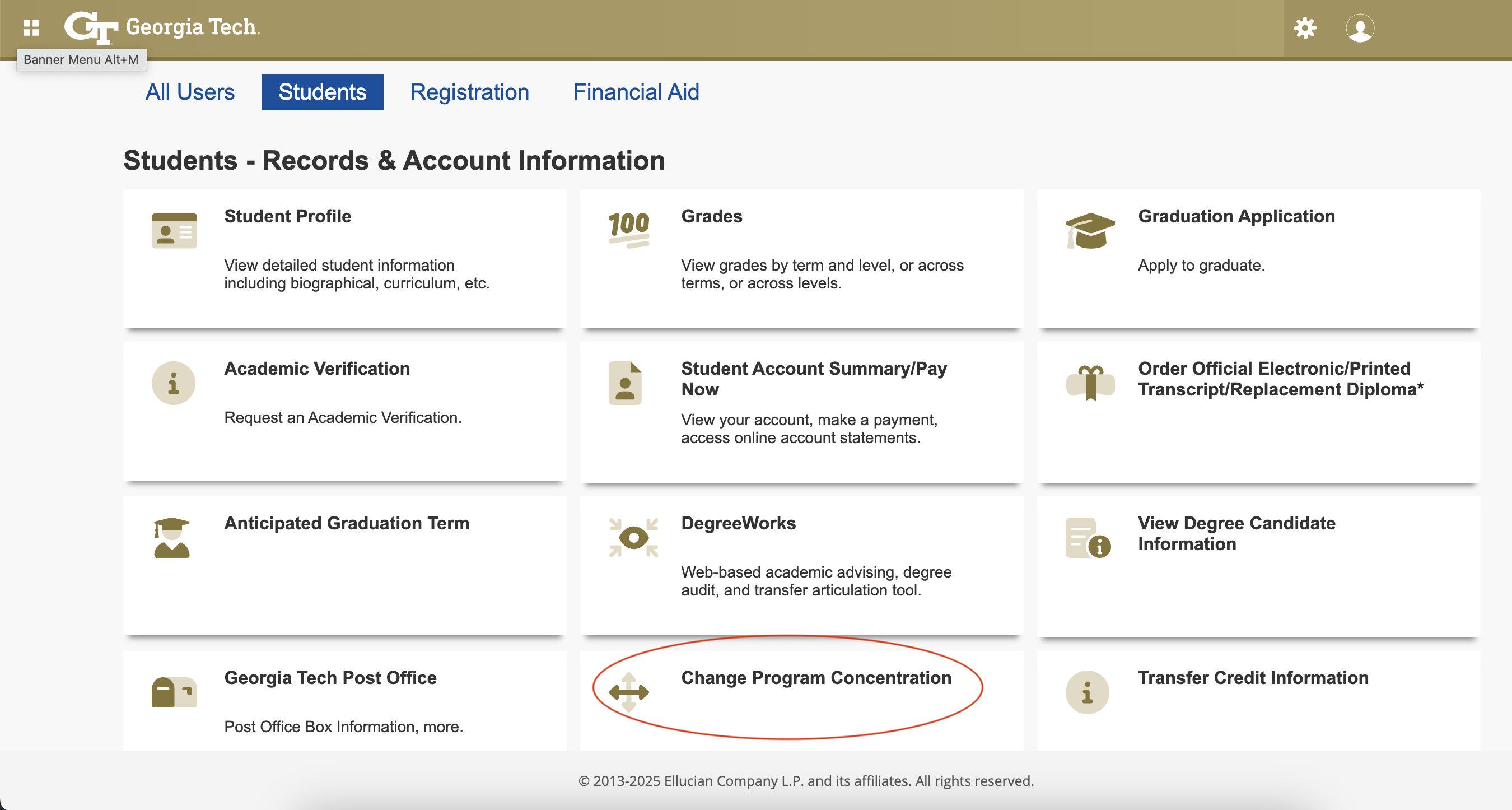
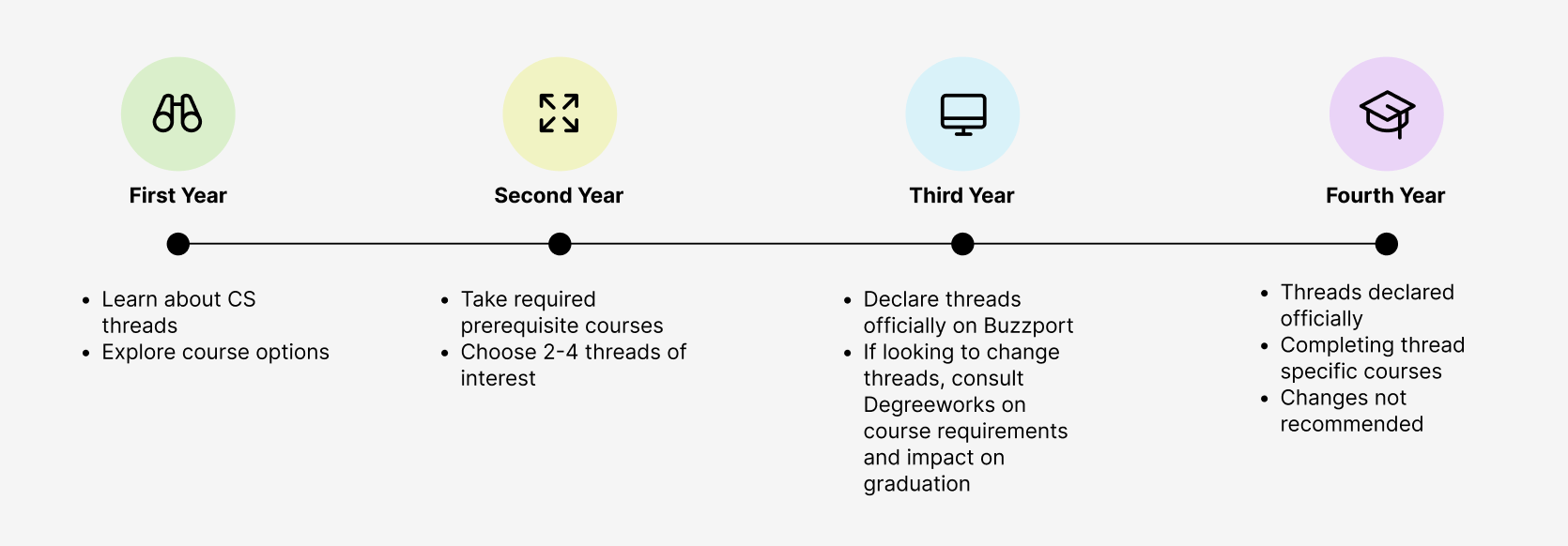
Students declare their threads on Buzzport, usually in their second or third semester. Early declaration grants access to thread restricted classes, proper advising, and helps with planning electives, research, and internships.
Step 5 (optional): Change Your Threads
Students may change threads at any point during their studies if their interests shift, but it is recommended to make changes as early as possible to avoid delaying your graduation. Before switching threads, students should review course requirements and consult their academic advisor to ensure all prerequisites can be met. Note that during registration, students are only allowed to drop a thread but cannot add any threads. You can change your threads on Buzzport through the same process as declaring your threads.
Step 6: Learn about Careers Related to Each Thread
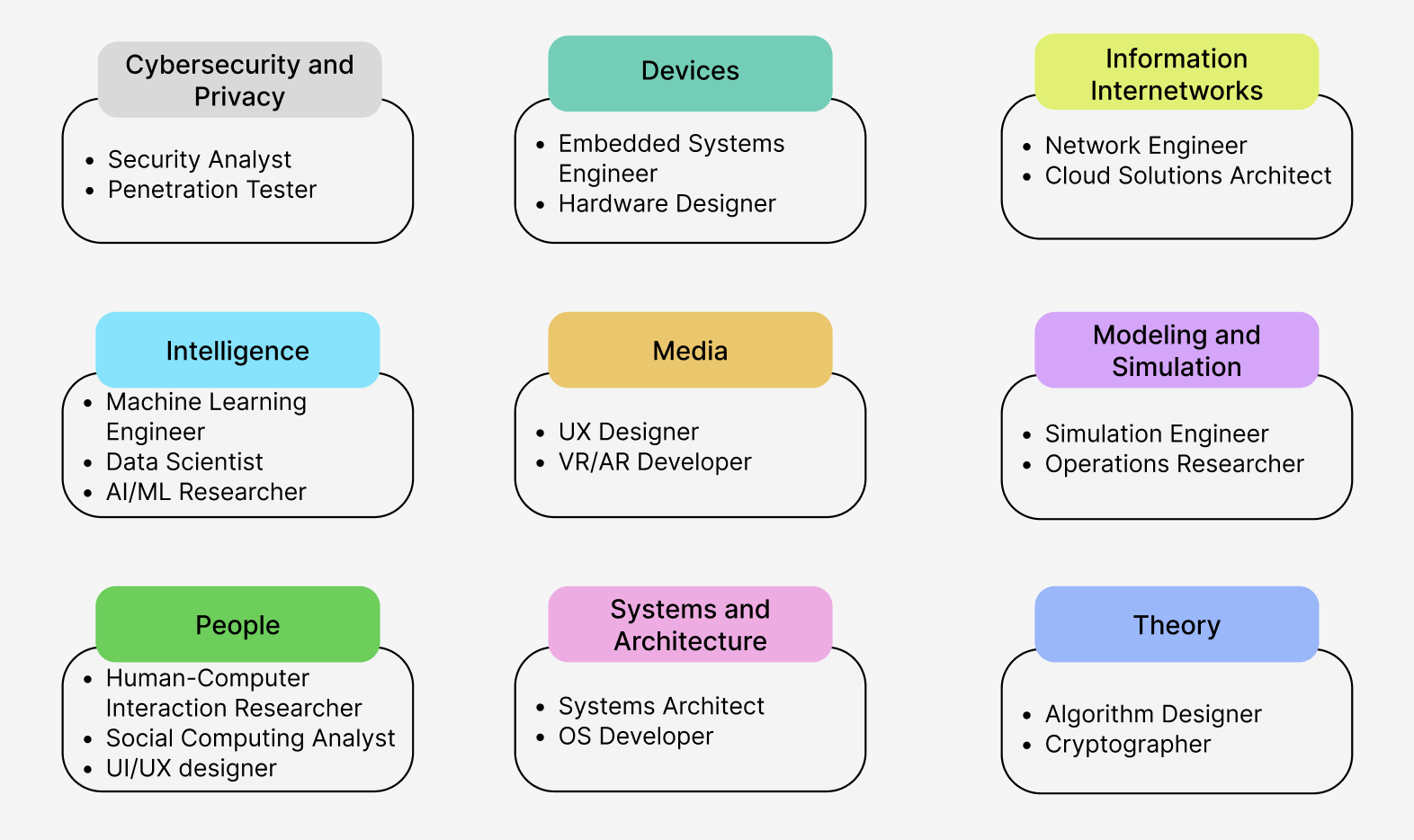
The threads you choose allows you to gain computing skills that are specific to certain jobs. Here are some example career paths that each thread prepares you for:
Step 7: Explore Threads
Now that you’re familiar with each thread and the process to declare them, it’s time to explore. Georgia Tech offers plenty of ways to learn more about your options before making your decision.
Explore threads by talking to professors, advisors, and upperclassmen to learn how different combinations align with your goals. Attend info sessions, workshops, or panels hosted by the College of Computing. Try electives, research, or VIP projects related to threads you’re interested in. Use online resources like the CS Threads website, course catalog, and CareerBuzz to connect threads to potential careers.
Tip: You don’t need to decide right away—use your first year to explore, experiment, and discover what interests you most in computer science.


Leave a Reply